







10 kV / 20 kV / 35 kV Medium-Voltage Distribution Transformers for Kazakhstan
Nov 05, 2025
Leave a message
Distribution demand in Kazakhstan runs mainly on 10 kV and 35 kV medium-voltage networks stepping down to 0.4 kV, under an extreme continental climate that can swing from about −50°C in northern winters to above +40°C in southern summers.
That range - not the kVA rating - is what drives transformer design: insulation systems, sealing, cooling and short-circuit withstand must all be specified for the real site temperature envelope.
Key Takeaways
Voltage practice: Kazakhstan's utility distribution is dominated by 10 kV / 35 kV (GOST-derived), with 0.4 kV LV; 20 kV is an IEC 60038 standard voltage used in some projects - confirm the actual system voltage before ordering.
Climate-driven design: ~−50°C to +40°C+ ambient range plus grid fluctuations demand cold-capable materials, robust sealing, and strong short-circuit withstand with a wide tap range.
Standards hygiene: specify IEC 60076-11:2018 and GB/T 10228-2015 / GB 20052-2020 - never the withdrawn IEC 726 or GB/T 10228-1997 editions.
Loss data: the SCB series table in this article is level-3 (SCB10) per GB 20052-2020; SCB13 (level-2) cuts no-load loss roughly 20–25% at the same rating.
1. The Kazakhstan Distribution Picture
Distribution networks form the largest equipment demand segment in Kazakhstan, supplying urban, industrial and rural loads. The backbone voltage levels follow the post-Soviet GOST practice - 110 kV sub-transmission stepping to 35 kV and 10 kV distribution, then 0.4 kV utilisation. 20 kV is a recognised standard voltage in IEC 60038 and is used in some new industrial or dedicated projects, but it is not a mainstream utility distribution level; the system voltage of any specific project must be verified from the electrical specification before transformer design starts.
2. Why Kazakhstan Forces a Different Transformer Specification
- Temperature envelope: northern regions can approach −50°C in winter; southern regions exceed +40°C in summer. Materials must remain ductile at low temperature and insulation systems must tolerate the full range.
- Grid quality: significant voltage fluctuations require strong short-circuit withstand capability and a wide voltage regulation range (tap range).
- Logistics: long inland transport in extreme cold demands robust packaging and moisture protection from factory to site.
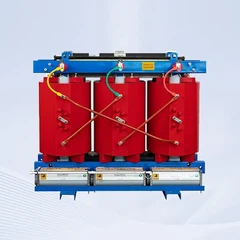
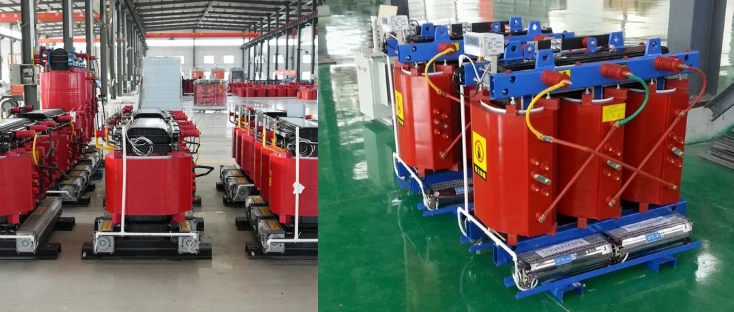
For a dry-type unit this translates concretely into: cast-resin coils with low partial discharge, cold-capable gaskets and cable terminations, IP-rated enclosures, and off-circuit tappings such as ±2 × 2.5% to absorb voltage variations.
3. Project Reference: SCB-2500/20 Dry-Type Transformer Supply
GNEE Electric has supplied SCB-2500/20 dry-type transformers (2500 kVA, 20 kV class) for Kazakhstan projects. The unit combines an oil-free, flame-retardant design with low noise, low partial discharge and strong overload capability under forced-air cooling.
Key data:
| Parameter | SCB-2500/20 (Reference) |
|---|---|
| Rated capacity | 2500 kVA |
| Primary voltage | 20 kV |
| Secondary voltage (no-load) | 400 V |
| Frequency | 50 Hz |
| Cooling | ANAF (air natural / air forced) |
| Insulation level | LI 125 / AC 50 (20 kV class, per IEC 60076-3) |
| Vector group | Dyn5 / Dyn11 |
| HV tappings | ±2 × 2.5% (off-circuit) |
| Short-circuit impedance | 6% |
| No-load loss | ≤ 5000 W* |
| Load loss (120°C) | ≤ 24,300 W* |
| Temperature rise (winding) | 100 K |
| Thermal class | F |
| Sound power level | ≈ 59 dB (at 1 m) |
| Protection | IP21 enclosure / IP21 LV cable box |
| Standards | IEC 60076-11:2018, GB/T 10228-2015 |
*Loss values marked with * are from the original project datasheet and should be re-verified against the current GB/T 10228-2015 / GB 20052-2020 limits for 2500 kVA (a modern SCB13 10 kV unit at level-2 sits near 1,440 W no-load; the 20 kV class increases winding losses) - request the factory type-test report for the exact unit.
4. SCB Series 10/0.4 kV Loss Table - Verified Levels
The table below lists 10/0.4 kV SCB dry-type transformers at level-3 energy efficiency (SCB10 loss level), GB 20052-2020 Table 2, F class (load loss at 120°C). If your project requires SCB13 (level-2), no-load loss is typically 20–25% lower at the same rating - ask for the level-2 table.
| Rated Capacity (kVA) | Vector Group | No-Load Loss (W) | Load Loss 120°C (W) | No-Load Current (%) | Impedance (%) | Sound Level (dB) |
|---|---|---|---|---|---|---|
| 30 | Dyn11 | 150 | 710 | 0.6 | 4.0 | 57 |
| 50 | Dyn11 | 215 | 1000 | 0.6 | 4.0 | - |
| 80 | Dyn11 | 295 | 1380 | 0.6 | 4.0 | 58 |
| 100 | Dyn11 | 320 | 1570 | 0.6 | 4.0 | - |
| 125 | Dyn11 | 375 | 1850 | 0.6 | 4.0 | 59 |
| 160 | Dyn11 | 430 | 2130 | 0.6 | 4.0 | - |
| 200 | Dyn11 | 495 | 2530 | 0.5 | 4.0 | 60 |
| 250 | Dyn11 | 575 | 2760 | 0.5 | 4.0 | - |
| 315 | Dyn11 | 705 | 3470 | 0.5 | 4.0 | 62 |
| 400 | Dyn11 | 785 | 3990 | 0.4 | 4.0 | - |
| 500 | Dyn11 | 930 | 4880 | 0.4 | 4.0 | 63 |
| 630 | Dyn11 | 1070 | 5880 | 0.4 | 4.0 | 63 |
| 800 | Dyn11 | 1215 | 6960 | 0.3 | 6.0 | 65 |
| 1000 | Dyn11 | 1415 | 8130 | 0.3 | 6.0 | - |
| 1250 | Dyn11 | 1670 | 9690 | 0.25 | 6.0 | 67 |
| 1600 | Dyn11 | 1960 | 11700 | 0.25 | 6.0 | - |
| 2000 | Dyn11 | 2440 | 14400 | 0.20 | 6.0 | 69 |
| 2500 | Dyn11 | 2880 | 17100 | 0.20 | 6.0 | - |
Values per GB 20052-2020 Table 2, level 3 (SCB10 loss level), 10/0.4 kV, Dyn11. "-" = value not listed in the source table. Confirm final values with the manufacturer's type-test report.
5. Specifying for Kazakhstan: Checklist
- Confirm the real system voltage (10 kV, 20 kV or 35 kV) and vector group with the project electrical design - do not assume from region alone.
- State the site ambient range (e.g. −45°C to +40°C) so insulation and sealing are designed for it.
- Demand current-standard compliance: IEC 60076-11:2018, GB/T 10228-2015, GB 20052-2020 (or the applicable local standard). Reject certificates citing withdrawn editions.
- Request the type-test report with no-load loss, load loss, partial discharge and sound level measurements.
- For 20 kV units, confirm insulation level (LI 125 / AC 50) and tap range against the network's actual regulation needs.
Frequently Asked Questions
What voltage levels are used for distribution in Kazakhstan?
Kazakhstan's grid follows the former Soviet GOST system: 110 kV sub-transmission, with 35 kV and 10 kV as the dominant medium-voltage distribution levels and 0.4 kV low voltage. 20 kV is a standard voltage in IEC 60038 and appears in some new or dedicated projects, but it is not a mainstream utility distribution level in Kazakhstan - always confirm the actual system voltage with the project specification.
Why do transformers for Kazakhstan need special design?
Kazakhstan has an extreme continental climate: winter temperatures can reach about −50°C in the north while summers exceed +40°C in the south, with strong grid voltage fluctuations. Transformer insulation, sealing, cooling and short-circuit withstand must therefore be specified for the actual site temperature range and network conditions, per IEC 60076 and the project's local codes.
What standards apply to dry-type transformers supplied to Kazakhstan?
The current reference standards are IEC 60076-11:2018 (dry-type transformers) and, for Chinese-manufactured units, GB/T 10228-2015 and GB 20052-2020 efficiency levels. Older references such as IEC 726 (withdrawn in the 1990s) or GB/T 10228-1997 must not be used in specifications - verify that any certificate or datasheet cites the current editions.
What is the difference between SCB13 and older SCB10/SCB12 dry-type transformers?
SCB10, SCB12 and SCB13 are loss-level designations: SCB10 corresponds to level-3 energy efficiency (GB 20052-2020), while SCB13 corresponds to level-2, with no-load loss typically about 20–25% lower than SCB10 at the same rating and load loss also reduced. A 630 kVA SCB13 unit, for example, has no-load loss ≤ 910 W versus ≤ 1,070 W for SCB10.
References
- IEC 60076-11:2018 - Power transformers, Part 11: Dry-type transformers.
- IEC 60038 - IEC standard voltages (including the 20 kV level).
- GB/T 10228-2015 - (Technical parameters and requirements for dry-type power transformers).
- GB 20052-2020 -(Minimum allowable values of energy efficiency and the energy efficiency grades for power transformers).
- KEGOC (Kazakhstan Electricity Grid Operating Company) - grid structure and voltage practice.
- GNEE Electric - Dry Type Transformer range.
Standards and figures above were verified against the cited sources as of the publication date. The SCB loss table reflects level-3 (SCB10) limits; project datasheet values marked with * should be re-verified against current standards. If you spot an error, contact us so we can correct it.
Supplying Distribution Transformers for Kazakhstan or CIS Projects?
Send your system voltage, site temperature range and load data - we will return a compliant specification with verified loss data and delivery plan.
Or email :sales@gneeelectric.com
WhatsApp: +86 158 2468 7445
Disclaimer: This article is provided for general information and does not constitute engineering advice or a product warranty. Voltage practice and standards should be confirmed against the applicable project specification and local codes. Henan GNEE Electric Co., Ltd. makes no representation regarding the accuracy of third-party references.
Send Inquiry