


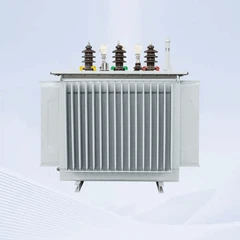
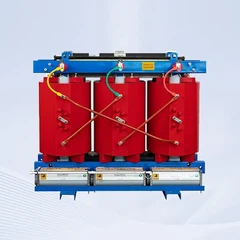






1250kVA Aluminum Transformer VS 1250kVA Copper Transformer
May 13, 2026
Leave a message
When specifying a 1250kVA Copper Transformer for industrial, commercial, or utility applications, engineers overwhelmingly prefer copper windings.
At GNEE, a ISO 9001:2015 certified transformer manufacturer with over 15 years of export experience, we have supplied thousands of 1250kVA units to power plants, data centers, and manufacturing facilities worldwide. The simple truth is: 1250kVA Aluminum Transformer units are rarely specified except for short-term, budget-driven projects.

This guide explains why copper delivers superior electrical performance, longer service life, and lower total cost of ownership-and when (if ever) aluminum might be acceptable.
Why a 1250kVA Copper Transformer is the Industry Standard
Superior Electrical Conductivity – Lower Losses, Higher Efficiency
Copper has nearly twice the conductivity of aluminum (100% IACS vs. ~61% IACS). For a 1250kVA copper transformer, this directly translates into significantly lower load losses (I²R losses). A typical 1250kVA copper unit achieves load losses of only 9,500–10,800 watts, while an equivalent aluminum unit suffers 12,000–13,500 watts. Over 8,760 operating hours per year, the copper transformer saves thousands of kilowatt-hours annually. For any project with a lifespan beyond 5 years, the energy savings alone justify the higher upfront cost.
Unmatched Thermal Management and Overload Capacity
Copper dissipates heat more efficiently due to its higher thermal conductivity. This means a 1250kVA copper transformer can handle momentary overloads (e.g., motor starting or peak demand) with less thermal stress. Aluminum windings run hotter under the same load, accelerating insulation aging (cellulose paper and oil). Lower hotspot temperatures in copper designs extend the transformer's life to 30–40 years, compared to only 15–20 years for aluminum when operated at full rating.
Mechanical Robustness Under Short-Circuit Conditions
Perhaps the most critical safety advantage: copper's tensile strength is approximately twice that of aluminum. During a short-circuit fault, electromagnetic forces can reach 10–15 times normal levels. A 1250kVA copper transformer maintains its winding geometry, while aluminum windings are prone to elongation, buckling, or even catastrophic failure. Utilities and industrial clients specify copper to avoid costly outages and fire risks.
Where Aluminum Might Be Considered (With Caveats)
A 1250kVA aluminum transformer should only be considered under two narrow conditions:
- Project lifespan ≤ 5–7 years – Temporary construction power, disaster recovery, or rental fleets.
- Extreme capital constraints – Non-profit rural electrification with subsidies for first cost only, and no long-term operation budget.
Even then, GNEE strongly recommends a full lifecycle cost analysis. The lower purchase price of aluminum (typically 30-35% less than copper) is quickly erased by higher energy losses, shorter life, and potential replacement costs.

Using Aluminum Foils in Transformer Windings
Technical Comparison Table – 1250kVA Copper vs. Aluminum Transformer
The table below presents typical values for 11kV/0.415kV, Dyn11, ONAN cooling, 50Hz, IEC 60076 compliant transformers. Note the significant differences in losses, weight, and lifespan.
| Parameter | 1250kVA Copper Transformer | 1250kVA Aluminum Transformer |
|---|---|---|
| Winding Material | Electrolytic tough pitch copper (Cu-ETP) | EC grade aluminum (1350) |
| Conductivity (% IACS) | ≥100% | ~61% |
| Load Loss (Pk) at 120°C | 9,500 – 10,800 W | 12,000 – 13,500 W |
| No-Load Loss (Po) | 1,350 – 1,500 W | 1,400 – 1,600 W |
| Impedance Voltage (Uk) | 6% (customizable) | 6% (customizable) |
| Total Weight (oil-filled) | 3,300 – 3,800 kg | 2,800 – 3,200 kg (lighter) |
| Hotspot Temperature Rise | Lower (better heat dissipation) | Higher (accelerated aging) |
| Short-Circuit Withstand | Excellent – no deformation up to 15x | Moderate – risk of bulging above 10x |
| Typical Service Life | 30 – 40+ years | 15 – 20 years (derated if fully loaded) |
| Relative First Cost | High (index 1.0) | Low (index 0.65 – 0.70) |
| Lifecycle Cost (20 years) | Lower (due to energy savings & longevity) | Higher (replacement & higher losses) |
Why Copper Wins Even at Higher First Cost
10-Year Total Cost of Ownership Comparison
Let's assume a 1250kVA transformer operating at 70% load factor, 8,760 hours/year, electricity cost $0.12/kWh.
- Copper transformer: Load loss 10,000W → annual loss cost = 10kW × 8,760h × 0.12=0.12=10,512/year.
- Aluminum transformer: Load loss 12,500W → annual loss cost = 12.5kW × 8,760h × 0.12=0.12=13,140/year.
Annual loss savings with copper: 2,628. Over 10 years, that's 2,628. Over 10 years, that's 26,280-already exceeding the initial price difference (typically 4,000−4,000−6,000). Add lower maintenance and no premature replacement, and the 1250kVA copper transformer delivers a clear ROI.
Resale and Recyclability Value
At end-of-life, a copper transformer retains 50-70% of its scrap copper value. Aluminum units have little to no recovery value. This further tilts the economic balance toward copper.

GNEE warehouse and packing area showing wooden-crated transformers ready for export shipping
Conclusion
For the vast majority of applications-industrial plants, commercial buildings, data centers, renewable integration, and utility substations – the 1250kVA copper transformer is the only rational choice. Its lower losses, higher short-circuit strength, and 30+ year lifespan deliver the lowest total cost of ownership. A 1250 kVA aluminum transformer should be restricted to temporary power or projects with a maximum 5-year operational horizon.
Ready to optimize your power distribution? Send GNEE your load profile, voltage requirements, and expected project lifespan. Our engineering team will provide a free lifecycle cost comparison and a firm quote within 24 hours.
Click the "Request a Quote" button below or contact our sales engineers via WhatsApp-we help you make the cost-smart, safety-smart decision.
What is the load of a 1250 kVA transformer?
The weight of the 1250 kVA transformer is 11,090 lbs. The load loss at rated voltage is less than 12,000W, and the no-load losses are less than 2,000W. The efficiency of the 1250 kVA transformer is 99.24%.
Which transformer is better, copper or aluminium?
While both copper and aluminum windings provide the same general functions for low and medium voltage transformers, copper outranks aluminum when it comes to reliability. Aluminum has only 62% of the electrical conductivity of copper, making copper a much more effective conductor.
What is the best material for transformers?
Ferrous. Grain-Oriented Silicon Steel: This material is widely used in energy-efficient transformers and high-performance generators. In the form of wound, laminated, or punched sheets, grain-oriented silicon steel is ideal for small and large transformers, including power and distribution transformers.
What is the main difference between aluminum and copper?
Aluminum has 61 percent of the conductivity of copper, but has only 30 percent of the weight of copper. That means that a bare wire of aluminum weighs half as much as a bare wire of copper that has the same electrical resistance. Aluminum is generally more inexpensive when compared to copper conductors.
Send Inquiry