





1600 KVA Transformer:Exploring The Capacity Expansion Requirements And Coping Strategies
Jul 21, 2026
Leave a message
In power systems, the capacity of a transformer directly determines the amount of load it can carry. When facing the need to add new loads, how to determine whether the existing transformer can meet the demand, and how to satisfy the total load requirements without expanding capacity, are common challenges for electrical engineers and maintenance personnel. This article takes a 1600 kVA transformer as an example to explore these issues.
1. Relationship Between Transformer Capacity and Load
First, we need to understand the relationship between transformer capacity and load. Transformer capacity is usually expressed in kilovolt-amperes (kVA), which represents the maximum power that the transformer can output at rated voltage and rated current. Load, on the other hand, is the actual power consumed by the electrical equipment connected to the transformer.
For a 1600 kVA transformer, the rated current on the low-voltage side can be calculated using the following formula:
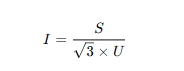
Where:
- S = Transformer capacity (kVA)
- U = Rated voltage (V)
- I = Rated current (A)
Taking a common low voltage of 400 V as an example, the rated low‑side current of a 1600 kVA transformer is approximately 2309 A.

2. Factors to Consider When Adding Load
When an additional 500 kW load is to be added, the following factors must be taken into account:
Power Factor
Power factor is the ratio of the actual active power consumed by the load to the apparent power. Different types of loads have different power factors. Improving the power factor can reduce the current required by the load, thereby easing the burden on the transformer.
Three‑Phase Balance
In three‑phase systems, maintaining balance among the three phases is essential for the stable operation of the transformer. If the three‑phase loads are unbalanced, it can cause overheating or damage to the transformer.
Overload Capability
Transformers generally have a certain overload capability, but prolonged overload operation will shorten the service life of the transformer.


3. Coping Strategies
Without expanding the transformer capacity, the following strategies can be adopted to meet the total load demand:
Optimise Power Factor
By installing compensation capacitors and other measures, the power factor of the load can be increased, thereby reducing the required current. This can alleviate the pressure on the transformer to a certain extent.
Adjust Load Distribution
By rearranging the allocation of electrical equipment, try to keep the three‑phase loads as balanced as possible. This can be achieved by reasonably distributing single‑phase equipment and using soft starters or variable frequency drives (VFDs) for large motors.
Staggered Power Consumption (Peak Shifting)
For non‑continuously operating equipment, schedule their operation during off‑peak periods to avoid simultaneous operation during peak hours, thus reducing the instantaneous demand on the transformer.
Enhance Heat Dissipation Measures
If the transformer approaches or exceeds its rated current during peak periods, additional cooling measures can be taken, such as increasing the number of fans or raising fan speeds, to ensure safe operation.
Long‑Term Monitoring and Maintenance
Strengthen regular monitoring and maintenance of the transformer to detect and resolve potential issues in time. Through periodic inspections, temperature measurements, etc., ensure that the transformer operates within its normal limits.
4. Comprehensive Assessment and Engineering Recommendations
In summary, adding a 500 kW load to a 1600 kVA transformer requires careful consideration. Measures such as optimising power factor, adjusting load distribution, and staggering power consumption can, to some extent, meet the total load demand. However, it should be noted that these measures are only temporary solutions and cannot replace a proper capacity upgrade. If the transformer is operated beyond its rated capacity for a prolonged period, irreversible damage will occur. Therefore, before deciding to add new loads, a detailed evaluation and planning process is strongly recommended.
Quick Load Rate Reference Table:
| Calculated Load Rate | Status Assessment | Recommended Actions |
|---|---|---|
| ≤ 85% | Safe operating zone | Normal operation with periodic monitoring |
| 85% – 92% | Caution zone | Consider power factor correction; closely monitor temperatures |
| 92% – 100% | Warning zone | Must adopt comprehensive measures: peak shaving + compensation + enhanced cooling |
| > 100% | Critical zone | Reduce load immediately; initiate capacity expansion or parallel unit solution |
Important Reminder: For every 8–10 °C increase in operating temperature, the insulation life of a transformer is halved. Even if the load calculation currently passes, prolonged operation above 90% load rate will still significantly shorten equipment life due to cumulative thermal ageing. If further production expansion is planned within the next two years, it is advisable to reserve sufficient capacity margin in advance to avoid repeated investment.
When Should You Upgrade or Add a Parallel Transformer?
If the calculated load rate consistently exceeds 90%, and you plan further production expansion within the next two years, then it is time to invest in an upgrade.
Why choose our new transformer or parallel solution instead of taking risks with your old equipment?
At GNEE Electric , we manufacture more than just "standard" transformers. We engineer heavy-duty 1600 kVA customised solutions with the following core advantages:
- Enhanced ONAF cooling system: Provides up to 20% short-term overload capacity.
- ±10% impedance tolerance design: Specifically optimised for high inrush current scenarios (motor-type loads), effectively suppressing voltage dips.
- Strict IEC 60076 compliance certification: Every unit undergoes a 120% full-load temperature rise test before leaving our factory, ensuring an extra safety margin that cheaper alternatives simply cannot match.
- 20+ years of insulation life: Manufactured with high-grade copper windings and premium insulating materials, maintaining long-term stable operation even at 85% continuous load rate.


Don't Wait Until Your Transformer Burns Out – Let the Professionals Give You a Clear Answer
We understand the real decision-making pressure you face-replacing a transformer involves multiple costs including equipment procurement, installation and commissioning, and production downtime. If you need an accurate load assessment report based on your site-specific data, you can obtain it through the following two options:
👉 Option 1 (Free Tool): [Click Here] to download the "Transformer Load Calculation Excel Sheet" – enter your site data and get an automatic risk level assessment.
👉 Option 2 (Free Expert Evaluation): [Click Here] to send us your load list and new equipment specifications. Our senior electrical engineers will provide you with the following within 48 hours:
- A detailed load assessment report (including thermal imaging simulation)
- If expansion is needed: a customised parallel or upgrade installation plan and 3D layout drawings
- A transparent quotation (covering equipment, sea freight, customs clearance, and after-sales installation guidance)

We don't just sell transformers – we provide reliable power solutions for your factory. All equipment strictly complies with IEC 60076 standards and undergoes a 120% full-load temperature rise test before delivery, ensuring more than 20 years of stable operating life.

Send Inquiry