





Can a 1600kVA Distribution Transformer Meet 1200kW Factory Load?
Jul 20, 2026
Leave a message
A 1600 kVA distribution transformer can reliably and safely supply a typical 1200 kW industrial load under normal operating conditions. It is one of the most cost-effective and widely adopted distribution transformer ratings for 1200 kW industrial production facilities.
During industrial power distribution system design, plant electrical engineers, consulting engineers, EPC contractors, and international procurement professionals often encounter the same challenge: distinguishing between active power (kW) and apparent power (kVA) when selecting a transformer. Choosing a transformer solely based on the equipment nameplate rating in kW, without considering the relationship between kW and kVA, can easily result in an incorrect transformer selection.
An oversized transformer leads to unnecessary capital investment, low asset utilization, and higher no-load losses. Conversely, an undersized transformer may operate under continuous overload conditions, increasing the risk of overload tripping, excessive temperature rise, accelerated insulation aging, and, in severe cases, transformer failure or unplanned plant power outages.
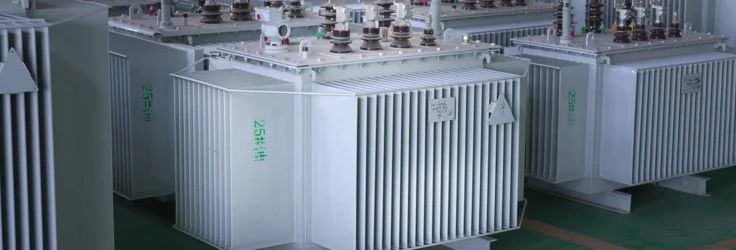
To help industrial users overcome these selection challenges, GNEE Electric provides a comprehensive analysis of the relationship between distribution transformer capacity and industrial load demand. From power fundamentals and load conversion to capacity calculations, real-world operating conditions, and transformer selection comparisons, we offer practical engineering guidance for new factory projects, power distribution system upgrades, and replacement of aging transformers.
If you have already determined your load parameters, contact GNEE's technical sales team for a quick quote and sizing verification.
What Is the Difference Between kVA and kW in Industrial Power Distribution?
In industrial power distribution and transformer sizing, matching transformer capacity to the load is one of the most critical design considerations. Understanding the difference between kVA and kW is essential to selecting the correct transformer capacity and avoiding costly sizing errors.
The key distinction lies in what each parameter represents:
- kVA (kilovolt-amperes) is apparent power. It is the transformer's rated capacity, indicating the maximum apparent power the transformer can supply. It is the primary parameter used for transformer specification and selection.
- kW (kilowatts) is active power (real power). It represents the actual electrical power consumed by industrial equipment to perform useful work.
Simply put, transformers are rated in kVA, while electrical loads are typically specified in kW. These two values represent different electrical quantities and cannot be used interchangeably.
As a general industry guideline, the average power factor of most manufacturing plants, processing facilities, and light industrial applications is approximately 0.8. This value is widely adopted in industrial power distribution projects worldwide for load conversion and transformer capacity verification.
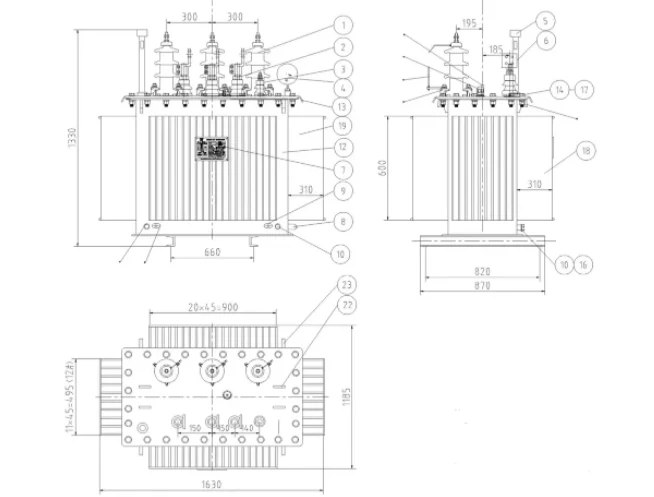
GNEE Electric Reminder: Never evaluate transformer suitability based solely on the kW rating of the connected load. Most industrial equipment-including electric motors, pumps, and fans-consists of inductive loads that consume both active power and reactive power during operation. Therefore, the load must be converted to apparent power (kVA) using the appropriate power factor before selecting the transformer capacity.
Selecting a transformer based only on the kW value will inevitably result in sizing errors. An incorrectly sized transformer can increase operating losses, reduce system efficiency, and, in severe cases, compromise the reliability and long-term safety of the entire plant power distribution system.
Is a 1600 kVA Distribution Transformer Suitable for a 1200 kW Industrial Load?
To accurately determine whether a 1600 kVA distribution transformer is suitable for a 1200 kW industrial load, the factory load demand and the transformer's available capacity margin should be evaluated using the standard power calculation formula. This provides an objective basis for transformer selection.
The standard formula used in industrial power distribution is:
- Apparent Power (kVA) = Active Power (kW) ÷ Power Factor
Using a typical industrial power factor of 0.8:
- 1200 kW ÷ 0.8 = 1500 kVA
The calculation shows that a 1200 kW industrial load requires a minimum transformer capacity of approximately 1500 kVA under normal operating conditions.
Since the rated capacity of a 1600 kVA distribution transformer exceeds the calculated 1500 kVA load requirement, it is fully capable of supplying a 1200 kW industrial facility under continuous operating conditions.
From the perspective of system reliability, a 1600 kVA transformer provides an additional 100 kVA capacity margin above the calculated load demand. This reserve capacity is essential for accommodating normal load fluctuations and short-term load increases commonly encountered in industrial production.
Maintaining an adequate capacity margin also helps reduce the risk of transformer overloading, nuisance trips, excessive temperature rise, and premature insulation aging, thereby improving the long-term reliability, operational stability, and safety of the entire power distribution system.
Suitability of a 1600 kVA Transformer for a 1200 kW Industrial Facility in Real-World Operating Conditions
While theoretical calculations provide the foundation for transformer sizing, continuous loading capability, load compatibility, and actual operating conditions are the key factors in industrial power distribution design. For a 1200 kW industrial facility, a 1600 kVA distribution transformer is suitable for the vast majority of standard industrial applications.
Stable Continuous-Load Applications
In applications such as processing lines and automated production systems, where the load is relatively stable with minimal fluctuations, a 1600 kVA distribution transformer can reliably supply a 1200 kW industrial load. It is capable of supporting continuous 24-hour operation without overheating, overloading, or nuisance tripping, making it well suited to the routine production requirements of small and medium-sized manufacturing facilities.
Applications with Fluctuating or High Inrush Loads
Industrial equipment such as air compressors, injection molding machines, and large electric motors can generate substantial inrush currents and short-term load fluctuations during starting and stopping.
With an available 100 kVA capacity margin, a 1600 kVA distribution transformer can effectively absorb temporary peak loads, helping to mitigate voltage fluctuations caused by equipment cycling. This improves voltage stability across the distribution system and reduces the likelihood of equipment malfunctions associated with transient load conditions.
Future Capacity Expansion
Many small and medium-sized factories plan for gradual production growth, including additional equipment, increased production capacity, or moderate load expansion.
The spare capacity provided by a 1600 kVA distribution transformer offers flexibility for these incremental load increases, allowing future expansion without the immediate need to replace the transformer with a higher-capacity unit. This helps reduce both the cost and downtime associated with future power distribution system upgrades.
Need a transformer tailored to your specific load profile? GNEE offers standard and custom 1600 KVA units with full engineering support-ask for a project-specific quote today.
Is a 1600 kVA Transformer Oversized or Undersized for a 1200 kW Load?
When selecting a transformer for a 1200 kW industrial facility, engineers and procurement professionals often ask two key questions: Is a 1600 kVA transformer oversized? Or is it undersized? The answers are critical to determining the most appropriate transformer capacity.
Based on both theoretical calculations and typical industrial operating conditions, the conclusion is clear: for a standard 1200 kW industrial load, a 1600 kVA distribution transformer is neither undersized nor excessively oversized. It provides an appropriate balance between capacity, reliability, and operational efficiency.
From a cost-performance perspective, selecting a transformer rated below 1600 kVA would leave little operating margin, causing the transformer to operate close to full load-or even under overload conditions. Over time, this can increase operating losses, accelerate insulation aging, raise the likelihood of equipment failures, and reduce overall system reliability.
Conversely, selecting a 2000 kVA transformer provides additional capacity, but it also results in higher equipment costs, increased installation expenses, and greater no-load losses. Unless future load growth justifies the additional capacity, the extra investment is unlikely to deliver proportional operational benefits.
Considering the four key engineering criteria-operational safety, system reliability, economic performance, and future expansion capability-a 1600 kVA distribution transformer is an excellent match for a 1200 kW industrial load. It offers one of the most cost-effective and technically appropriate solutions for small and medium-sized industrial facilities within this load range.
When Should You Choose a 2000 kVA Transformer Instead?
Although a 1600 kVA distribution transformer is suitable for the vast majority of 1200 kW industrial loads, certain operating conditions justify selecting a 2000 kVA transformer. The decision should be based on transformer loading, overload protection requirements, and the overall characteristics of the power distribution system. The following are the three most common scenarios.
1. The Plant Operates with a Persistently Low Power Factor
If the plant power distribution system lacks adequate reactive power compensation and the power factor remains consistently below 0.75, the reactive power demand increases substantially. Under these conditions, a 1200 kW active load requires significantly more than 1500 kVA of apparent power.
As a result, a 1600 kVA transformer may operate continuously near its rated capacity, leaving insufficient operating margin for reliable long-term service. In this case, a 2000 kVA transformer is the more appropriate choice.
2. The Plant Has Severe Impact Loads
Industries such as heavy manufacturing, metal fabrication, stamping, and forging often operate multiple high-power machines that start and stop frequently or experience intermittent heavy-duty loading.
These operating conditions can produce instantaneous peak demands well above the normal 1200 kW steady-state load. In such applications, the reserve capacity of a 1600 kVA transformer may not be sufficient to absorb these load fluctuations. Upgrading to a 2000 kVA transformer provides greater capacity to withstand transient peak loads and enhances overall system reliability.
3. The Plant Has a Confirmed Expansion Plan
If the facility has a well-defined expansion plan within the next 1–3 years-such as increasing production capacity, installing additional equipment, or adding new production lines-the total electrical load is expected to exceed 1200 kW.
In this situation, selecting a 2000 kVA transformer from the outset can eliminate the need for an early transformer replacement, reduce future retrofit costs, and provide sufficient capacity for long-term production growth.
GNEE Electric Recommendation: Transformer selection should never be based solely on the connected load power (kW). A proper engineering evaluation should also consider the plant's power factor, load characteristics, operating load profile, and future expansion plans. A scientifically selected transformer ensures both long-term power system reliability and optimized lifecycle costs.
Why Choose GNEE Electric?
As a professional power transformer manufacturer, GNEE Electric provides customized low-impedance 1600 kVA transformer solutions to help customers minimize voltage drop and improve overall power system performance.
✅ Manufactured in strict accordance with IEC 60076 and GB 1094 standards
✅ Custom low-impedance designs available - percentage impedance can be customized to as low as 4.0% for oil-immersed transformers, while dry-type transformers can be optimized to below 5.0%, subject to application requirements and system short-circuit considerations.
✅ Factory test reports included - each transformer is supplied with measured voltage regulation and routine test reports, ensuring complete traceability of performance data.

✅ Free transformer selection service - our engineers recommend the most suitable transformer configuration based on your load profile, installation conditions, and operating requirements.
✅ Free voltage-drop calculation service - we evaluate transformer voltage drop, feeder voltage drop, motor starting voltage drop, and other critical system parameters to support reliable system design.
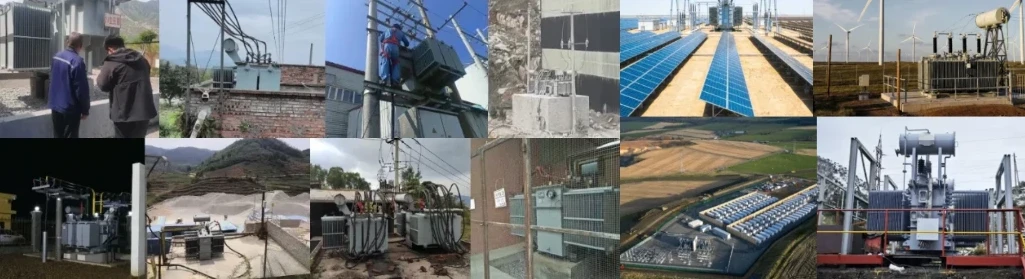
For load calculations, transformer recommendations, or a detailed quotation, contact GNEE's technical sales team today. We respond within 24 hours with engineering-grade support.
FAQ
Can a 1600 kVA transformer continuously supply a 1200 kW industrial load?
Yes. Under a typical industrial power factor of 0.8, a 1200 kW load requires approximately 1500 kVA of apparent power. A 1600 kVA transformer therefore provides a 100 kVA capacity margin, allowing reliable continuous operation without operating at its rated capacity or creating a risk of overload or excessive temperature rise.
What is the available capacity margin of a 1600 kVA distribution transformer for industrial applications?
For a 1200 kW industrial load, a 1600 kVA distribution transformer provides an effective 100 kVA capacity margin. This reserve capacity helps accommodate normal load fluctuations and short-duration peak demands, making it suitable for continuous industrial operation.
Should I choose a 1600 kVA or a 2000 kVA transformer for a 1200 kW industrial load?
For most light industrial and manufacturing applications with stable operating conditions, a 1600 kVA distribution transformer is the preferred choice because it offers the best balance of performance and cost without unnecessary excess capacity.
A 2000 kVA transformer is recommended when the facility operates with a consistently low power factor, experiences frequent high-impact loads, or has a confirmed short-term expansion plan that will significantly increase the electrical load. Under these conditions, the additional capacity provides greater operating margin and supports long-term system reliability.
Send Inquiry