





How Many kW Load Can a 1600kVA Transformer Handle?
Jul 08, 2026
Leave a message
A 1600kVA transformer is one of the most commonly used capacity ratings in factories, industrial parks, and commercial facilities. However, one common mistake during transformer selection is treating kVA and kW as the same value.
Choosing a transformer that is too small may cause overload trips, voltage drops, and production interruptions. On the other hand, selecting an oversized transformer increases investment costs, no-load losses, and unnecessary electricity expenses.
In this guide, GNEE Electric explains how to accurately calculate the actual load capacity of a 1600kVA transformer by considering power factor, load rate, equipment characteristics, and operating environment.

At GNEE Electric, we always emphasize that proper transformer selection requires not just looking at the nameplate rating but also analyzing real‑world operating conditions – including power factor, load profile, and ambient temperature.
1. Basic Theory: Difference Between kVA and kW
A transformer's rated capacity is expressed in kVA (kilovolt-amperes), while the actual power consumed by electrical equipment is measured in kW (kilowatts).
The relationship between them is:
- P = S × cosφ
Where:
- P = Active power (kW), the actual power used by motors, heating equipment, lighting systems, and other electrical loads
- S = Apparent power (kVA), the transformer rated capacity
- cosφ = Power factor of the load
For a 1600kVA transformer:
S = 1600kVA
The actual available kW depends mainly on the power factor.
Theoretical Load Calculation Under Different Conditions
1. Pure Resistive Load (cosφ = 1)
For purely resistive loads such as electric heaters:
- P = 1600 × 1 = 1600kW
Although theoretically possible, most factories do not operate with 100% resistive loads. This condition is mainly applicable to special heating applications or laboratory environments.
2. Standard Industrial Load (cosφ = 0.9)
Most factories with proper reactive power compensation operate around:
cosφ = 0.9
Calculation:
- P = 1600 × 0.9 = 1440kW
This is the theoretical maximum active power when the transformer is fully loaded.
However, industrial transformers should not operate continuously at 100% capacity. A safety margin must always be considered.
2. Actual Available Capacity: Load Rate Determines Long-Term Operation
In industrial power systems, transformers are generally designed to operate at 70%–85% load rate for long-term reliability.
For normal factory operation, 80% load rate is commonly recommended.
The actual operating capacity is calculated as:
- Sactual = Rated Capacity × Load Rate
For a 1600kVA transformer:
- Sactual = 1600 × 80%
- Sactual = 1280kVA
Then considering different power factors:
| Operating Condition | Power Factor | Actual Active Load |
|---|---|---|
| Excellent compensation | 0.95 | 1280 × 0.95 = 1216kW |
| Standard industrial factory | 0.90 | 1280 × 0.90 = 1152kW |
| Average compensation level | 0.85 | 1280 × 0.85 = 1088kW |
| Poor compensation condition | 0.80 | 1280 × 0.80 = 1024kW |
Therefore, the realistic long-term load capacity of a 1600kVA transformer in an industrial environment is usually around: 1,100–1,150kW,rather than the theoretical 1,440kW.
3. Key Factors Affecting Transformer Load Capacity in Real Applications
Load Type: Motor Starting and Impact Loads Reduce Capacity
Industrial factories often include:
- Air compressors
- Welding machines
- Large induction motors
- Crushers
- Pumps
- Production machinery
These loads have high starting currents, typically 4–7 times the rated current during startup.
If multiple high-power motors start simultaneously, the transformer may experience:
- Voltage drop
- Excessive current surge
- Protection tripping
- Reduced service life
For factories with heavy impact loads, engineers should reserve an additional 20% capacity margin or install:
- Soft starters
- Variable frequency drives (VFDs)
- Sequential motor starting control systems
Example:
A 1600kVA transformer supplying several 75kW motors may experience significant startup current impact if all motors start at the same time.
Recommended solutions:
- Start motors in stages
- Install soft starters
- Use frequency converters


Reactive Power Compensation Improves Available Capacity
Power factor correction is one of the most economical ways to improve transformer utilization.
Many factories have sufficient transformer capacity but cannot fully utilize it because of low power factor caused by:
- Motors
- Welding equipment
- Inductive loads
Installing capacitor banks can improve power factor and increase usable capacity.
Example:
When cosφ = 0.80:
P = 1280 × 0.8
= 1024kW
When cosφ = 0.95:
P = 1280 × 0.95
= 1216kW
Difference:
- 1216 - 1024 = 192kW
This is equivalent to adding capacity for several medium-size motors without replacing the transformer.


Ambient Temperature and Cooling Conditions Affect Capacity
Transformer ratings are normally based on standard operating conditions, usually:
- Ambient temperature: 40°C
- Proper ventilation
- Rated cooling conditions
During hot seasons, poor ventilation or high indoor temperatures may reduce heat dissipation performance.
Excessive temperature can cause:
- Higher winding temperature
- Faster insulation aging
- Reduced transformer lifespan
For high-temperature environments, the load should generally be reduced by:
5%–10%
For a 1600kVA transformer, actual available output during extreme summer conditions may decrease to approximately:
980–1090kW
depending on cooling conditions.
4. Practical Selection Guide for a 1600kVA Transformer
| Application Condition | Recommended Long-Term Load | Notes |
|---|---|---|
| New factory, good compensation, stable loads | 1150–1200kW | Transformer capacity can be fully utilized |
| Older factory, mixed loads | 1050–1100kW | Additional margin recommended |
| Heavy motors, welding machines, impact loads | 950–1000kW | Larger safety margin required |
| High-temperature transformer room | Reduce another 5–10% | Improve ventilation or cooling |
Short-term emergency operation:
A 1600kVA transformer may temporarily operate near its rated capacity:
- 1600kVA × 0.9 power factor ≈ 1440kW
However, continuous operation above 85% load rate is not recommended.
5. GNEE Electric Recommendation
For most industrial applications, a 1600kVA transformer from GNEE Electric can safely support approximately:
- 1,100–1,150kW continuous industrial load
under normal operating conditions.
The final selection should be based on the actual factory load profile, equipment type, and future development plan.
GNEE Electric provides complete transformer solutions including:
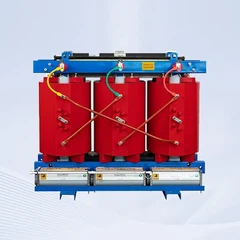
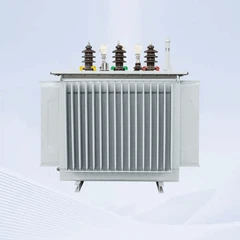
- Oil immersed transformers
- Dry type transformers
- Industrial power transformers
- Customized transformer design
- IEC-compliant manufacturing and testing
With professional engineering support, GNEE Electric helps customers select the most economical and reliable transformer solution for factories, industrial parks, renewable energy projects, and commercial facilities.

FAQ
Q1: Can a 1600kVA transformer supply a 1600kW load?
A: Theoretically yes when the power factor equals 1. However, real industrial loads usually include motors and inductive equipment. Considering power factor and safe load rate, the practical continuous output is normally around 1100–1150kW.
Q2: How can I increase the usable capacity of a 1600kVA transformer?
A: The most economical method is installing reactive power compensation equipment to improve power factor from 0.8 to 0.95. This can significantly increase usable active power. Soft starters and VFDs can also reduce motor starting impact.
Q3: How much should transformer capacity be reduced during hot weather?
A: When ambient temperature exceeds 40°C or ventilation is insufficient, a load reduction of approximately 5–10% is recommended. The exact value depends on transformer cooling design and temperature-rise limits.
Q4: What factory area can a 1600kVA transformer supply?
A: It depends on power density:
Mechanical processing factories: approximately 8,000–12,000 m²
Electronics and light manufacturing factories: approximately 12,000–18,000 m²
The actual requirement should be calculated according to equipment load.
Q5: Is temporary overload operation allowed?
A: Short-term overload may be acceptable during emergency conditions, such as equipment startup or temporary load transfer. However, continuous operation above the recommended load rate is not advised because it accelerates insulation aging and reduces transformer service life.
GNEE Electric - Reliable Transformer Solutions for Global Industrial Power Applications
Send Inquiry