





How to Select a 1600 kVA Oil-Filled Transformer for Your Project
Jul 07, 2026
Leave a message
A 1600 kVA oil-immersed transformer falls within the medium-to-large power distribution capacity range. It typically does not serve a single small workshop-it is integrated into a comprehensive low-voltage power distribution system, such as a factory main switchgear room, a commercial complex, mining auxiliary power, a food processing plant, a textile mill, a cement plant, or a critical load segment in an EPC project
As capacity increases, so do the associated challenges. No-load losses, load losses, temperature rise, short-circuit impedance, low-voltage side current, busbar connections, installation space, hoisting and transportation, protective devices, and on-site acceptance-none of these factors can be evaluated solely on "lowest price".
⚠️ The hard truth: With a 1600 kVA unit, choosing the wrong configuration makes future modifications extremely difficult and may compromise the stability of the entire power distribution system.
🔹 Need a reliable 1600 kVA oil filled transformer for your project? Our engineering team helps B2B buyers worldwide select the right configuration-voltage, winding, cooling, and accessories-in one streamlined quote.
👉 [REQUEST A CUSTOM QUOTE NOW]
Which Projects Typically Use a 1600 kVA Oil-Immersed Transformer?
A 1600 kVA oil immersed transformer is typically specified for projects with concentrated loads, long operating hours, and high requirements for power supply stability.
Industrial facilities commonly using this capacity include:
- Food processing plants
- Metalworking and machinery manufacturing
- Plastics and textiles production
- Building materials and cement plants
- Commercial building projects
- Mining, cement, and heavy industry projects
- EPC projects

How to Select a 1600 kVA Oil-Filled Transformer
Step 1: Confirm Voltage Rating and Connection Group
The first parameters to confirm for any 1600 kVA oil filled transformer are primary voltage, secondary voltage, frequency, and connection group.
- Common primary voltages: 10 kV, 11 kV, 13.8 kV, 20 kV, 22 kV, 33 kV
- Common secondary voltages: 0.4 kV, 0.415 kV, 0.433 kV, 0.69 kV
⚠️ Critical: Standards vary by country and project. The 10/0.4 kV configuration commonly used in China cannot be directly applied to overseas projects.
💡 Procurement tip: If the project already has a single-line diagram or electrical design drawings, send the drawings directly to the supplier for confirmation. Simply stating "we need a 1600 kVA transformer" is insufficient-suppliers cannot accurately determine voltage ratio, connection group, impedance, cable interfaces, or protection configuration.
Step 2: Is the Capacity Sufficient? It Depends on Load Structure
1600 kVA may seem like substantial capacity, but whether it is suitable depends on the load structure.
- If the project primarily involves lighting, office equipment, and standard low-power devices, 1600 kVA may provide significant headroom.
- If the project includes high-power motors, air compressors, crushers, pump stations, cooling systems, welding equipment, or continuous production lines, you cannot simply add up the power ratings.
You must also consider starting currents, simultaneous operation factors, power factors, harmonic conditions, and future expansion needs
Example: In a food processing plant, total equipment power may appear close to 1,200 kW, but not all equipment operates at full load simultaneously. After grouping loads, a 1,600 kVA transformer might be a reasonable choice
Step 3: Copper Windings vs. Aluminum Windings - The Real Trade-offs
A 1600 kVA oil-immersed transformer can be equipped with either copper or aluminum windings. There is no definitive "better" choice-it depends on project budget, operating conditions, and customer preferences.
Copper windings offer:
- Superior electrical conductivity
- High mechanical strength
- Better short-circuit resistance
- Suitable for heavy loads, long operating hours, high short-circuit impact requirements, or where service life is critical
For main transformers in industrial plants, mining projects, and long-term continuous operation, many engineering firms prefer copper windings
For industrial plants operating more than 16 hours per day, copper windings generally provide better long-term reliability despite the higher initial investment.
Step 4: How to Select Loss Class - Balance Purchase Price and Operating Costs
1600 kVA transformers typically have a long operational lifespan, so losses cannot be ignored.
- No-load losses originate from the core and persist as long as the transformer is energized, even under very low load conditions.
- Load losses are related to load current-during prolonged factory operation, these losses significantly impact electricity costs.
For transformers in the 1600 kVA range, the value of a low-loss design is more pronounced than for smaller-capacity units.
If the project involves temporary power usage, short operating periods, or low load factors, standard loss-class transformers may suffice.
For main power distribution in factories, commercial buildings, data center auxiliary systems, industrial parks, or long-term EPC projects, carefully evaluate low-loss models such as S13 or higher efficiency designs.
While the initial purchase price may be higher, the difference in electricity costs over several years of operation will gradually offset the initial price difference
Step 5 – Impedance, Temperature Rise & Noise
- Impedance (typically 4–6%): too low → high short-circuit current; too high → voltage drop. Match for parallel operation.
- Temperature rise: Hot climates, poor ventilation, or enclosed substations require enhanced cooling or higher insulation class – specify ambient conditions upfront.
- Noise: Critical near residential/commercial areas – confirm dB levels early, as reductions depend on core and tank design, not quick fixes.
Step 6 – Tank Type & Cooling
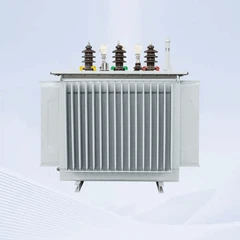
Fully sealed corrugated tank – maintenance-free, prevents oil oxidation, preferred for overseas projects.
Oil conservator tank – traditional, requires more maintenance, suits projects with dedicated O&M teams.
Cooling: Most 1600 kVA units use ONAN (natural oil/air). If ambient >40°C or load factor is consistently high, request larger radiators or enhanced cooling margin.
Step 7 – Accessories & Custom Parameters
Standard accessories: oil/thermometer gauges, pressure relief valve, Buchholz relay, breather, drain valve, bushings, tap changer. Additional needs: alarms, remote signals, anti-corrosion coating, special IP rating, or color. For outdoor/coastal/chemical sites, specify corrosion protection grade (C3/C4/C5).
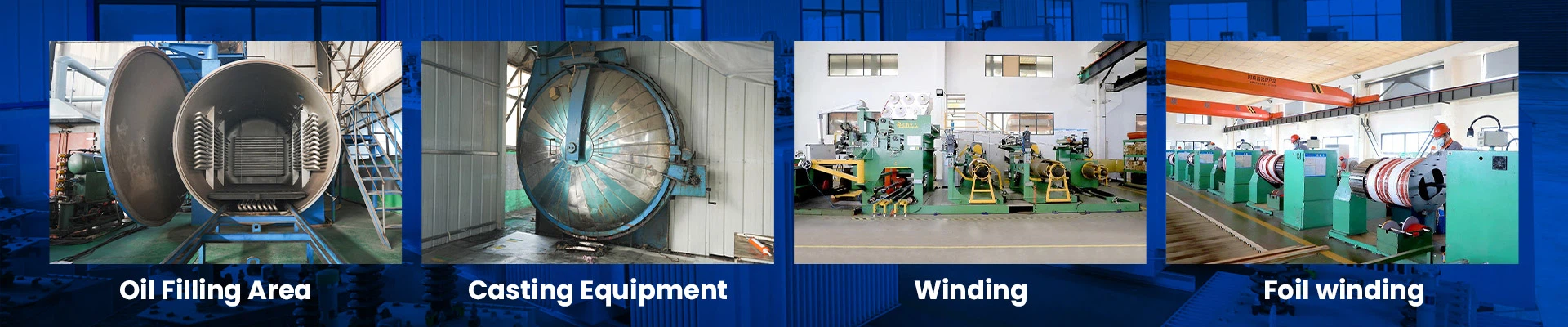
GNEE Electric Testing and Packaging
Before shipment, 1600 kVA oil-immersed transformers typically undergo routine testing:
- Winding resistance measurement
- Voltage ratio and connection group verification
- Short-circuit impedance and load loss testing
- No-load loss and no-load current testing
- Insulation resistance testing
- Power frequency withstand voltage testing
- Impulse withstand voltage testing
- Transformer oil inspections
Depending on project requirements, temperature rise testing, noise testing, or third-party inspection may also be required.

Export packaging must be confirmed in advance.
Given the substantial size and weight of a 1600 kVA transformer (approximately 4,000–5,000 kg with oil), transportation considerations include:
- Moisture protection and shock resistance
- Tilt prevention and bushing protection
- Separate packaging of accessories
- Securing for ocean transport
For long-distance ocean shipping, details regarding wooden crates, steel base frames, anti-corrosion treatment, and container loading plans must be clearly specified

Ready to order your 1600 kVA oil filled transformer? Our team is standing by to provide:
✓ Custom configuration recommendations based on your project site
✓ Full IEC test reports and factory inspection data
✓ Competitive pricing with clear cost breakdown
✓ Delivery schedule within 10–15 days for standard units
Contact us now and get your customized quote within 24 hours.
GNEE Electric transformer Custom Configuration Options
| Configuration Item | Custom Options Available |
|---|---|
| Rated Capacity | 30–5000 kVA |
| Primary Voltage (HV) | 6.6 kV, 11 kV, 13.8 kV, 15 kV, 20 kV, 22 kV, 33 kV |
| Secondary Voltage (LV) | 0.415 kV, 0.433 kV, 0.48 kV, 0.69 kV, 3.3 kV, Customer Specified |
| Frequency | 50 Hz / 60 Hz |
| Cooling Method | ONAN, ONAF |
| Vector Group | Dyn11, YNyn0, YNd11, YNd1, Other IEC Vector Groups |
| Tap Changer | OCTC or On-Load Tap Changer (OLTC) |
| Impedance Voltage | 4%, 4.5%, 5%, 6%, Customized |
| Insulating Oil | Mineral Oil, FR3 Natural Ester Fluid, Silicone Oil |
| Ambient Temperature | Up to +55°C or Lower Temperature Design |
| Installation Environment | Outdoor / Indoor / High Altitude / Coastal / Desert / Tropical Climate |
| Protection & Monitoring | Temperature Indicator, Oil Level Gauge, Pressure Relief Valve, Buchholz Relay, Online Monitoring System |
| Enclosure Finish | C3, C4, C5 Corrosion Protection Systems |
| Paint Color | RAL7032, RAL5015, Customer Specified |
| Applicable Standards | IEC, ANSI/IEEE, BS, AS/NZS, Customer Specifications |
FAQ
What types of projects typically use 1600 kVA oil-immersed transformers?
1600 kVA oil-immersed transformers are commonly used in medium-to-large-scale factories, commercial buildings, mines, cement plants, food processing plants, industrial parks, and EPC power distribution projects. They are suitable for projects with concentrated loads, long operating hours, and high requirements for power supply stability.
Should a 1600 kVA transformer use copper windings or aluminum windings?
If the project involves heavy loads, long operating hours, and high short-circuit withstand requirements, copper windings are generally the safer choice. If budget is a concern, the load is relatively stable, and the supplier's manufacturing process is reliable, aluminum windings can also be considered. When purchasing, verify the winding material rather than simply comparing prices.
What are the common voltage ratings for 1600 kVA oil-immersed transformers?
Common primary voltages include 10 kV, 11 kV, 13.8 kV, 20 kV, 22 kV, and 33 kV. Common secondary voltages are 0.4 kV, 0.415 kV, 0.433 kV, or 0.69 kV. The final configuration should be determined based on the project's country, grid regulations, and low-voltage distribution system.
Is a 1600 kVA transformer suitable for ONAN cooling?
Most 1600 kVA distribution projects can utilize ONAN cooling. If the project is located in a high-temperature region, has a consistently high load factor, or has poor ventilation in the substation, the cooling margin and temperature rise design should be verified in advance.
Why shouldn't price be the only consideration when purchasing a 1600 kVA transformer?
Different quotes may vary significantly in terms of winding materials, loss class, tank structure, accessory configuration, anti-corrosion treatment, testing requirements, and packaging methods. Low-cost solutions with inadequate specifications may result in higher operating costs.
Send Inquiry