








2500kVA Distribution Transformer: Maximum Overload Capacity with ONAN/ONAF Cooling
May 13, 2026
Leave a message
For industrial plants, data centers, and large commercial complexes, the 2500kVA distribution transformer is a critical asset. But when summer peaks hit or production lines extend, every engineer asks: How much overload can my 2500kVA transformer actually handle?
The answer lies in its cooling method-specifically ONAN/ONAF combined cooling.
As a professional transformer manufacturer with over 18 years of export experience, GNEE designs and delivers 2500kVA units that safely achieve 25–33% additional capacity without changing the nameplate rating.
This guide explains the real-world limits, material choices, dimension planning, and fluid selection to help you maximize your investment.

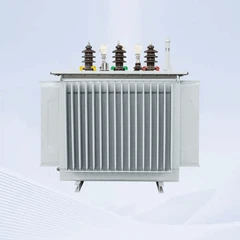
2500kVA distribution transformer
ONAN vs ONAF Cooling - Where the Power Reserve Comes From
Most modern 2500kVA distribution transformers are built with dual-stage cooling: ONAN for base load and ONAF for peak demand.
- ONAN (Oil Natural, Air Natural). No fans; hot oil rises naturally into radiators where ambient air flows passively. Base continuous capacity: 2500kVA. Best for steady loads and quiet environments (hospitals, residential substations).
- ONAF (Oil Natural, Air Forced). Same oil circulation, but fans force air over the radiators, extracting heat much faster. Overload capacity with fans on: typically 3125–3333kVA (25–33% increase). Best for industrial peaks, hot climates and emergency backup.

Maximum Safe Overload - Engineering Guidelines
| Cooling mode | Continuous capacity | Short-term emergency (typical) |
|---|---|---|
| ONAN only | 2500 kVA | 2750 kVA (2 h) / 3000 kVA (1 h, accelerated aging risk) |
| ONAF engaged | 3125 kVA | 3300 kVA (2 h) / 3500 kVA (1 h, ambient <30 °C) |
These values are an indicative guide. Per IEC 60076.7, the permissible short-duration overload depends on pre-load, ambient temperature and thermal time constant - typically up to 1.3–1.5 × rated for 1–2 hours under defined conditions. Temperature limits per IEC 60076-2: winding average temperature rise ≤65 K, top-oil ≤60 K. For safe dynamic overload, monitor winding and oil temperatures in real time; never exceed the limits without thermal assessment.
Copper vs Aluminum Windings – Which Is Right for Your 2500kVA Transformer?
When specifying a 2500kVA distribution transformer, conductor material directly affects cost, size, and efficiency.
Copper Windings – Higher Cost, Better Performance
- Conductivity: Copper is ~40% more conductive than aluminum.
- Size advantage: A 2500kVA copper-wound transformer can be 15–20% smaller in footprint and weight.
- Strength: Better short-circuit withstand – critical for industrial grids with frequent faults.
- Lifespan: Copper does not creep or loosen over decades.
Aluminum Windings – Lower Initial Cost
- Cost: Usually 30–35% cheaper than copper for the same 2500kVA rating.
- Drawback: Larger cross-section needed – results in a bulkier transformer (adds ~300–400 mm to length).
- Risk: Requires perfect bolted connections; otherwise, thermal expansion can cause loosening.
Quick Comparison Table (2500kVA, 11/0.4 kV, 50 Hz)
| Parameter (2500kVA, 11/0.4 kV, 50 Hz) | Copper | Aluminium |
|---|---|---|
| Conductivity | About 40% higher than aluminium | Base |
| Footprint / weight | 15–20% smaller and lighter (approx. 4200 kg) | Bulkier (approx. 5100 kg, +300–400 mm) |
| Short-circuit strength | Excellent | Moderate |
| Cost | Higher (price index ~1.4x) | 30–35% cheaper (1.0x) |
| Best fit | Industrial, data centre | Rural, budget projects (bolted connections must be perfect) |
Dimensions and Housing – Will a 2500kVA Transformer Fit Your Substation?
Many GNEE clients send photos of existing "brick houses" or compact prefab substations asking: Can a 2500kVA transformer fit here? The answer depends on cooling method and material choice.

Typical 2500kVA Transformer Dimensions (Copper, ONAN/ONAF Ready)
| Component | Length | Width | Height |
|---|---|---|---|
| Tank (without radiators) | 2000 mm | 1200 mm | 1800 mm |
| With ONAN radiators | 2400 mm | 1600 mm | 2200 mm |
| With ONAF fans added | +100 mm | same | +50 mm |
Minimum Clearance Requirements for Safe Operation
- Airflow: At least 800 mm on all sides for ONAN cooling; 1000 mm on fan side for ONAF.
- Oil containment: Allow space for a bund wall or drip tray (typically 110% of oil volume – ~3000 liters for a 2500kVA unit).
- Door opening: If going into a "housing," the door must be at least 2500 mm high × 1800 mm wide.
- Ventilation: Even with ONAF, the room needs intake louvers and exhaust fans – otherwise hot air recirculates and cooling fails.
Sizing and Clearance Notes
- Allow at least 800 mm airflow clearance on all sides for ONAN; 1000 mm on the fan side for ONAF.
- Oil containment: bund wall or drip tray at about 110% of oil volume (roughly 3000 litres for a 2500kVA unit).
- Room ventilation with intake louvers and exhaust fans is mandatory even with ONAF.
Mineral Oil vs Ester Oil – Choosing the Right Dielectric Fluid
Oil type impacts fire safety, environmental risk, and transformer lifespan. For a 2500kVA distribution transformer operating under ONAN/ONAF loads, here is your guide.
Mineral Oil – The Standard Choice
- Pros: Lowest cost, excellent dielectric strength, widely available.
- Cons: Low fire point (~160°C) – high risk indoors or near combustible materials.
- Best for: Outdoor substations, remote areas, or where budget is primary.
Natural Ester (FR3) or Synthetic Ester
- Pros: Fire point >300°C (K-class fluid), biodegradable, extends paper insulation life by 5–8 years.
- Cons: 2–3x more expensive than mineral oil, more viscous (slower natural circulation – requires slightly larger radiators).
- Best for: Indoor installations, shopping malls, hospitals, environmentally sensitive sites.
Quick Selection Table
| Fluid | Fire point | Biodegradable | Best for | |
|---|---|---|---|---|
| Mineral oil | About 160 °C | No | Outdoor substations, budget-first sites | |
| Natural ester fluid | >300 °C (K-class) | Yes | Indoor, malls, hospitals, environmentally sensitive sites | |
| Synthetic ester | About 310 °C | Partial | High-fire-safety indoor applications |
Whether you choose ONAN for simplicity or ONAF for peak flexibility, the 2500kVA distribution transformer can deliver up to 3333kVA when specified and operated correctly. Copper windings give you a smaller footprint; aluminum saves upfront cost. Mineral oil works outdoors; ester oil protects people and the planet.
Don't guess your overload margin. Send GNEE your load profile, ambient temperature, and substation photos. Our engineers will reply within 8 hours with:
- A custom overload calculation table (ONAN vs ONAF for your specific site)
- Copper vs aluminum quote + dimension drawing
- Mineral vs ester oil recommendation based on fire risk
FAQ
How much oil is in a 2500 kVA transformer?
The transformer oil of a 2500 kVA, 13.8kv pad-mounted transformer is 383 Gal. 2500 kva transformer weight is about 13889lbs. Normally 1 x 40 HQ can load 4 units 2500kva, 13.8 kV pad-mounted transformer to North America.
How much does a 2500kva transformer weight?
2500 kva transformer weight is about 13889lbs. Normally 1 x 40 HQ can load 4 units 2500kva, 13.8 kV pad-mounted transformer to North America.
How many kW can a 2500kVA transformer handle?
It depends on power factor: about 2125 kW at PF 0.85; 2500 kW at unity PF.
What is the full-load current at 480 V?
About 3007 A (three-phase); about 10416 A at 240 V; about 2406 A at 600 V.
What is the typical efficiency?
The efficiency is often greater than 99%, often meeting or exceeding global eco-design regulations (such as DOE 2016).
Can it be overloaded?
Yes, short-term overloads up to about 1.3–1.5 × rated are possible under IEC 60076.7 guidance with temperature monitoring; long-term operation above nameplate accelerates insulation aging.
Send Inquiry