





4 Signs Your Dry Type Transformer Needs To Be Repaired—Fast
Jan 12, 2026
Leave a message
Transformers are integral to the prolonged success of any operation. That's why it's important to be proactive about replacing your transformer.

Typically, a quality transformer should last for a decade, but often, lesser quality builds will fail well before that. Transformer failure can have steep costs in time and money. Evaluate your dry-type transformer and be on the look out for any of these warning signs. If your transformer exhibits any combination of these issues, it's time for a replacement.

1.It's Unusually Noisy
Don't ignore a funny noise coming from your transformer. If it is emitting sound that is louder than normal, call a specialist to evaluate it's health. Other noise changes in tone or pitch can also be a distress signal. Listen to your transformer-literally-as it will likely tell you when a failure is incoming.

2. Vibration Changes
Transformers will vibrate naturally, but if they become extremely shakey, that could be a sign that it's parts are starting to wear down. Your dry type transformer has anti-vibration rubber pads that sit underneath the front and back runners. These will wear down over time, and will no longer provide any cushion or shock absorption. In addition to being a sign that your transformer is getting older, extra vibration risks potential damage to other parts of your transformer.

3. Insulation Color Changes
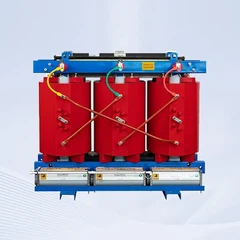
The color of your transformer's insulation can be an informative insight into its overall health. Heat is one of the most common things that breaks a transformer down. When transformers have been running hot for a significant amount of time, it will affect the color of the insulation, making it much darker than it was when the transformer was new. You can evaluate your transformer's insulation color by looking at the outside of the windings near the top, as well as the inner sections. Because hot air rises, the top of the coils will look more discolored than the bottom. If the contrast between the bottom and the top of the coils is significant, that is a sign that your transformer has been dealing with excess heat for a good amount of time.

4. Signs of a Surge
A surge might cause obvious damage to your transformer, but it could also leave behind more subtle damage that could lead to trouble down the line. If the coils of your transformer have changed position-like a shift or a rotation on the glastic blocks or pressing plates-your unit has taken a surge, and should be evaluated by a transformer professional.
If your transformer is exhibiting any of these warning signs, don't wait. The transformer experts at GNEE can replace or repair your transformer, no matter who the original manufacturer was. Give us a call and we can start the conversation about getting you a transformer that will last for years to come.
Product Parameters
| Rated Capacity (KVA) |
Junction group labe |
Voltage combination(KV) | No-load current (%) |
Load loss (W) |
No-load loss (W) |
Short circuit impedance (%) |
||
| (H.V.) | High voltage tap range(%) |
(L.V.) | ||||||
| 30 | Dyn11 YynQ |
10 6.3 6 |
±5 ±2×2.5% or -1 ×2.5% +3 |
0.4 | 2.00 | 710 | 150 | 4.0 |
| 50 | 2.00 | 1000 | 215 | |||||
| 80 | 1.50 | 1380 | 295 | |||||
| 100 | 1.50 | 1570 | 320 | |||||
| 125 | 1.30 | 1850 | 375 | |||||
| 160 | 1.30 | 2130 | 430 | |||||
| 200 | 1.10 | 2530 | 495 | |||||
| 250 | 1.10 | 2760 | 575 | |||||
| 315 | 1.00 | 3470 | 705 | |||||
| 400 | 1.00 | 3990 | 785 | |||||
| 500 | 1.00 | 4880 | 930 | |||||
| 630 | 0.85 | 5880 | 1070 | |||||
| 630 | 0.85 | 5960 | 1040 | 6.0 | ||||
| 800 | 0.85 | 6960 | 1210 | |||||
| 100C | 0.85 | 8130 | 1410 | |||||
| 1250 | 0.85 | 9690 | 1670 | |||||
| 1600 | 0.85 | 11730 | 1960 | |||||
| 2000 | 0.70 | 14450 | 2440 | |||||
| 2500 | 0.70 | 17170 | 2880 | |||||
Send Inquiry