


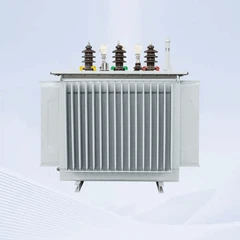





400 KVA vs 315 KVA Oil Filled Distribution Transformer: Community Power Supply Selection
Jan 29, 2026
Leave a message
Planning the electrical backbone for a new community, residential complex, or township development? Selecting the right oil filled distribution transformer capacity is a critical decision that impacts reliability, scalability, and operational costs for decades.
As a specialized manufacturer of distribution transformers in China, GNEE has extensive experience in supplying robust and efficient units for community power projects across the globe.
This guide provides a detailed comparison between a 400 KVA oil filled distribution transformer and a 315 KVA oil filled distribution transformer to help engineers, developers, and utilities make the optimal choice for sustainable community power supply.
The Core of Community Power: Distribution Transformer Fundamentals
An oil filled distribution transformer is the final step-down link in the power network, delivering safe, usable voltage to end-users. Its KVA rating must be carefully matched to the community's total connected load, diversity factor, and future growth projections.
- 315 KVA Transformer: A robust standard for medium-density housing or smaller communities.
- 400 KVA Transformer: Provides significantly greater capacity for high-density developments, commercial zones, or communities planning for electrification (e.g., EV charging stations).
Choosing the wrong capacity can lead to frequent overloads, voltage drops, and premature failure, or conversely, to wasted capital and inefficient low-load operation.
Load Capacity & Community Scaling: The 85 KVA Difference
The 85 KVA difference between these models translates directly into how many households and amenities can be reliably served.
- Typical Household Load: Assuming an average diversified demand of 3-5 KVA per household.
- 315 KVA Capacity: Can comfortably serve approximately 60-100 households, plus basic common area loads (street lighting, water pumps).
- 400 KVA Capacity: Can reliably support 80-130 households, with ample allowance for community centers, small commercial shops, and future load additions like electric vehicle (EV) charging clusters.
For growing communities, the 400 KVA model offers vital future-proofing, preventing costly transformer replacements within 5-10 years.
Key Technical & Economic Comparison Table
| Parameter | 315 KVA Oil Filled Distribution Transformer | 400 KVA Oil Filled Distribution Transformer |
|---|---|---|
| Rated Capacity | 315 KVA | 400 KVA |
| Rated Voltage (Typical) | 11/0.433 kV or 22/0.433 kV | 11/0.433 kV or 22/0.433 kV |
| Full Load Current (LV Side) | ~420 Amps | ~533 Amps |
| No-Load Loss (Typical, P<sub>0</sub>) | Lower (e.g., 600-800W) | Slightly Higher (e.g., 800-1000W) |
| Load Loss at 75°C (Typical, P<sub>k</sub>) | Lower | Higher |
| Optimal Operational Load Range | 160-240 KVA (50-75%) | 200-300 KVA (50-75%) |
| Initial Investment Cost | Lower Capital Cost | Higher (due to more materials) |
| Long-Term Cost per KVA | May be higher if overloaded and replaced early. | Often lower due to better-loaded efficiency and longevity. |
| Ideal Application | Established, stable communities with predictable, low-growth load. | New developments, high-density housing, communities with planned commercial areas or EV infrastructure. |
Efficiency, Losses, and Total Cost of Ownership (TCO)
For a community power supply, lifetime costs are paramount. Transformers operate 24/7.
- No-Load Losses: The 400 KVA transformer has higher fixed core losses. If the community load consistently remains below 200 KVA, the 315 KVA unit may be more efficient.
- Load Losses: At higher community loads (e.g., evening peaks), the larger 400 KVA transformer operating at a lower percentage of its rating can have lower variable copper losses, improving overall system efficiency.
- TCO Analysis: The slightly higher purchase price of a 400 KVA oil filled transformer is often justified by avoiding an early upgrade, reducing peak-time losses, and supporting community growth without power quality issues. Learn more about transformer efficiency standards.
Community-Specific Considerations for Selection
Beyond raw numbers, consider these factors:
- Load Diversity: Residential loads have high diversity (not all appliances run simultaneously). Professional load forecasting is essential.
- Future-Proofing: Will the community add a clubhouse, swimming pool filtration, or EV charging stations? The 400 KVA model provides essential headroom.
- Grid Strength: In areas with weak grid infrastructure, a larger transformer can better handle voltage regulation.
Why Partner with GNEE for Your Community Project?
GNEE builds reliability into every distribution transformer.
- Custom Design: We can tailor impedance, loss levels (e.g., Si11, SBH15 standards), and LV bushing arrangements to your specific grid requirements.
- Quality Assurance: Full routine and type tests, including heat-run and noise level tests, ensure compliance and long service life.
- Project Support: From initial load calculation to commissioning documentation, we support utility and contractor partners.
Conclusion: Powering Communities with Confidence
The choice between a 315 KVA and a 400 KVA oil filled distribution transformer hinges on a careful balance of current demand, confirmed future plans, and total lifecycle cost. For most new and expanding developments, the scalability and safety margin of the 400 KVA oil filled distribution transformer make it the prudent, long-term investment for a reliable community power supply.
Ready to design a resilient power infrastructure for your community?
Send Inquiry