







Ester Oil vs Mineral Oil Transformer Insulation: A Practical Comparison
Jan 29, 2026
Leave a message
Insulation Medium Basics: Ester Oil vs Mineral Oil
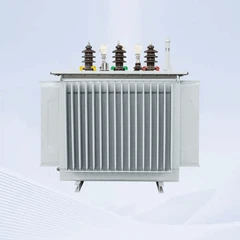
The insulation medium inside a liquid-filled transformer performs two duties at the same time: it insulates the windings from each other and from earth, and it carries heat away from the windings to the tank wall. Mineral oil, refined from petroleum, has been the standard medium for more than a century and remains the most widely used liquid insulation. Ester liquids, either natural esters derived from vegetable oils or synthetic esters, are a newer family designed for higher fire safety and better environmental behaviour. Both media are used in transformers built to IEC 60076, but they impose different limits on operating temperature, moisture content, and maintenance, which is why the choice of medium affects the whole life of the equipment.
Thermal and Dielectric Performance Differences
Mineral oil has a slightly higher thermal conductivity than ester liquids, so it removes heat from the windings a little more efficiently in the same tank geometry. Ester liquids compensate with a higher permissible operating temperature: a natural ester can normally be operated at a top-oil temperature of 105 C or above, depending on the design and the standard applied, whereas mineral oil is conventionally limited to a lower top-oil temperature to control ageing. On the dielectric side, both media can be processed to a breakdown voltage well above the levels required by IEC 60156 and IEC 60076. The decisive difference is moisture tolerance: ester liquids can absorb substantially more water before their dielectric strength degrades, which makes them more forgiving in humid climates and reduces the risk of insulation failure caused by moisture ingress.
Safety and Environmental Considerations
Fire safety is the main reason buyers choose ester-filled transformers in sensitive locations. Natural and synthetic esters have a flash point above 300 C and are classified as less flammable, whereas mineral oil has a flash point of around 160 C and is combustible. In an indoor installation, an ester-filled transformer can often be installed without oil containment or fire suppression systems that would be mandatory for mineral oil, saving space and cost. On the environmental side, natural esters are biodegradable and non-toxic, so a leak does not contaminate soil or groundwater in the same way as a mineral oil spill. For these reasons ester liquids are frequently specified for buildings, metro systems, offshore platforms, and sites near water bodies. The trade-off is a higher initial cost of the liquid itself and, for some designs, a need for slightly different maintenance procedures.
Ageing Behaviour and Maintenance Impact
Ester liquids oxidise more slowly than mineral oil and are less prone to sludge formation, which helps to keep the cooling channels clean and can extend the intervals between oil treatment. In practice the maintenance programme must still include periodic sampling and testing, because the liquid absorbs moisture and must be kept within the limits of the applicable standard. The table below summarises the typical differences in testing frequency and lifecycle behaviour between the two media.
| Aspect | Mineral Oil | Ester Liquid |
|---|---|---|
| Flash point | Approximately 160 C | Above 300 C |
| Biodegradability | Low | High for natural esters |
| Moisture tolerance | Low; water reduces dielectric strength quickly | High; absorbs more water before breakdown |
| Oxidation stability | Moderate; sludge can form over time | Better resistance to oxidation |
| Recommended oil testing | Annually or per site practice | Every two to three years when well sealed |
| Initial cost | Lower | Higher |
How the Medium Affects Application Choice
The application decides which medium is appropriate. Where the transformer sits indoors, close to people, or in an environmentally sensitive area, ester filling removes most of the fire and pollution risk, which is why ester units are common in commercial buildings, hospitals, schools, and marine environments. Where the transformer is installed outdoors in a well-ventilated substation with an oil pit and fire protection, mineral oil remains an economical and proven solution with a very large installed base and widely available servicing expertise. It is also worth noting that retrofilling an existing mineral-oil transformer with an ester liquid is possible in many cases after a careful assessment, because the two liquids are miscible and the gasket materials must be checked for compatibility.
FAQ
Q: Is ester oil the same as transformer oil?
A: No. Conventional transformer oil is mineral oil refined from crude petroleum. Ester liquids are a different class: natural esters come from vegetable feedstocks and synthetic esters are manufactured chemicals. They have different flash points, moisture behaviour, and ageing characteristics, and they are covered by their own standards such as IEC 61099 for synthetic esters and IEC 62770 for natural esters.
Q: Can an ester-filled transformer be installed indoors without a fire rating?
A: Ester liquids have a flash point above 300 C and are classified as less flammable, so in most building codes they allow indoor installation with fewer fire-protection measures than mineral oil. The local regulations and the transformer standard still govern the final requirements.
Q: Does ester liquid reduce the transformer efficiency?
A: The insulation medium has no direct effect on the no-load loss of the core. Load loss can differ slightly because the cooling performance of the liquid affects the winding temperature and therefore the resistance, but the efficiency class of the transformer is determined by the core and winding design rather than by the liquid itself.
Q: Why is moisture tolerance important in humid climates?
A: Water entering the tank reduces the dielectric strength of the insulation system and can cause failure. Because ester liquids can hold much more water before the breakdown voltage falls, they are more forgiving when the transformer breathes humid air, which is a real advantage in tropical and coastal installations.
Q: Can existing mineral-oil transformers be converted to ester?
A: Retrofilling is possible when the design review confirms that gaskets, paint, and accessories are compatible with the ester liquid. The transformer must be drained, flushed, and refilled with the ester, followed by appropriate testing. The exercise is usually justified by improved fire safety or environmental compliance.
Q: Which standards apply to ester liquids?
A: The main standards are IEC 61099 for synthetic ester liquids and IEC 62770 for natural esters, together with the relevant parts of IEC 60076 for the transformer itself. Testing of the liquid follows IEC 60156 for breakdown voltage and related IEC methods for other properties.
Send Inquiry