

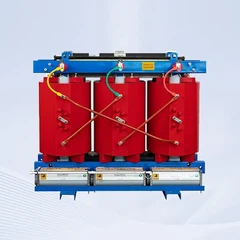




500kVA Dry Type Transformer: A Complete Cost Analysis of Purchase vs. Long-Term Operation
Jan 27, 2026
Leave a message
When evaluating industrial electrical equipment, the initial purchase price is just one part of the financial picture. A truly strategic decision requires a deep dive into the total cost of ownership (TCO).
This analysis is crucial for a critical component like a 500kVA dry type transformer. Understanding the balance between upfront investment and long-term operational expenses is key to maximizing your return on investment and ensuring reliable, efficient power distribution for years to come.
Who We Are: Your Trusted Transformer Manufacturer
At GNEE, we are a premier manufacturer specializing in high-performance, reliable dry-type transformers. With years of engineering expertise and a commitment to quality, we empower businesses worldwide with safe, efficient, and durable power solutions. We don't just sell transformers; we provide long-term value partnerships, helping you make informed decisions based on comprehensive cost-benefit analyses, not just price tags.
Breaking Down the Initial Purchase Cost of a 500kVA Transformer
The upfront cost of a 500kVA dry type transformer encompasses several factors.
Key drivers include the core and winding materials (typically copper or aluminum), the insulation class (e.g., H-class for higher temperature tolerance), and the overall design complexity for specific applications like harmonic mitigation or high inrush currents.
Brand reputation, certifications (like UL, CE), and included features such as temperature control systems (PT100 sensors) and protective enclosures (IP rating) also significantly influence the price.
While opting for a lower-priced unit may seem attractive initially, it often involves compromises in materials, efficiency, or durability that can lead to higher costs later.
The Hidden Long-Term Operational Costs You Must Consider
This is where the true financial impact is revealed. Long-term costs primarily revolve around energy consumption and maintenance. The transformer's no-load loss and load loss (determined by its efficiency rating) translate directly into annual electricity bills-a cost that compounds over a 20-30 year lifespan.
A less efficient unit can waste tens of thousands of dollars in energy. Furthermore, dry-type transformers require periodic maintenance: cleaning, checking connections, and verifying cooling systems.
A robustly built transformer from a quality manufacturer like GNEE will have lower maintenance needs and higher reliability, minimizing downtime-a critical, often hidden, cost for any operation.
Efficiency Ratings: The Key to Lifetime Savings
The efficiency rating (often adhering to standards like DOE 2016 or IEC 60076) is the single most important factor for operational cost. A high-efficiency 500kVA dry type transformer may have a slightly higher purchase price but reduces core and winding losses.
These savings in energy costs typically pay back the price premium within a few years, after which you enjoy pure cost savings. Always calculate the payback period based on your local electricity rates and expected operating load.
Making the Smart Choice: Total Cost of Ownership Analysis
The wisest investment decision is based on Total Cost of Ownership (TCO). TCO = Purchase Price + (Annual Energy Cost × Lifetime) + Estimated Maintenance & Downtime Costs. When you perform this calculation, a high-quality, high-efficiency transformer from a reliable manufacturer consistently proves more economical. It ensures not only lower lifetime costs but also enhanced safety, reduced risk of failure, and better compatibility with modern, sensitive electrical loads.
Why GNEE is Your Optimal Partner for Value
Choosing GNEE means investing in a transformer engineered for low TCO. We use premium materials, advanced design techniques, and rigorous testing to optimize efficiency and durability. Our experts provide transparent data on losses and efficiency, helping you model accurate lifetime costs.
We support you from specification to installation and beyond, ensuring you get a solution that delivers reliability and savings throughout its entire service life.
Conclusion: Invest in Long-Term Value with the Right 500kVA Dry Type Transformer
In conclusion, a holistic view that prioritizes long-term operational efficiency over the initial ticket price is essential for your bottom line. The right 500kVA dry type transformer is an investment in decades of stable, cost-effective power. Partner with a manufacturer who understands this balance.
Contact GNEE today for a detailed cost-benefit analysis and a transformer quote tailored to minimize your total cost of ownership.
GNEE 500kVA Dry Type Transformer: Key Technical Parameters
| Parameter | Specification | Notes |
|---|---|---|
| Rated Power | 500 kVA | Standard capacity |
| Primary Voltage | Up to 35 kV (e.g., 11kV, 33kV) | Customizable to requirement |
| Secondary Voltage | 400V, 480V, etc. | Standard LV outputs |
| Frequency | 50/60 Hz | |
| Insulation Class | H-Class (180°C) | Standard for high thermal endurance |
| Winding Material | Copper (Standard) / Aluminum | Copper recommended for higher efficiency |
| Protection Degree | IP20 (Indoor) / IP23 (Weather-protected) | Common enclosure standards |
| Temperature Rise | 80K / 115K / 150K | Depending on insulation class |
| Efficiency Level | Compliant with DOE 2016, IEC 60076-20 | High-efficiency designs available |
| Cooling Method | AN/AF (Air Natural/Air Forced) | |
| Standards | IEC, IEEE, ANSI, GB, CE | Certified for global markets |
| Optional Features | Temperature control (PT100), Fan kits, Protective enclosure, Delta/Wye configurations |
Send Inquiry