









500kVA Dry Type Transformer vs. 630kVA Model: Which Saves More Energy for Industrial Parks?
Jan 27, 2026
Leave a message
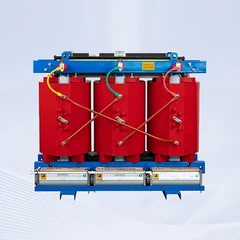
Are you planning the electrical infrastructure for an industrial park and debating between a 500kVA dry type transformer and a 630kVA model for optimal energy savings? This critical decision impacts your operational costs for decades.
As GNEE, a premier dry type transformer manufacturer with over 18 years of specialization in industrial power solutions, we guide major parks through this exact technical and economic analysis.
This article will compare both models on efficiency, load profile suitability, and total cost of ownership to determine which truly saves more energy for your park's unique demands.
Choosing the right transformer size is not just about meeting peak demand; it's about optimizing efficiency across fluctuating loads. An oversized or undersized unit can silently drain energy and capital.

Core Efficiency Comparison: 500kVA vs 630kVA Dry Type Transformer
The fundamental question of energy savings starts with efficiency curves. Transformers operate at peak efficiency at a specific load range, typically between 35% and 85% of their rated capacity.
- The 500kVA Transformer: If your park's typical operational load is consistently between 175 kVA (35%) and 425 kVA (85%), a 500kVA unit will run in its highest efficiency zone. Operating here minimizes core and copper losses, saving significant energy.
- The 630kVA Transformer: If loaded to the same 425 kVA demand, this larger model operates at only about 67% load, still within a good efficiency range. However, its no-load losses (core losses) are inherently higher due to its larger core. If the park often runs at lower loads (e.g., at night or during low production), these constant no-load losses make the 630kVA model less efficient.
Key Takeaway: The more efficiently sized transformer for your average load, not just your peak load, will save more energy. For accurate assessment, review our transformer technical data sheets with detailed loss tables.
Analyzing Industrial Park Load Profiles for Optimal Sizing
An industrial park's load is dynamic. Sizing must account for:
- Base Load: Constant consumption from security, lighting, and essential systems.
- Variable Process Load: Fluctuating demand from manufacturing tenants.
- Peak Demand & Future Expansion: Short-term spikes and planned growth.
Scenario Analysis:
- For a Park with Stable ~400kVA Demand: A 500kVA dry type transformer (80% load) is the energy-saving champion, operating near its efficiency sweet spot.
- For a Park with Peaks to 550kVA but Average of 350kVA: Here, the 500kVA model would be overloaded during peaks, causing excessive losses and risk. The 630kVA model is the necessary choice, but to maximize savings, load management strategies become critical.
- Future-Proofing: If park expansion within 5 years will push demand above 500kVA, the 630kVA transformer may be more economical long-term, avoiding an early replacement.
Total Cost of Ownership (TCO): Beyond the Purchase Price
True savings are measured in TCO: Purchase Cost + Installation + Lifetime Energy Losses + Maintenance.
| Cost Factor | 500kVA Dry Type Transformer | 630kVA Dry Type Transformer | Notes |
|---|---|---|---|
| Initial Purchase Price | Lower | Higher (~15-25% more) | Lower material cost. |
| No-Load Losses (Core Losses) | Lower | Higher | Fixed, constant loss. The 630kVA model incurs higher daily energy waste. |
| Load Losses (Copper Losses) | Depends on Load | Depends on Load | Lower at same load if 630kVA is underloaded. |
| Lifetime Energy Cost | Potentially Much Lower | Higher if significantly underloaded | Calculate with local electricity rates over 20+ years. |
| Suitability for Future Load | Limited | Superior | Avoids costly premature upgrade. |
The Energy Cost Calculator: Over 20 years, even a small difference in efficiency can translate to tens of thousands of dollars. An oversized 630kVA unit with high no-load losses might never recoup its higher upfront cost through marginal load loss savings.
Technical Specifications and Compliance for Industrial Parks
Both models from a quality manufacturer like GNEE are built for industrial duty, but specifications differ.
| Parameter | Typical 500kVA Model | Typical 630kVA Model |
|---|---|---|
| Rated Power | 500 kVA | 630 kVA |
| Noise Level | ≤ 65 dB(A) | ≤ 67 dB(A) |
| Impedance Voltage (Uk%) | ~4-6% | ~4-6% |
| Insulation Class | Class F (155°C) | Class F (155°C) |
| Protection Degree (IP) | IP20 (Indoor) or IP23 | IP20 (Indoor) or IP23 |
| Standards | IEC, IEEE, ANSI, ISO | IEC, IEEE, ANSI, ISO |
Choosing a supplier like GNEE ensures both options meet the highest standards, and we can provide custom enclosures (e.g., IP23 for outdoor use) or special low-noise designs.
Conclusion: Maximize Efficiency with the Correctly Sized Transformer
The battle between a 500kVA and a 630kVA dry type transformer for energy savings in industrial parks is won by precise load analysis. The most energy-efficient choice is the transformer whose typical operating load falls within its 35-85% capacity range.
For stable loads below 425kVA, the 500kVA model typically offers lower lifetime costs and superior energy efficiency. For loads with higher peaks or imminent growth, the 630kVA transformer is the necessary, strategically future-proof investment.
Let GNEE, your expert partner in industrial power, help you make this vital calculation. Contact GNEE today for a detailed load analysis and a tailored quote on the most energy-efficient dry type transformer for your industrial park.
Send Inquiry