







Types of Dry-Type Transformers: Cast-Resin, VPI and Loss Data
Nov 17, 2025
Leave a message
What Counts as a Dry-Type Transformer
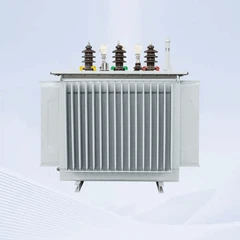
A dry-type transformer is cooled by air and insulated by solid materials rather than by transformer oil. The magnetic circuit is still laminated silicon steel and the conductors are still copper or aluminium, but the insulation system and the heat path change completely. There is no tank, no oil, no breather and no oil containment pit, so a dry-type unit suits indoor installation, basement rooms, tunnels, ships and any location where a liquid spill or a burning oil pool would be unacceptable.
The trade-off is a larger core and winding cross-section for the same rating, a wider physical footprint and a lower short-circuit withstand capability than an equivalent liquid-immersed transformer. Selection therefore turns on load profile, ambient ventilation and the fault level available at the busbar.
Cast-Resin and VPI: Two Dominant Constructions
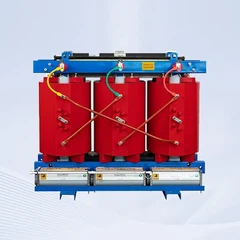
The cast-resin family encapsulates the high-voltage winding in epoxy resin cast under vacuum, which gives a rigid, moisture-resistant body with high mechanical strength, low partial discharge and good performance in damp or chemically aggressive rooms. The temperature class of the resin, B (130 C), F (155 C) or H (180 C), fixes the permissible winding temperature rise and therefore the load the unit can carry continuously.
The VPI family winds the coil first and then vacuum-pressure impregnates it with resin, leaving a thinner insulation wall than a cast body. VPI units are lighter and cheaper, respond well to cyclic load, and are easier to repair, but the open winding structure needs a cleaner, drier environment and a well-designed air circuit to keep partial discharge low.
Loss Data for 6 kV to 10 kV Class Units
Representative values for three-phase epoxy-resin dry-type units with high voltage at 6 kV, 6.3 kV, 6.6 kV, 10 kV, 10.5 kV or 11 kV, low voltage 0.4 kV and Dyn11 or Yyn0 connection. Load losses are given at the three insulation temperature references.
| Capacity (kVA) | No-load loss (W) | Load loss 130 C / 155 C / 180 C (W) | No-load current (%) | Impedance (%) |
|---|---|---|---|---|
| 30 | 190 | 670 / 710 / 760 | 2.0 | 4 |
| 100 | 400 | 1480 / 1570 / 1690 | 1.5 | 6 |
| 315 | 880 | 3270 / 3470 / 3730 | 1.0 | 6 |
| 630 | 1340 | 5530 / 5880 / 6290 | 0.85 | 6 |
| 1250 | 2090 | 9100 / 9690 / 10300 | 0.85 | 6 |
| 2000 | 3050 | 13600 / 14400 / 15500 | 0.7 | 6 |
| 2500 | 3600 | 16100 / 17100 / 18400 | 0.7 | 6 |
The spread between the three load loss columns is not a manufacturing tolerance; it is the temperature at which the resistance is referred. A unit specified in class F at 155 C legitimately shows a higher loss figure than the same hardware quoted in class B, and comparing the two numbers without the class is meaningless. Impedance rises from 4 percent on the small ratings to 6 percent on the larger ones, which also raises the downstream voltage drop under load and must be checked against the fault level.
Standards and Test Requirements
Dry-type transformers are specified to IEC 60076-11, with general requirements from IEC 60076-1 and insulation thermal classes defined by IEC 60085. North American projects refer to IEEE C57.12.01 for general requirements for dry-type distribution and power transformers, and Chinese projects combine GB 1094.1 with GB/T 1094.11 for dry-type units. Type tests normally include lightning impulse, partial discharge, temperature rise and short-circuit withstand; routine tests cover winding resistance, ratio, impedance, no-load loss and load loss, applied voltage and induced voltage.
Partial discharge is the single most useful acceptance indicator for cast-resin hardware, because an internal void will grow under repeated thermal cycling long before it shows up as a loss change. Buyers should require the test method and the limit to be stated in the offer rather than inferred from a catalogue.
Matching the Family to the Application
Heavy load centres, commercial buildings, factories, shipyards and locations with strict fire protection requirements are the classic dry-type cases. Cast-resin is preferred where humidity, salt or chemical attack is present and maintenance access is difficult. VPI is preferred for economical indoor distribution boards with stable load and clean air. Where ambient temperature is high, ventilation is poor, or the load includes significant harmonic content, the unit must be de-rated and forced air cooling considered.
Frequently Asked Questions
Q: Can a dry-type transformer be installed outdoors?
A: Yes, with an enclosure rated for the site conditions. Without a weatherproof enclosure the cast-resin body tolerates damp air but the terminals, fans and control wiring do not.
Q: Which insulation class should be ordered, B, F or H?
A: Class F (155 C) is the usual industrial default. Class H (180 C) is chosen where high ambient temperature or cyclic overload raises the winding temperature; class B is limited to lightly loaded, well-ventilated rooms.
Q: Why is the impedance 4 percent on 30 kVA but 6 percent on 2500 kVA?
A: Small coils naturally have lower leakage reactance. Impedance must still be high enough to limit secondary fault current, which is why the larger ratings are built at 6 percent.
Q: Do dry-type units need periodic oil tests?
A: No oil means no oil tests, but the windings should be cleaned, the fans checked and insulation resistance measured at planned intervals.
Q: What is the available high-voltage range?
A: The standard family covers 6 kV, 6.3 kV, 6.6 kV, 10 kV, 10.5 kV and 11 kV, with a 20 kV to 24 kV class available from 50 kVA to 2500 kVA.
Send Inquiry