







Dry Type Transformer for Guide
Nov 17, 2025
Leave a message
In application places with voltage levels of 35k V and below that go deep into load centers or have special requirements for fire protection, flame-retardant and maintenance-free dry-type transformers have become the first choice for users.
If you need to purchase dry-type transformers, you can contact HENAN GNEE ELECTRIC CO., LTD.. Daelim has more than 15 years of experience in transformer production and sales. Can provide the most professional assistance for your transformer procurement project.

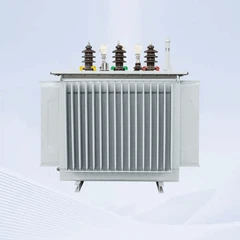
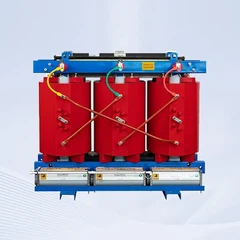
10KV Class Three Phase Epoxy-resin Dry-type Transformer
Get A Quote Now
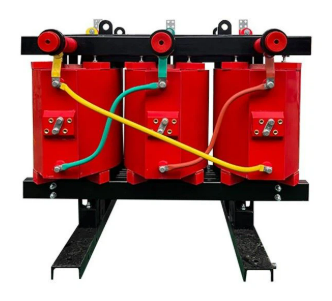
20KV Class Three Phase Epoxy-resin Dry-type Transformer
Get A Quote Now

35KV Class Three Phase Epoxy-resin Dry-type Transformer
Get A Quote Now
What is Dry Type Transformer?
A dry type transformer, also known as cast resin type transformer is solid. Meaning it doesn't have any rotating parts.
A dry type transformer is an electrical device that converts voltage without using any liquid insulation, relying instead on air or gas and solid insulating materials like epoxy resin for cooling and insulation. These transformers are favored for their safety, environmental benefits, and suitability for indoor or sensitive locations due to their lack of flammable oil.
It can be divided into dry-type transformers with encapsulated windings, that is, dry-type transformers with one or more windings encapsulated with solid insulation;
Dry-type transformers with non-encapsulated windings, which means no windings are encapsulated with solid insulation Of dry-type transformers.
Because dry-type transformers have the characteristics of simple structure, convenient maintenance, long life, high reliability, high flame retardancy, etc.
As an emerging power distribution equipment in recent years, dry-type transformers have been widely utilized in power transmission and distribution systems in various locations such as factory workshops, high-rise buildings, commercial centers, airports, docks, subways, and oil platforms. They can also be integrated with switchgear to form compact substation units.
What is a dry type transformer used for?
Dry transformers are typically used in indoor applications where there is no risk of the unit being exposed to water or other liquids. However, they are also used in locations where there is a high risk of fire, such as in chemical plants or oil refineries.
Can you overload a dry type transformer?
According to ANSI standards, these transformers can sustain 200% of their nameplate load for a duration of one-half hour, 150% load for one hour, and 125% load for four hours, as long as a constant 50% load precedes and follows the overload.
What is The Efficiency of Dry Type Transformer?
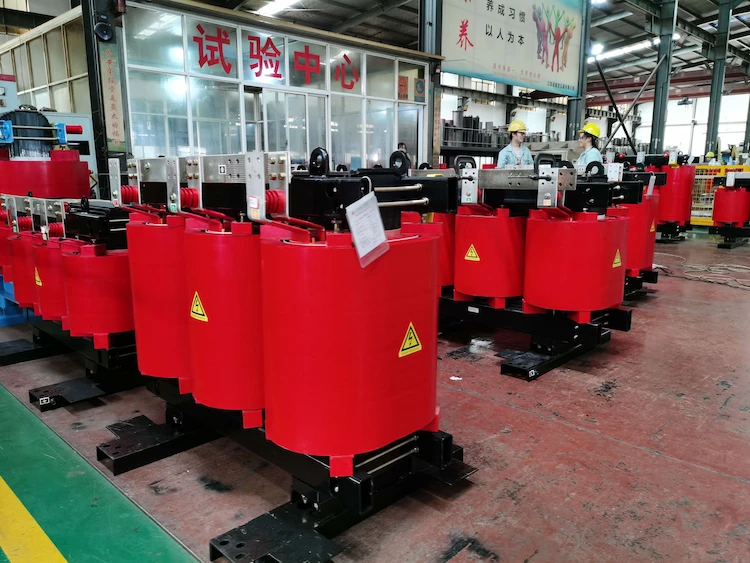
Dry type transformers in dalim factory
The main advantages of dry-type transformers are as follows:
- High working voltage, large capacity, high insulation strength, strong short-circuit resistance, environmental protection, easy recycling, and maintenance-free;
- Good fire and flame resistance, low loss, excellent heat cycle resistance and heat shock resistance, no toxic gas, flame retardant, and self-extinguishing;
- Low operating noise, low loss, high efficiency, moisture resistance, and operation in high humidity environments;
- Small size, lightweight, convenient installation and debugging, and can be installed in the center of the load without special foundation;
- There is no need for separate transformer and hanging core maintenance, saving land;
- Automatic temperature monitoring and protection can be carried out. Due to the above advantages, dry-type transformers have been valued and adopted by developers and design units.
How Does a Dry Type Transformer Work?
1) Since the dry-type transformer does not need cooling oil, its operating temperature must be closely monitored and controlled to ensure the safe and normal operation of the transformer.
The temperature controller is usually used to monitor and display the temperature of its iron core and winding in real-time.
2) During normal operation, the transformer is cooled by natural air to maintain temperature balance.
When the temperature exceeds a certain limit, the fan is started to perform forced air cooling to ensure the continuous and safe operation of the transformer.
3) The temperature controller of the dry-type transformer must have two power supplies, and the two power supplies must not be drawn from the transformer to be protected.
This is to ensure that when one power supply fails, the transformer can be detected or the monitoring data saved, which is convenient Look for the fault.
In addition, the current and voltage of the transformer should be monitored in real-time, and corresponding current and voltage protection devices should be equipped.
When the current or voltage exceeds its limit, the protection device can cut off the power supply and make the transformer out of operation to ensure the safety of the transformer.
What Are The Different Types Of Dry Type Transformers?
In the current world dry-type transformer market, there are two types of cast resin dry type transformers (CRDT) represented by Europe and varnished dry-type transformers (OVD T) represented by the United States.
See more:all kinds of dry type transformer
Impregnated Dry-type Transformer
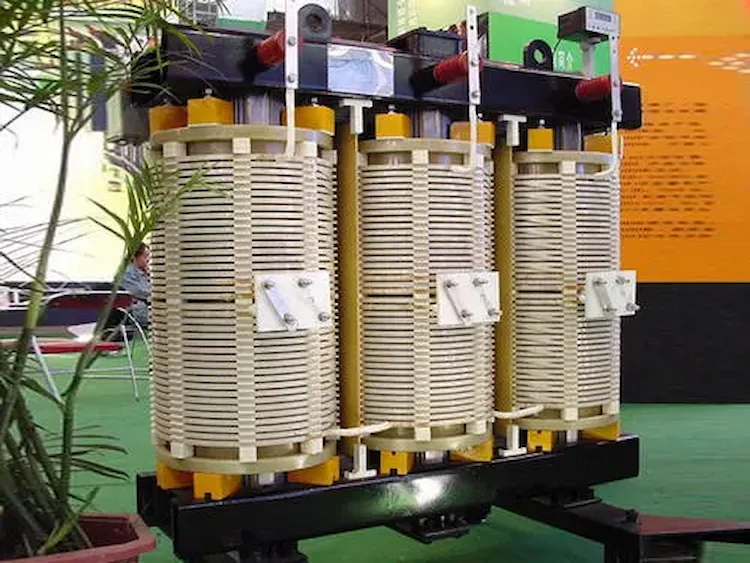
Impregnated Dry-type Transformer
The wire of the impregnated dry-type transformer is covered with glass fiber, and the spacer is formed by hot pressing with corresponding insulating material. It is mostly used in hydropower stations and high-rise buildings with good fire resistance.
Due to the difference of dipping varnish, transformer insulation is divided into B, F, H and C grades.
Main and longitudinal insulation (main insulation is the insulation between windings and windings and between windings and cores. Longitudinal insulation refers to the insulation between different points and parts of transformer windings with different potentials, mainly including winding turns and layers And the insulation performance between the segments.) The air channels are all with air as the insulating medium.
Such dry-type transformers are more affected by the environment than resin-type dry-type transformers, and their appearance and weight are also larger.
Cast Resin Dry Type Transformer

Cast Resin Dry Type Transformer
The current market mainly uses vacuum Cast Resin Dry Type Transformers. The leading products currently representing today's cast resin transformers can be divided into the following three categories.
The first type, referred to as wire-wound cast-type transformer, is the high voltage is the wire-wound breaking cylinder casting type, and the low-voltage is the wire-wound cylinder (or segmented cylinder) casting type; the casting is no filler casting.
The second type, referred to as foil-wound casting transformer, its a high voltage is segmented foil-wound casting type, and low voltage is a copper foil (or aluminum foil) winding type; casting is filled with filler.
The third type, high pressure is the wire-wound segmented cylinder casting type, low pressure is the copper foil (or aluminum foil) winding type; the casting is no filler casting.
What is an Cast Resin Type Transformer?
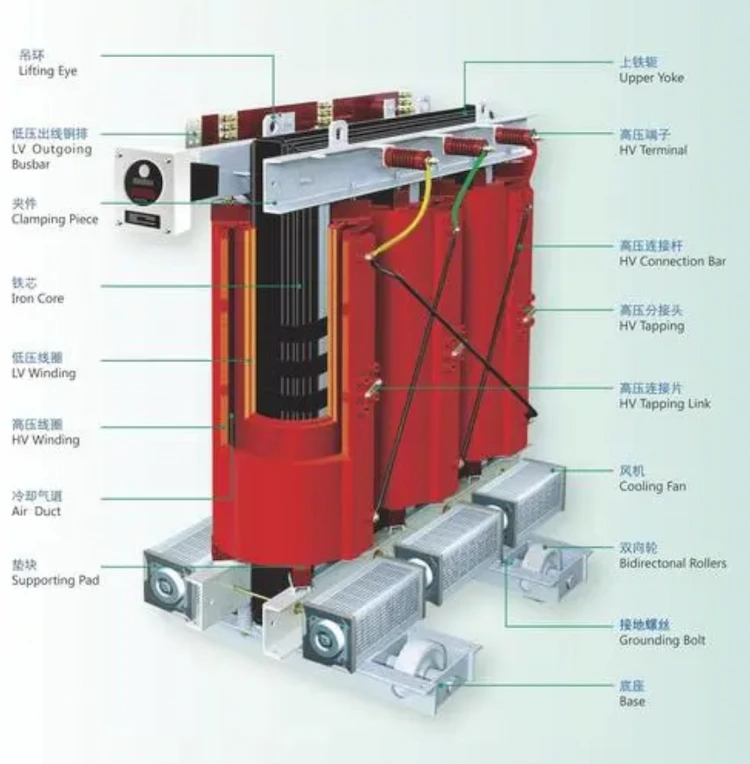
Cast Resin Type Transformer
Epoxy cast resin type transformer (hereinafter referred to as dry-type transformers) are currently the most widely used types of dry-type transformers. They are divided into two types: vacuum casting with filler and vacuum casting without filler.
Both white billet windings are wound with F-class or H-class enameled, glass filament or film-wrapped electromagnetic wire.
During the winding process, the filled windings use an epoxy glass grid as the main filling framework for the inner and outer insulation, interlayer, and section, and the windings without filler use glass fiber cloth, glass fiber mat, or non-woven fabric, which is easy to penetrate Inorganic fiber materials are used as fillers.
After the winding is completed, special vacuum casting equipment is used to mix liquid resin, curing agent, etc., into the winding in a vacuum environment to keep no air gap in the winding after casting.
The casted winding is cured and molded in an oven with a special curing temperature curve, and finally forms an integral thermoset winding with excellent electrical performance and high mechanical strength.
Epoxy cast resin type transformer is mainly used for power distribution equipment with a rated frequency of 50Hz and a voltage level of 10kV.
It is the key equipment for transmission and utilization of electrical energy between the power grid and power users, and important power equipment in various fields of the national economy and national life.
The Cast Resin Type Transformer seals the high-voltage winding conductor in a thermosetting, high-temperature-resistant epoxy resin.
The use of vacuum casting eliminates the air gap inside the high-voltage winding, avoids the occurrence of partial discharge, and also avoids the possibility of external environment and impact on the internal conductor of the winding.
Cast Resin Type Transformer has good electrical properties and mechanical strength. After curing, its breakdown field strength can reach 16~22k V/mm, and its yield strength can reach 130~150MPa.
Therefore, Cast Resin Type Transformer is widely used in power systems with its high reliability and environmental adaptability.
What is the Cast Resin Dry-type Transformer made up of?
Epoxy Cast Resin Dry-type Transformer is mainly composed of electromagnetic materials, copper and aluminum materials, insulating materials and epoxy resin materials.
As a kind of flame-retardant, fireproof and easy to recycle material, epoxy resin has greatly accelerated the development of dry-type transformers.
As a more mature way of pouring windings of dry-type transformers, epoxy resin casting process has been widely used in the development of dry-type transformers.
The casting material used in the epoxy Cast Resin Dry-type Transformer, epoxy resin, is a polymer material with a reactive epoxy group and a molecular weight of hundreds to thousands.
Cast Resin Dry-type Transformer has good electrical and mechanical properties, and good bonding performance. It has an irreplaceable position in the casting of dry-type transformers.
In the manufacturing process of this type of dry type transformer, the manufacturing process of the epoxy Cast Resin Dry-type Transformer and the corresponding process are considered
| Transformers of different capacities and their sound power requirements | ||||||||||
| Capacity (kVA) | 100 | 250 | 500 | 800 | 1000 | 1250 | 1600 | 2000 | 2500 | 4000 |
| Sound power (dBA) | 65 | 67 | 70 | 72 | 72 | 74 | 75 | 77 | 78 | 84 |
What are The Advantages in Using Cast Resin Dry-type Transformer?
Impact resistance
The high-voltage winding of Cast Resin Dry-type Transformer adopts a special segmented cylindrical structure, which is developed on the basis of ordinary segmented cylindrical windings.
The ordinary segmented cylindrical type not only inherits the advantages of cylindrical windings in impact resistance, but also solves the contradiction of the high voltage between cylindrical windings. It is a relatively ideal winding structure, which is often referred to as non-resonant type. Winding structure.
After the winding of the Cast Resin Dry-type Transformer is completed, it is poured with pure resin in a vacuum state without any filler, so that the flowability of the resin does not decrease.
And because the winding is made of wire, the resin can completely penetrate the winding no matter from the axial direction or the radial direction of the winding, and there are no bubbles inside.
After the winding is dried and cured, the solid insulation composed of resin and glass fiber not only has good impact resistance, but also has a small amount of partial discharge.
Contact GNEE and Let GNEE Help Your Power Business
Send Inquiry