







200 kVA Transformer: Types, Specifications, and Buying Guide
Nov 20, 2025
Leave a message
Why the 200 kVA Rating Is So Common
A 200 kVA transformer sits in the middle of the distribution range, large enough to supply a substantial building or a small industrial site but still compact and economical to install and maintain. It is available in several forms: oil-immersed distribution transformers for outdoor use, dry-type transformers for indoor and fire-sensitive locations, pad-mounted units for residential and commercial developments, and isolation transformers for sensitive electronic and medical equipment. Because the same rating appears in so many configurations, the 200 kVA transformer is one of the most frequently specified units in the market, and the choice between configurations is driven mainly by the installation environment and the load characteristics.
Types of 200 kVA Transformers
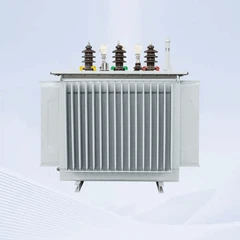
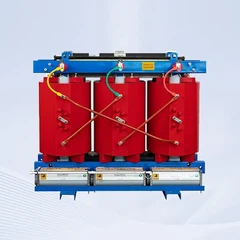
The oil-immersed 200 kVA distribution transformer is the most economical option: the core and windings are cooled and insulated by mineral oil in a sealed or conservator-fitted tank, and the unit is installed outdoors on a plinth or pole. The dry-type 200 kVA transformer uses air, vacuum-impregnated resin, or cast epoxy resin for insulation, which makes it suitable for indoor installations such as commercial buildings, data centres, and hospitals where oil is not acceptable. The pad-mounted 200 kVA transformer is an oil-immersed unit inside a locked, tamper-resistant steel enclosure with cable access from below, commonly seen in residential and commercial developments where the transformer must sit at ground level. The isolation transformer provides galvanic separation between its primary and secondary circuits, which protects sensitive loads and suppresses common-mode noise.
Key Specifications and Typical Values
The specifications of a 200 kVA transformer are defined by its application and its configuration. The table below lists the typical values for a three-phase unit; the exact figures are fixed by the voltage ratio, the vector group, and the efficiency class required by the local regulation.
| Parameter | Typical Value |
|---|---|
| Rated power | 200 kVA |
| Phase | Three-phase, single-phase available |
| Frequency | 50 Hz or 60 Hz |
| Primary voltage | 11 kV, 10 kV, or 20 kV; 480 V for LV isolation duty |
| Secondary voltage | 415 V, 400 V, or 240 V |
| Vector group | Dyn11 or Yyn0 |
| Impedance voltage | 4% |
| Full-load current at 415 V secondary | Approximately 278 A |
| Approximate weight | Dry-type about 1,030 kg; oil-immersed about 1,130 kg |
Standards and Safety Requirements
200 kVA transformers are designed and tested against internationally recognised standards. The IEC 60076 series is the global reference for power transformers, covering general requirements, temperature rise, insulation, and short-circuit withstand, and IEC 60076-11 applies to the dry-type versions. In North America, the IEEE C57 family, in particular IEEE C57.12.00 and C57.12.91, applies, and the ANSI standards govern the ratings and testing in that market. The efficiency of distribution transformers is regulated in many countries, for example through GB 20052 in China and the ecodesign requirements in the European Union, so the declared losses must meet the applicable class. Safety features include temperature monitoring on dry-type units, pressure relief and oil level devices on oil-immersed units, and the fire-rating provisions required by the building code for indoor installations.
Selection and Buying Considerations
Selecting a 200 kVA transformer starts with the installation environment: indoor buildings and fire-sensitive sites point to a dry-type unit, while outdoor sites point to an oil-immersed or pad-mounted unit. Then confirm the voltage ratio, the frequency, and the vector group against the network and the load, and choose the efficiency class required by the local regulation, because the losses affect both the energy bill and the compliance. For the price comparison, request quotations on the same specification and compare the declared losses, the delivery time, the warranty, and the test report, not just the first price. The cost of the transformer is a small part of its lifetime cost; the difference in losses between an efficient and a standard design can exceed the price difference over a 20-year operating life.
FAQ
Q: How many amps can a 200 kVA transformer deliver?
A: At a 415 V three-phase secondary, the full-load current is 200,000 divided by 415 and by the square root of three, which is approximately 278 A. A single-phase 200 kVA unit at 240 V would deliver approximately 833 A.
Q: What is the difference between kVA and kW?
A: kVA is the apparent power, the product of voltage and current, while kW is the real power actually delivered to the load. They are related by the power factor: kW equals kVA multiplied by the power factor. At a power factor of 0.8, a 200 kVA transformer can supply 160 kW of real power at rated current.
Q: How much load can a 200 kVA transformer handle?
A: The rated continuous load is 200 kVA. Short-term overloads are possible for small percentages above rating under controlled conditions, but sustained overloading raises the winding temperature and shortens the insulation life, so the load current should normally stay at or below the rated value.
Q: How much does a 200 kVA transformer cost?
A: The price depends on the type, voltage, and specification: dry-type units cost more than oil-immersed units of the same rating, and pad-mounted and kiosk configurations cost more again because of the enclosure and switchgear. Buyers should compare quotations on the full specification, including losses and delivery terms.
Q: Can a 200 kVA transformer be installed indoors?
A: Yes, if it is a dry-type unit or an ester-filled unit, or if the building provides the fire protection required for mineral oil. In most indoor applications a dry-type transformer is the practical choice because it adds no oil hazard and needs no containment.
Q: What does the vector group Dyn11 mean?
A: It describes the connection of the windings: the high-voltage winding is delta-connected, the low-voltage winding is star-connected, and the 11 indicates the phase displacement of 330 degrees between the corresponding high- and low-voltage line voltages. This arrangement provides an accessible neutral and is standard for 400 V distribution systems.
Send Inquiry