







The Ultimate Guide To 100 kVA Transformer
Nov 18, 2025
Leave a message
100kVA transformers can be overhead transformers, single phase transformers, three phase transformers, distribution transformers, and dry-type transformers.
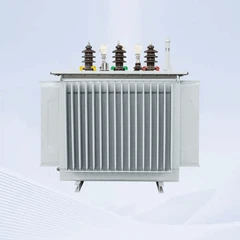
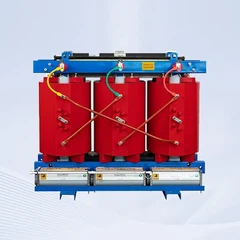
100 kva transformer is one of the most frequent modes that clients will inquire to. In Conso Electrical, the expert team could manufacture 100 kva oil immersed transformer, 100 kva dry type transformer.
What Does 100 kVA Mean?
kVA, or kilovolt-amperes, is a unit used to describe apparent power, which includes both active (real) and reactive power. A 100 kVA transformer has the capacity to deliver up to 100,000 volt-amperes of apparent power to the load.
However, to convert this into actual usable power (in kilowatts), we need to consider the power factor (PF) - a measure of how efficiently the current is being converted into useful work. In most industrial settings, a typical power factor is 0.8. Therefore:
Load Capacity (in kW) = 100 kVA × 0.8 = 80 kW
So, a 100 kVA transformer can support up to 80 kW of real power under typical conditions.
Applications of a 100 kVA Transformer
Transformers with a 100 kVA rating strike a balance between affordability and utility. Here are common scenarios where they're used:
Commercial Buildings: Powering HVAC, elevators, lighting, and office equipment.
Small to Medium Industrial Plants: Operating CNC machines, compressors, or packaging lines.
Agricultural Facilities: Running irrigation pumps and storage systems.
Renewable Energy Integration: Used in solar or wind energy systems for stepping up/down voltages.
100kVA Dry Type Transformer
| Technical Specifications | ||
| Rated Power | 100 kVA | |
| Rating Primary Voltage | 2.4-34.5kV | |
| Secondary Voltage | 480/277V 400/230V 380/220V Customized |
|
| Frequency | 50/60Hz | |
| Vector Group | Dyn11,Yyn0,Dyn5 | |
| Winding Material | Aluminum/Copper | |
| Efficiency | As IEEE,Doe 2016,CAS Std or Customized | |
| Impedance Voltage | Nominal 2% or Customized 1.1-5.75% | |
| Altitude | ≤1,000m or Customized | |
| Enclosure material | 304 Stainless Steel | |
| Total Weight | 500 kg | |
| Outline Dimensions(L×W×H)in. | 850×650×1150(mm) | |
How much load can a 100 kVA transformer hold?
Transforms with kVA ratings can have their maximum full load current carrying capability calculated using this full load current calculator on the LT (415 V side) and HT (11 KV side) sides.
Thus, this type of 100 kVA Distribution Transformer is known as a distribution transformer because it delivers power to users' homes and small businesses.
The transformer's capacity is expressed in kVA. From 10 kVA to 3 kVA, the distribution transformer's rating is available.
The primary function of a distribution transformer is to provide power to the distribution network's final users.
The distribution transformer's low- and high-voltage sides have a distinct current-carrying capacity.
When making a 100 kva distribution transformer's primary and secondary windings, they are always formed in delta and star.
When it comes to secondary side neutrality, this is the primary factor.
Single-phase power on the consumer side requires a phase to neutral voltage of 230 volts, as we've already established.
The secondary side must always be low voltage and star type to maintain neutrality.
Since the beginning of time, the neutral wire has been grounded to keep the voltage at zero.
We need to know the type of distribution transformer to acquire the entire load current capacity.
The 10 kVA, 25 kVA, 63 kVA, and 100 kVA are all examples of low-power 100 kva distribution transformers. On the other hand, 250 kVA medium power distribution transformer More than 600 megawatts and one megavolt-ampere
There are transformers with 2.5 and 5 MVA of power rating.
However, only countries with LT voltages of 230 or 440 volts and ht voltages of 11 kilovolts can use this formula or calculator.
This formula can be used to determine the transformer's maximum load capacity.
The distribution transformer must be balanced as part of the network's power department's load balancing duties.
As a result of this knowledge, the transformer's load balance can be adjusted to keep the load from exceeding the transformer's capacity.
We can only prevent the load transformer from catching fire due to overloading if we know its maximum load.
What is the 3 phase 100 kva transformer?
Step-down transformer from 11 kV to 38 kV, the primary voltage is 11 kV, and the secondary is 38 kV in this 100 kVA 11 kV transformer. On the primary side, the transformer has a no-load tap changer with a 2*2.5 percent no load factor. With sophisticated technology and high-quality materials and components, our 100 KVA Distribution Transformer provides reliable quality and long service life.
It has been years since Daelim has maintained a defect rate record of zero for the 3 phase 100 kva transformers it has supplied. All essential international standards are adhered to in the design of the oil-immersed 3 phase 100 kva transformer.
How much does a 100 kVA transformer weight?
The transformer's core grows in size as the frequency drops. We must keep the frequency and cross-sectional area constant to maintain a steady flow. As a result, decreasing frequency necessitates increasing area to keep the flux constant.
Then, we require less space if the frequency is high. Maintaining a steady flux rate is necessary if you want a stable cycle repetition frequency. As a result, a 25 Hz transformer will be larger than a 100 Hz transformer in dimensions.
Therefore, they will be heavier and more significant than the 100kVA, 100 Hz transformers, smaller and lighter. Other things equal, a faster-rotating machine will be smaller and lighter in weight than a slower-rotating one. The frequency utilized in aircraft is 400 Hz to reduce the weight of the electrical equipment.
The frequency at which we operate the transformer and the amount of power we intend to transfer through it influence the transformer's size.
The relationship between frequency and power is a one-to-one one. Low-frequency transformers are used to move power measured in kilowatts and megawatts (50Hz,60Hz).
We employ high-frequency transformers with frequencies in the kHz or MHz range for low-power applications.
What is the application background of a 100 kva transformer?
A 100 kVA transformer is a small capacity transformer to three phase distribution transformers. Normally, a 100 kva transformer is widely to provide power supply to community as a pole mounted transformer or to a city park for lighting as a pad mounted transformer.
How do I choose a 100 kva transformer?
First of all, it is necessary to clarify the value of power needed or the active power of a 100 kva transformer could supply. For a 100 kva transformer, it could supply 100 kva total power to terminal users. However, it is impossible to use the total power on energy conversion, because some part energy use to keep the voltage stable in AC circuit. In most of countries and areas, the power gird corporation will keep 90% of total power that could actual supply to terminal users. The 90% power is called active power, which the unit is kW. Thus, a 100 kva transformer could supply 90 kW active power to terminal users.
Secondly, a 100 kva designed as various categories to fit the working environment. That is to say, to select a suitable 100 kva transformer, terminal users should know the working environment. For example, the oil immersed transformer widely use in outdoor and the cast resin transformer widely use in fireproof environments.
Thirdly, the budget is also an essential consideration. A oil immersed transformer is a lower material costs than a cast resin dry type transformer, but a cast resin transformer has a lower maintenance costs.
Additionally, a better outside looking will be considered in some circumstance, such as in a luxury residential area or a city park. It has the same function and characteristics between a pole mounted substation and a pad mounted transformer. However, the input and output cable connect to a pad mounted transformer through the underground. It makes the urban landscape more beautiful. And the severe weather will not impact to power supply circuit.
What is the key specification to a 100 kva transformer?
1.The following parameter is the basic information to a 100 kva transformer:
(1) Rated capacity;
(2) Primary and secondary voltage;
(3) Rated frequency;
(4) Insulated material (dry type or oil immersed);
(5) Phase number (single phase or three phase).
2.The following parameter can impact material costs significantly:
(1) Temperature rise;
(2) No loading loss and loading loss;
(3) Winding materials.
3.The impedance and the vector group is essential to keep similar or same if it is necessary to parallel connect distribution transformers.
How many rated current could a distribution transformer supply?
It is important to measure the actual current to a distribution transformer, because it could check if the actual capacity matches to the designed which write on the name place or not.
the following table shows the value of current could be supply by 1 kva in different voltage levels:
|
Phase voltage |
Amps |
Power factor |
Line voltage |
Amps |
|
110 V |
9.0909 A |
1 |
208 V |
2.7757 A |
|
120 V |
8.3333 A |
200 V |
2.8867 A |
|
|
127 V |
7.8740 A |
220 V |
2.6243 A |
|
|
220 V |
4.5454 A |
240 V |
2.4056 A |
|
|
230 V |
4.3478 A |
380 V |
1.5193 A |
|
|
240 V |
4.1666 A |
400 V |
1.4433 A |
|
|
|
|
415 V |
1.3912 A |
|
|
|
|
460 V |
1.2551 A |
For example, a 100 kva transformer could supply 151.93 A under 380 V line voltage and 454.54 A under 220 V phase voltage, if the power factor is 1.
100 kva transformer for sale.
Normally, a 100 kva transformer costs about $1400 to $ 7000. take a 10/0.4 kv three phase copper 100 kva transformer as an example:
1.The 100 kva oil immersed transformer might costs about $1900;
2.The 100 kva cast resin transformer might costs about $2400;
Load Calculation: Single Phase vs Three Phase
Depending on the type of transformer-single-phase or three-phase-the actual current delivered to the load differs:
For a Three-Phase Transformer (assuming 400 V):
Formula:
I = (100,000 VA) / (√3 × 400 V) ≈ 144.3 A
For a Single-Phase Transformer (assuming 240 V):
Formula:
I = (100,000 VA) / 240 V ≈ 416.7 A
This information is crucial when sizing circuit breakers, conductors, and protective devices.
Technical Comparison: 100 kVA Oil vs Dry Type
| Feature | Oil-Filled Transformer | Dry-Type Transformer |
|---|---|---|
| Cooling Mechanism | Mineral oil | Air (natural or forced convection) |
| Indoor Suitability | Limited | Excellent |
| Outdoor Suitability | Excellent | Requires enclosure |
| Maintenance Needs | Moderate (oil testing/filtering) | Low (cleaning and inspection) |
| Lifespan | 25–40 years | 20–30 years |
| Cost | Lower initial + O&M | Higher upfront |
Choosing the Right 100 kVA Transformer
When selecting a 100 kVA transformer, consider:
Load Type: Continuous, fluctuating, or surge-based loads?
Location: Indoor environments favor dry types; outdoor favors oil-filled types.
Budget and Maintenance: Oil-filled units are cost-effective long-term, while dry types offer lower maintenance.
Safety: For fire-sensitive areas, dry-type transformers are preferable.
Frequently Asked Questions (FAQ)
Q1: Can a 100 kVA transformer support a manufacturing unit?
A: Yes, if the total real power requirement of the facility is under 80 kW and it fits the voltage and phase requirements.
Q2: How many air conditioners can a 100 kVA transformer handle?
A: A standard 1.5-ton AC consumes around 1.5 kW. So, 100 kVA (~80 kW usable) can support approximately 50–55 AC units, assuming no other significant load.
Q3: Is it better to oversize or undersize a transformer?
A: Oversizing can handle future expansion but may increase losses at low loads. Undersizing leads to overload and early failure. Always size based on accurate load calculations.
A 100 kVA Filled Transformer guide is a versatile and efficient solution for medium-scale power needs. With a usable real power capacity of around 80 kW, it can support a wide range of commercial, industrial, and agricultural applications. Understanding its technical limits, proper sizing, and application context ensures optimal performance and longevity. Whether you're upgrading a facility or planning a new installation, leveraging the full potential of a 100 kVA transformer-guided by international standards and expert sources-will ensure safety, efficiency, and cost-effectiveness.
Send Inquiry