





Can a Transformer Work Without Oil? Dry-Type vs Oil-Filled
Dec 04, 2025
Leave a message
Comprehensive Analysis of Transformer Types: Applications, Differences, and Selection Criteria for Oil-Immersed and Dry-Type Transformers
As core equipment for voltage conversion and energy transmission in power systems, the design and material selection of transformers directly impact the stability, safety, and applicability of power transmission. Among these factors, "whether insulating oil is used" is one of the key dimensions for classifying transformers.
This article provides a detailed analysis of the core characteristics, application scenarios, key differences, and selection logic for oil-immersed and dry-type transformers, offering professional guidance for power engineering design and equipment selection.
1. What is an Oil-immersed Transformer?
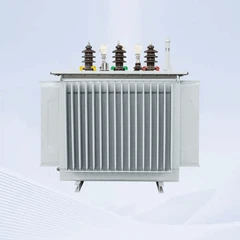
The oil-immersed transformer (also known as an oil-filled transformer) is the most widely used traditional transformer type in power systems. Its core design involves completely immersing the transformer's key components-primary winding, secondary winding, and core-in insulating oil, which serves two critical functions.
Structurally, oil-immersed transformers primarily consist of windings, a core, insulating oil, a tank, and auxiliary components (such as radiators and gas relays). The windings and core, serving as the core of electromagnetic induction, are immersed in specially formulated insulating oil to ensure insulation protection and heat dissipation during operation.
Insulating oil plays three core roles in oil-immersed transformers: First, cooling and heat dissipation-it transfers heat generated by the windings and core during operation to the tank walls or radiators via thermal convection, preventing equipment damage from overheating.
Second, insulation protection-leveraging the oil's superior electrical insulation properties to isolate arcing risks between windings and between windings and the core, ensuring reliable insulation performance.
Third, it ensures stability. High-quality insulating oil possesses excellent chemical stability, enabling long-term stable operation under high-temperature and high-pressure conditions, thereby extending the transformer's service life.
Are there transformers that do not use oil?
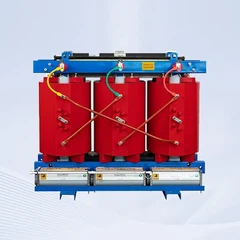
The answer is yes. Besides oil-immersed transformers, dry-type transformers are the most common oil-free variant. Their core feature is the use of solid insulating materials instead of insulating oil, relying on air circulation for cooling. This completely eliminates environmental and safety risks associated with oil leakage.
The core characteristics of dry-type transformers can be summarized as follows:
- Cooling Method: Primarily relies on natural air convection or forced air cooling, eliminating the need for additional oil circulation systems and resulting in a simpler structure;
- Insulation Materials: Utilizes high-performance solid insulating materials such as epoxy resin and mica tape, ensuring stable insulation performance without oil contamination risks;
- Safety Advantages: Completely eliminates hazards from insulating oil leakage or combustion, produces no toxic gases during operation, and offers higher safety.
Due to their environmental and safety benefits, dry-type transformers are particularly suitable for scenarios with strict environmental requirements or limited space, serving as an important complementary type to oil-immersed transformers.
Key Differences Between Oil-Immersed and Dry-Type Transformers
| Comparison Dimension | Oil-Immersed Transformer | Dry-Type Transformer |
|---|---|---|
| Cooling Medium & Method | Insulating Oil (Natural or Forced Oil Circulation) | Air (Natural Convection or Forced Air Cooling) |
| Insulation Material | Insulating Oil + Cellulose (Paper) Insulation | Solid Insulation (e.g., Epoxy Resin, Mica Tape) |
| Heat Dissipation Efficiency | Excellent; can withstand higher and sustained overloads. | Relatively limited; lower overload capacity. |
| Safety Risk | Risk of oil leakage and fire; requires fire protection measures. | No oil leakage or fire hazard; inherently higher safety. |
| Installation Requirements | Requires separate vault/room with fireproof spacing; primarily for outdoor use. | Suitable for indoor installation without special fire protection. |
| Maintenance Cost | Higher; requires regular oil testing (dielectric strength, dissipation factor, etc.). | Lower; no oil-related maintenance; primarily cleaning. |
| Typical Voltage Application | Medium, High, and Extra-High Voltage Systems (e.g., 10kV and above). | Low and Medium Voltage Systems (typically up to 35kV). |
Furthermore, in terms of size and weight, oil-immersed transformers typically feature larger dimensions and heavier weight due to the inclusion of components such as oil tanks and radiators. In contrast, dry-type transformers boast a compact structure and smaller footprint, making them more suitable for space-constrained environments.
4.Common Applications of Oil-Immersed Transformers
With their superior heat dissipation, insulation properties, and high-voltage compatibility, oil-immersed transformers dominate core components of power systems, primarily serving the following applications:
1. Power Plants
Generators in power plants typically output voltages of 10-20kV. Oil-immersed transformers step these up to transmission voltages of 110kV, 220kV, or higher for connection to long-distance transmission lines. These transformers are sized to match generator specifications and must withstand massive transient loads. The efficient heat dissipation of oil-immersed designs ensures stable operation.
2. Substations
At the interface between transmission lines and distribution networks, substations utilize oil-immersed transformers to step down high voltages (e.g., 110kV, 220kV) to medium voltages (e.g., 10kV, 35kV) before distributing power to lower-level distribution systems. Oil-immersed transformers efficiently handle high-load, high-voltage conversion demands, serving as the core voltage regulation equipment in substations.
3. Distribution Networks
Within distribution networks, oil-immersed transformers further step down medium voltage to low voltage levels (e.g., 220V, 380V) suitable for direct user consumption, enabling widespread power supply across urban and rural areas. Their reliable insulation and heat dissipation properties ensure safe and stable power delivery in complex environments.
4. Industrial Facilities
In heavy industrial settings like metallurgy, chemical processing, and machinery manufacturing, production equipment (e.g., electric arc furnaces, large motors) typically requires power at specific voltage levels with significant load fluctuations. Oil-immersed transformers enable precise voltage reduction from high levels to equipment-compatible voltages while withstanding instantaneous heavy loads, meeting the stringent demands of industrial production.
Typical Installation Scenarios for Dry-Type Transformers
The safety, environmental friendliness, and compact design of dry-type transformers make them the preferred choice for specific scenarios, primarily installed in the following environments:
1. Commercial and Residential Buildings
Indoor spaces such as office buildings, shopping malls, and high-rise residences demand stringent fire safety standards while offering limited space. Dry-type transformers can be directly installed within building distribution rooms, eliminating oil leakage risks and requiring no additional fire separation distances, making them ideal for compact building layouts.
2. Healthcare Facilities
Hospitals, clinics, and similar settings demand stringent power reliability and safety while avoiding oil contamination in medical environments. Dry-type transformers operate quietly with zero pollutant emissions, ensuring safe indoor operation and stable power supply for medical equipment.
3. Urban Core Areas and Underground Projects
Scenarios like city CBDs, subways, and underground utility tunnels feature confined spaces with high personnel density and extreme fire/explosion prevention requirements. Dry-type transformers pose no combustion risk and feature compact dimensions, making them suitable for installation in confined underground spaces while preventing oil leakage contamination.
4. Environmentally Sensitive Areas
Natural reserves, drinking water sources, and precision electronics industrial parks demand stringent environmental standards with zero tolerance for oil contamination risks. The oil-free design of dry-type transformers meets these environmental requirements while ensuring reliable power supply.
Key Factors in Selecting Oil-immersed vs. Dry-type Transformers
In power engineering design, selecting transformer types requires comprehensive consideration of technical requirements, environmental constraints, economic costs, and other factors. Core determining factors include:
1. Voltage Level and Capacity Requirements
For medium-to-high voltage (35kV and above) and large capacity (hundreds of kVA and above) applications, oil-immersed transformers are preferred due to their superior heat dissipation and insulation performance suited for high-load demands.
For low voltage (10kV and below) and small capacity (below hundreds of kVA) applications, dry-type transformers adequately meet requirements while offering greater cost efficiency and compactness.
2. Installation Environment Conditions
For outdoor, open-air sites, or standalone equipment rooms, oil-immersed transformers may be selected with accompanying fire prevention and leakage containment measures.
For indoor, underground spaces, densely populated areas, or environmentally sensitive zones, dry-type transformers must be chosen to mitigate safety and environmental risks.
3. Safety and Environmental Requirements
In scenarios with stringent fire safety requirements (e.g., hospitals, subways) or environmental restrictions, dry-type transformers are the sole option.
For outdoor industrial zones, remote areas, or other settings with lower safety constraints, oil-immersed transformers offer better cost-effectiveness.
4. Maintenance Costs and Lifecycle
When operational resources are limited and low maintenance costs are prioritized, dry-type transformers are more advantageous (no oil quality testing or replacement required).
For long-term operation (20+ years) where periodic maintenance is feasible, oil-immersed transformers provide longer service life and lower overall costs.
5. Space and Layout Constraints
In confined spaces with compact layouts (e.g., building distribution rooms), dry-type transformers are the preferred choice.
In scenarios with ample space allowing for dedicated equipment rooms, oil-immersed transformers offer greater installation flexibility.
Core Specifications of Oil-immersed Transformers
The specifications of oil-immersed transformers must be precisely matched to application scenarios. Core technical parameters include:
1. Voltage Ratings
Input Voltage (Primary Voltage): Commonly 10kV, 11KV,13.8KV,35kV etc., to meet transmission and distribution system requirements;
Output Voltage (Secondary Voltage): Customized based on downstream load requirements, such as 10kV, 0.4kV (380V), etc.
2. Capacity Specifications
Standard capacity range: 10kVA - 2500KVA; larger capacities available for specialized applications.
Capacity selection must consider load factor (typically recommended operating load factor of 70%-80%) to prevent overloading or capacity wastage.
3. Cooling Method
Natural Oil Circulation Cooling (ONAN): Suitable for small to medium capacities (typically 3150kVA and below), featuring simple structure and high reliability;
Forced Oil Circulation Air Cooling (OFAF): Suitable for large capacities and high-load scenarios, enhancing cooling efficiency via oil pumps and fans;
Forced Oil Circulation Water Cooling (OFWF): Suitable for ultra-large transformers or scenarios with limited cooling conditions.
4. Short-Circuit Impedance
Typical range: 4%-10.5%. Affects transformer short-circuit current levels and voltage regulation rate; must be matched to system short-circuit capacity.
5. Insulation Level
Classified per GB/T 1094 standard into LI (lightning impulse withstand voltage) and AC (power frequency withstand voltage) ratings, e.g., LI95/AC35kV (10kV-class transformer).
6. Tank Type
Categorized by oil containment method into sealed and oil conservator types (see Section 8 for details), affecting moisture resistance and maintenance requirements.
Application Differences Between Hermetically Sealed and Conservator-Type Transformers
The oil preservation design of oil-immersed transformers directly impacts their moisture resistance, maintenance requirements, and service life. They are primarily categorized into two types: hermetically sealed and conservator-type.
Their application scenarios exhibit distinct differences:
1. Structural and Operational Differences
Hermetically Sealed Transformers: Employ a fully sealed tank design, completely isolating insulating oil from external air. Thermal expansion and contraction of the oil is accommodated through the tank's own elastic deformation (e.g., corrugated tanks), eliminating the need for a breather device.
Conservator-Type Transformers: Feature an independent conservator (oil reservoir) atop the tank, connected to the atmosphere via a breather valve. This conservator regulates oil level during temperature changes, equalizing pressure inside and outside the tank. The breather valve incorporates a desiccant to prevent moisture ingress into the oil.
2. Core Application Scenarios
Hermetically Sealed Transformers:
Suitable for: Low-voltage, medium-voltage (10kV and below), small-to-medium capacity (typically 1600kVA and below) applications;
Ideal scenarios: Indoor installations, space-constrained environments, environmentally sensitive areas, or settings requiring minimal maintenance (e.g., remote distribution);
Core advantages: Superior moisture resistance, no need for periodic insulation oil replenishment, extended maintenance intervals (typically 5-10 years), and no risk of oil oxidation.
Oil-filled transformers:
Suitable for: High-voltage (35kV and above), large-capacity (2000kVA and above) applications;
Ideal for: Outdoor installation, long-term operation (20+ years), high-load fluctuation scenarios (e.g., power plants, substations);
Core advantages: Strong oil level regulation capability; oil quality changes monitored via oil conservator, facilitating periodic sampling, testing, and maintenance; adapts to harsh climatic conditions (e.g., high/low temperatures).
3. Selection Criteria
For "maintenance-free, compact" solutions with lower voltage/capacity requirements, choose sealed transformers.
For "long-term reliability, high voltage/large capacity" applications where periodic maintenance is feasible, select oil conservator transformers.
Summary
Oil-immersed transformers and dry-type transformers are not mutually exclusive alternatives but complementary choices based on specific application requirements.
Oil-immersed transformers dominate core power infrastructure such as power plants, substations, and industrial high-load applications due to their superior heat dissipation and high-voltage compatibility. Dry-type transformers, meanwhile, excel in indoor buildings, underground projects, and environmentally sensitive areas through their safety, eco-friendliness, compactness, and flexibility.
When selecting the optimal type in practice, factors such as voltage level, capacity requirements, installation environment, safety and environmental standards, and maintenance costs must be comprehensively evaluated.
For oil-immersed transformers, further consideration should be given to sealing methods-choosing between sealed or oil-storage tank configurations-to ensure precise alignment between equipment and application scenarios.
Send Inquiry