







Analysis of Oil-immersed Transformer Applications
Dec 05, 2025
Leave a message
1. Introduction
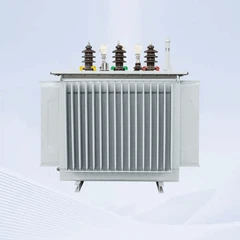
Oil-immersed transformers utilize transformer oil as both an insulating and cooling medium. Their core structure comprises components such as the iron core, windings, and oil tank, making them critical equipment for voltage conversion and power transmission. Through technological evolution, their capacity now spans from tens to tens of millions of kVA, covering low, medium, and ultra-high voltage levels. Adaptable to diverse scenarios, they hold a central position within the power industry.
Within power systems, oil-immersed transformers serve as "energy hubs": they step up voltage at generation points to reduce long-distance transmission losses and step down voltage for distribution in consumption areas. Whether facilitating power transmission from generation bases, enabling grid interconnection, or ensuring industrial and residential electricity supply, they play an irreplaceable role as the core pillar for the safe, stable, and efficient operation of the system.
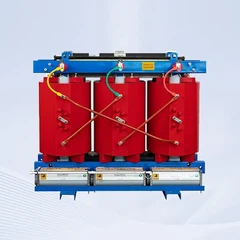
Compared to dry-type transformers, oil-immersed units offer distinct advantages: insulating oil isolates moisture, enhancing reliability and reducing failure rates; superior heat dissipation and insulation support high loads; and their standard operational lifespan of 20-30 years (with some exceeding 40 years) far surpasses the 15-20 years typical for dry-type units. While dry-type transformers suit fire- and explosion-proof scenarios like high-rise buildings, oil-immersed transformers offer superior overall performance for large-scale, high-load power transmission and conversion needs.
2. Working Principle of Oil-Immersed Transformers
2.1 Core Structure
The core and windings form the electromagnetic conversion heart of oil-immersed transformers. The core consists of laminated silicon steel sheets with high permeability, creating a closed magnetic circuit to minimize magnetic resistance and hysteresis losses. Windings are made of copper or aluminum insulated conductors, divided into primary (connected to input voltage) and secondary (connected to output voltage) sides. When AC is applied to the primary winding, it generates an alternating magnetic flux in the core. As this flux passes through the secondary winding, it induces an electromotive force according to the electromagnetic induction principle. By adjusting the turns ratio between primary and secondary windings, voltage transformation is achieved, enabling electrical energy conversion.
2.2 The Triple Core Functions of Transformer Oil
Transformer oil serves as the lifeblood of oil-immersed transformers, fulfilling three core functions: cooling, insulation, and arc quenching. For cooling, heat generated by winding and core losses during operation is absorbed through natural convection or forced circulation within the oil, then dissipated via radiators to maintain compliant component temperatures. For insulation, its dielectric strength far exceeds that of air, isolating conductive parts between windings and cores and preventing insulation breakdown. For arc quenching, during switching operations or partial discharges, the oil rapidly extinguishes arcs, preventing fault escalation and ensuring operational safety.
2.3 Cooling Mechanisms
Oil-immersed transformers employ two cooling mechanisms: natural cooling and forced cooling. Natural cooling relies on oil's natural convection and radiator dissipation, suitable for low-capacity, stable-load scenarios. It features simple structure, high reliability, and zero additional energy consumption. Forced cooling employs auxiliary equipment to enhance heat dissipation, categorized into air-cooled (fan-assisted heat dissipation) and water-cooled (cooling water heat exchange for temperature reduction). It offers superior heat dissipation capacity and is suitable for high-capacity, high-load operating conditions.
2.4 Classification and Characteristics of Common Cooling Methods
Under international standards, oil-immersed transformer cooling methods are denoted by letter combinations, with four common types: ONAN, ONAF, OFAF, and OFWF. ONAN (Oil-immersed Natural Cooling) is the basic method, relying on natural oil and air dissipation, suitable for small capacities; ONAF (Oil-immersed Natural Air-cooled) adds fans to this, improving heat dissipation by 30%-50% compared to ONAN, suitable for medium capacities; OFAF (Forced Oil Circulation Air-cooled) uses oil pumps for forced oil circulation combined with fans, offering high heat dissipation efficiency, suitable for large capacities; OFWF (Forced Oil Circulation Water-Cooled) combines oil pumps with water cooling for the highest cooling capacity, suitable for extra-large capacities or special environments. The cooling method should be selected based on equipment capacity, load, and installation environment.
3. Core Advantages of Oil-Immersed Transformers
3.1 Exceptional Overload Capacity
Oil-immersed transformers possess outstanding overload capacity, capable of withstanding short-term operation beyond rated load. This capability stems from efficient heat dissipation and superior insulation properties. Transformer oil rapidly absorbs excess heat generated during overloads, preventing insulation damage to windings. In practical applications, it effectively handles load fluctuations such as peak electricity demands and large equipment startups, ensuring continuous power supply, reducing outage risks, and enhancing supply reliability.
3.2 Outstanding Heat Dissipation and Insulation Performance
The high specific heat capacity and insulation strength of transformer oil confer exceptional performance to the equipment. In heat dissipation, its efficiency is several times that of air. When integrated with cooling systems, it enables stable temperature control and adapts to high-temperature environments. For insulation, it fills gaps, blocks moisture, and achieves a breakdown voltage exceeding 30kV/mm-significantly outperforming the air insulation of dry-type transformers. This capability resists overvoltage and reduces the risk of insulation failures.
3.3 Extended Lifespan in Harsh Conditions
Oil-immersed transformers demonstrate significant longevity advantages in demanding conditions. Transformer oil isolates corrosive elements like dust and moisture, slowing aging of windings and cores. Their robust construction withstands vibration and thermal expansion. Under standardized maintenance, service life exceeds 25 years in heavy-load applications (thermal power, steel) and surpasses 30 years in stable environments like transmission and distribution, substantially reducing replacement costs.
3.4 Cost-Effective Operation and Maintenance Characteristics
Oil-immersed transformers demonstrate outstanding lifecycle cost advantages. Initial investment costs are 15%-30% lower than dry-type equivalents for products of the same capacity and voltage rating. Operational maintenance features extended intervals and simplified tasks (primarily periodic oil quality testing and radiator cleaning), resulting in annual maintenance costs half that of dry-type units. Additionally, fault repair complexity is low, core components exhibit strong repairability, and the design supports large-scale deployment.
3.5 Robust Environmental Adaptability
Oil-immersed transformers demonstrate exceptional environmental resilience. Their sealed tanks protect against dust, rain, snow, and humidity, making them suitable for harsh environments like deserts, plateaus, and coastal areas. By selecting transformer oils of different grades, they can operate reliably within a temperature range of -40°C to 50°C, meeting demands from frigid to tropical climates. This enables dependable performance in remote locations, field operations, and other specialized scenarios.
4. Industry Applications of Oil-immersed Transformers
4.1 Power Generation Sector
4.1.1 Core Step-Up Equipment in Power Plants
In power generation, oil-immersed step-up transformers serve as critical devices for electricity transmission. The voltage levels produced by power plants (whether thermal, hydroelectric, wind, or solar) are typically low (e.g., thermal generators output 10kV-20kV), making direct long-distance transmission impractical. Oil-immersed step-up transformers elevate this low-voltage power to 110kV, 220kV, 500kV, or even higher ultra-high voltage levels. This significantly reduces energy losses during transmission, enabling efficient long-distance power delivery.
4.1.2 Adapting to Diverse Power Generation Modes
Oil-immersed transformers seamlessly accommodate the operational characteristics of various power generation types. In thermal and hydroelectric power plants, their stable overload capacity handles load surges during unit startup and shutdown. In wind farms, where output fluctuates significantly, oil-immersed transformers maintain stable output voltage through their inherent regulation capabilities. In solar photovoltaic power plants, they work with inverters to smoothly convert and output electricity despite fluctuations in generation caused by varying sunlight intensity. Furthermore, in the nuclear power sector, specialized oil-immersed transformers possess unique properties like radiation resistance and high-temperature tolerance, meeting the stringent safety requirements for nuclear power operations.
4.2 Transmission and Distribution Networks
4.2.1 Core Conversion Equipment in Substations
Within transmission and distribution networks, oil-immersed transformers serve as core equipment at all substation levels. At primary substations (hub substations), they step down ultra-high or high-voltage power from generating stations to medium-voltage levels. At secondary substations, they further reduce medium-voltage power to low-voltage levels for industrial and residential consumers. Whether in step-up, step-down, or interconnection substations, oil-immersed transformers perform the core functions of voltage conversion and power distribution. Their operational status directly determines the power supply quality and reliability of the transmission and distribution network.
4.2.2 Grid Interconnection and Voltage Regulation
As the scale of cross-regional grid interconnection continues to expand, oil-immersed transformers play a critical role in grid integration. Through oil-immersed interconnection transformers, networks of different voltage levels can be interconnected, enabling optimal allocation and complementary support of power resources. Simultaneously, oil-immersed transformers possess voltage regulation capabilities. By adjusting the tap changer, output voltage can be dynamically modified in response to grid load changes and voltage fluctuations, ensuring grid voltage remains stable within permissible limits and safeguarding the normal operation of all types of electrical equipment.
4.2.3 Applications in Urban and Rural Distribution Networks
In urban and rural distribution networks, oil-immersed transformers are extensively deployed in distribution substations. Within urban grids, compact, space-efficient box-type oil-immersed transformers are widely used in densely populated areas like residential communities and commercial districts. In rural networks, their robust environmental adaptability enables reliable operation in challenging settings such as remote villages and mountainous regions, ensuring power supply for agricultural production and daily life. Furthermore, to address rapid load growth in urban grids, capacity expansion through upgrades or parallel operation leverages oil-immersed transformers' scalability to meet increasing demand.
4.3 Industrial Sector
4.3.1 Core Power Support for Heavy Industry Production
In heavy industries such as steel, chemical, and machinery manufacturing, oil-immersed transformers serve as core power equipment for high-load production. Steel plants' blast furnaces, converters, rolling mills, and similar equipment require large-capacity, highly stable power supplies. Oil-immersed transformers provide suitable voltage levels and ample electrical energy while withstanding the massive inrush currents during equipment startup. Continuously operating equipment in chemical plants, such as reactors and compressors, demands exceptionally high power supply reliability. The long service life and high reliability of oil-immersed transformers ensure uninterrupted production processes, minimizing production downtime and economic losses caused by power outages.
4.3.2 Mining and High-Power Motor Drives
Oil-immersed transformers also play a vital role in the mining industry. Mining equipment in coal mines and metal mines-such as roadheaders, coal cutters, hoisting equipment (e.g., mine elevators), and ventilation systems-are all driven by high-power motors requiring dedicated oil-immersed transformers for power supply. These transformers typically feature dustproof, moisture-resistant, and vibration-resistant properties, enabling them to withstand harsh underground or surface mining environments. Additionally, addressing the characteristic high fluctuations in mining electrical loads, the high overload capacity of oil-immersed transformers ensures stable equipment operation under varying working conditions.
4.3.3 Specialized Applications in the Oil and Gas Industry
Within the petroleum and natural gas sector, oil-immersed transformers are extensively deployed across exploration, extraction, and transportation operations. On offshore oil platforms, specialized marine oil-immersed transformers feature corrosion resistance, anti-vibration capabilities, and explosion-proof design to withstand harsh marine environments characterized by high salt fog and humidity. At onshore drilling sites, mobile oil-immersed transformers can be flexibly relocated with drilling equipment, providing temporary power for rigs, mud pumps, and other machinery. Along oil and gas transmission pipelines, these transformers supply stable electricity to booster pumps and heating equipment, ensuring uninterrupted transportation.
4.4 Infrastructure and Commercial Facilities
4.4.1 Power Supply for Large Commercial and High-Rise Buildings
Large commercial complexes and high-rise buildings feature substantial electrical loads and diverse equipment, demanding high reliability and quality in power supply. Oil-immersed transformers serve as core safeguarding equipment. Through appropriate capacity configuration and voltage conversion, they adapt to various electrical needs, while efficient heat dissipation handles peak loads. Pre-assembled oil-immersed transformers used in some buildings offer advantages like quick installation and compact footprint, accommodating layout requirements.
4.4.2 Power Assurance for Transportation Hubs
The continuity of power supply at transportation hubs like airports, railway stations, and subways directly impacts operational safety. Oil-immersed transformers power critical equipment including terminal lighting, signaling systems, and traction devices. To address the hubs' concentrated loads and stringent reliability requirements, transformers typically employ dual-circuit power supply and redundant configurations, ensuring stable power delivery even during single-unit failures.
4.4.3 Power Supply for Data Centers and Communication Hubs
As core facilities of the digital economy, data centers and communication hubs demand power stability exceeding 99.999%. Oil-immersed transformers deliver stable electricity to server clusters, cooling systems, and communication equipment, with their high reliability minimizing the impact of power interruptions. To accommodate the rapid load growth in data centers, transformers' expansion capabilities support phased construction and load increase requirements.
4.5 Renewable Energy Systems
4.5.1 Core Power Conversion for Wind and Solar Power Plants
Oil-immersed transformers serve as the core equipment for integrating green power from wind and solar plants into the grid. Wind power undergoes initial step-up through box-type oil-immersed transformers (box transformers) before being elevated to high-voltage grid connection by main step-up transformers. Photovoltaic power first converts DC to AC via inverters, then undergoes step-up through oil-immersed transformers for grid integration. Their efficient conversion and stable operation ensure effective utilization and seamless grid integration of wind and solar energy.
4.5.2 Stable Operation Under Variable Load Conditions
Renewable energy output fluctuates due to natural conditions (e.g., wind speed affecting wind power, sunlight affecting solar power), demanding high variable load performance from transformers. Oil-immersed transformers adapt to rapid load changes with superior heat dissipation and insulation properties, preventing overheating or insulation damage. Advanced models feature intelligent monitoring systems that track operational status in real time, providing data support for power plant optimization.
4.5.3 Energy Exchange Medium for Energy Storage Systems
In new energy storage systems (ESS), oil-immersed transformers serve as the critical energy exchange medium: during charging, they step down grid power to match storage units; during discharging, they step up stored energy for grid injection or load supply. Addressing the frequent charging/discharging cycles and high load fluctuations characteristic of ESS, their high overload capacity and long service life ensure long-term stable operation, facilitating efficient coordination between storage and the grid.
5. Practical Application Case Analysis
5.1 Application of Oil-immersed Transformers in Large Wind Farms
A 2000MW onshore wind farm deployed 500 units of 4.5MVA (0.69kV/35kV) box-type oil-immersed step-up transformers and 10 units of 200MVA (35kV/220kV) main step-up transformers. To address fluctuating wind power output, the design incorporates a 1.2-times overload capacity for 2 hours, paired with a fully sealed structure and natural ester oil suited for remote, windy, and dusty environments. After five years of operation, the failure rate was only 0.5%, with maintenance costs at 60% of traditional oil-filled transformers. Annual power generation reached 4 billion kWh, contributing to a carbon reduction of 3.2 million tons.
5.2 Steel Plant Transformer Upgrade Project
A 125MVA (110kV/10kV) oil-immersed transformer commissioned in the 1990s at a steel plant experienced frequent tripping due to aging and insufficient overload capacity. It was upgraded to a new 160MVA intelligent oil-immersed transformer of the same voltage level. The new transformer features high-temperature insulation (1.3 times overload capacity), IoT monitoring, and low-loss materials (reducing annual losses by 25%). After three years of operation without tripping, it achieved annual loss reduction of 800,000 kWh and cost savings of 640,000 yuan, while increasing maintenance efficiency by 40% and reducing maintenance costs by 30%.
5.3 Urban Substation Modernization Project
A 220kV substation commissioned in 2000 within the city's core area underwent upgrades due to insufficient capacity, energy efficiency, and safety of its original oil-immersed transformers. The renovation deployed three 315MVA (220kV/110kV/10kV) high-efficiency smart oil-immersed transformers featuring forced oil circulation air cooling, natural ester oil insulation, and intelligent monitoring systems. Post-upgrade total capacity increased from 630MVA to 945MVA, achieving Class 1 energy efficiency and reducing annual losses by 1.5 million kWh. Fault response time was reduced to 1 hour, with power supply reliability enhanced to 99.99%.
Send Inquiry