









What Is a Dry-Type Transformer and How Does It Work?
Jan 09, 2026
Leave a message
What Is a Dry-Type Transformer
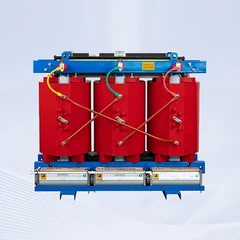
A dry-type transformer is a static electrical machine that changes voltage levels using electromagnetic induction, with the windings insulated by solid materials such as epoxy resin instead of insulating liquid. Because it contains no oil, it does not leak, does not need oil containment, and presents a very low fire risk. The air around the windings provides cooling, so the unit must be installed in a ventilated space. This design makes dry-type transformers the preferred choice for indoor locations such as commercial buildings, hospitals, schools, and underground substations, and the design rules are defined by IEC 60076-11.
How a Dry-Type Transformer Works
The transformer consists of a laminated silicon steel core, a primary winding, and a secondary winding. When alternating current flows in the primary winding, it creates a magnetic field in the core, and this changing field induces a voltage in the secondary winding. The ratio of the input and output voltages equals the ratio of the winding turns. The core provides a low-reluctance path for the magnetic flux, while the windings transfer the energy. In a dry-type unit, the core and windings are encapsulated in solid insulation, and heat is removed by natural air circulation or by forced-air fans when fitted.
The Dry-Type Manufacturing Process
The production of a cast resin dry-type transformer follows a controlled sequence. First the core is assembled from high-grade grain-oriented silicon steel laminations that are cut and stacked to minimize no-load loss and noise. Then the primary and secondary windings are wound from copper conductors, with the conductor cross-section and turns calculated for the required voltage and current. Next the winding assembly is placed in a mould and impregnated with epoxy resin under vacuum, so that the resin penetrates fully between turns and no air pockets remain. The assembly is then cured by heating to harden the resin into a solid, moisture-resistant insulation layer. Finally the complete unit is assembled into its enclosure and subjected to routine tests, including ratio verification, no-load and load loss measurement, and dielectric withstand tests.
Dry-Type vs Oil-Immersed Transformers
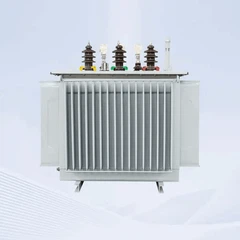
The two technologies differ in insulation and cooling, and each suits different conditions. Dry-type units use air and solid resin, need no oil testing or replacement, and are easier to recycle because the copper and steel are not contaminated by oil. They are also quieter and safer in enclosed spaces. Oil-immersed units use mineral oil for both insulation and cooling, which gives more effective heat removal and therefore higher continuous overload capacity, but they require oil maintenance, oil containment, and more careful fire protection. The choice depends on the installation environment, the load profile, and the local fire regulations.
Where Dry-Type Transformers Are Used
Dry-type transformers fit most indoor applications that need a reliable medium voltage to low voltage conversion. Typical installations include office and commercial buildings, hospitals and medical centers, universities, data centers, and industrial plants where fire safety rules restrict oil-filled equipment. They can also be installed outdoors when placed in a weatherproof enclosure rated for the environment. Their low maintenance requirement and clean operation make them attractive for facilities that run continuously and cannot afford long outages.
FAQ
Q: Is a dry-type transformer the same as a cast resin transformer?
A: Largely yes. Most modern dry-type transformers are cast resin units in which the windings are encapsulated in epoxy resin, and the two terms are often used interchangeably.
Q: Do dry-type transformers need oil changes?
A: No. They contain no oil, so there is no oil testing, oil replacement, or leakage monitoring, which simplifies maintenance compared with oil-immersed units.
Q: Can a dry-type transformer be installed outdoors?
A: Yes, if it is housed in a weatherproof enclosure that protects the exposed insulation from rain, snow, and humidity, and if the ambient conditions stay within the design limits.
Q: How long does a dry-type transformer last?
A: A well-maintained dry-type distribution transformer typically serves 20 to 30 years, provided it is operated within its rating and kept clean.
Q: Are dry-type transformers more efficient than oil-immersed ones?
A: At rated load, both types reach high efficiency, generally above 96%. Oil-immersed units tend to have an advantage under sustained heavy load because oil cooling is more effective, while dry-type units are favored for safety and low maintenance.
Q: What tests are performed on a dry-type transformer before delivery?
A: Routine tests include voltage ratio and vector group verification, winding resistance, no-load loss and current, load loss and impedance, insulation resistance, and applied-voltage and induced-voltage withstand tests per IEC 60076-11.
Send Inquiry