







Bangladeshi Customers Visit GNEE Electric Transformer Factory for Cooperation
May 14, 2024
Leave a message
Why International Buyers Visit Transformer Factories
Transformer procurement is a high-value, long-lifecycle decision, and serious buyers rarely place orders without visiting the factory. A factory visit lets the customer verify manufacturing capacity, witness the production process, inspect testing equipment, and confirm the quality management system, typically certified to ISO 9001. It also gives both sides the chance to align technical specifications face to face, which prevents misunderstandings about voltages, standards, and delivery requirements. For a transformer manufacturer, hosting customers is an opportunity to demonstrate engineering capability and to understand the real operating conditions of the buyer's network, which leads to better equipment recommendations.
The 2024 Visit of Bangladeshi Customers to GNEE Electric
On May 13, 2024, customers from Bangladesh visited the equipment workshop of GNEE Electric. During the visit, the business and technical teams presented the overall development of the company, the professional research and development team, and the production lines, including cutting equipment and wire technology, together with the quality control applied to finished products. The discussion focused on expanding the depth and breadth of future cooperation to achieve mutual benefit. The Bangladeshi customers acknowledged the size and strength of the company, the research and development capability, and the product quality. During the technical exchange, the customers stated their current needs for outdoor distribution transformers, and the GNEE Electric team introduced pad-mounted transformers in detail, explaining their functions, advantages, and features for the specific application.
Pad-Mounted Transformers for Outdoor Distribution
Pad-mounted transformers are the common choice for outdoor ground-level distribution in commercial, industrial, and residential developments. Their key characteristics include:
A tamper-resistant steel enclosure that protects the connections and reduces safety hazards in accessible areas.
Dead-front construction on the primary side, which minimizes exposed live parts and improves personnel safety.
Compact footprint for installation on a concrete pad next to buildings or roads, without overhead structures.
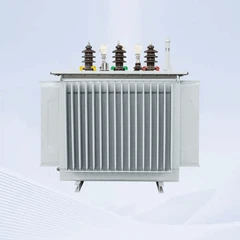
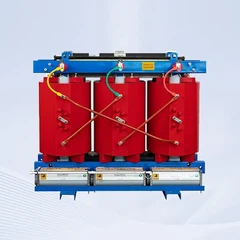
Oil-immersed design with proven cooling and long service life, or dry type construction where fire regulations require it.
Standard voltage configurations such as 11 kV or 33 kV primary with 400 V secondary, or 22 kV class systems, matched to the local distribution network.
Design and testing per IEC 60076 and IEEE C57.12.20, which is the dedicated standard for pad-mounted distribution transformers.
For networks like those in Bangladesh, where outdoor distribution must tolerate high ambient temperatures, humidity, and seasonal storms, the pad-mounted format provides a robust and serviceable solution.
What Buyers Should Evaluate During a Factory Visit
A productive transformer factory visit covers more than the assembly line. Buyers should review the following points:
Raw material control, including the source and certificates of silicon steel, copper or aluminum conductors, and insulating oil.
Winding and core manufacturing processes, and the skill level of the operators.
Test laboratory capability, including loss measurement, turns ratio, insulation resistance, and high-voltage dielectric testing.
Quality management certification such as ISO 9001 and the documentation practices behind it.
Handling of the final product, including drying, oil filling, and shipping protection.
Taking photographs and collecting test certificates during the visit creates a technical record that supports the later purchase decision and the acceptance inspection.
Building Long-Term Cooperation
A successful visit is the start of a relationship rather than the end of a negotiation. The next steps typically include a written technical specification that fixes the transformer parameters, a factory acceptance test plan, delivery schedules, and warranty terms. Regular communication about operating experience after commissioning helps the manufacturer improve the product and helps the buyer plan maintenance. For the Bangladeshi customers, the visit established a foundation for selecting outdoor transformers with the correct ratings and accessories for their network conditions, and for developing a supply relationship based on verified capability rather than brochures alone.
FAQ
Q: Why do transformer buyers travel to the factory before ordering?
A: A factory visit verifies manufacturing capacity, production quality, testing capability, and management systems such as ISO 9001, and allows both sides to align technical specifications face to face before committing to a purchase.
Q: What is a pad-mounted transformer?
A: It is an outdoor, ground-level distribution transformer enclosed in a tamper-resistant steel cabinet, commonly with dead-front primary connections, installed on a concrete pad and used for commercial and residential distribution.
Q: Why are pad-mounted transformers recommended for outdoor projects?
A: They combine a compact footprint, safe dead-front construction, robust oil-immersed design, and easy service access, and they comply with dedicated standards such as IEEE C57.12.20 for pad-mounted distribution transformers.
Q: What voltage levels are typical for pad-mounted transformers?
A: Typical configurations are 11 kV or 33 kV primary with 400 V secondary for distribution networks, with 22 kV class and other ratios available to match the local system.
Q: What should I inspect during a transformer factory visit?
A: Raw material certificates, winding and core processes, the test laboratory and its equipment, quality management certification, and final handling such as drying, oil filling, and shipping protection.
Q: What happens after the factory visit?
A: The parties usually finalize a technical specification, agree a factory acceptance test plan, delivery schedule, and warranty terms, and begin the formal order process based on the verified capability seen at the factory.
Send Inquiry