







Visiting a Dry-Type Transformer Factory: What Buyers Should Inspect on a Factory Audit
May 14, 2024
Leave a message
Why a Factory Visit Matters When Buying Dry-Type Transformers
A factory visit is one of the most reliable ways to verify the capability of a dry-type transformer manufacturer before placing an order. It allows the buyer to see the production equipment, the skill of the workforce, the cleanliness of the workshop and the state of the quality control system first-hand. Factory visits are especially common in international procurement, where buyers travel to evaluate the production line, confirm that the promised technology is actually in place and build trust with the supplier. A structured audit covers the production workshop, the winding and casting processes, the testing area and the documentation system.
What to Inspect in the Production Workshop
The production workshop is the heart of the factory, and the audit should follow the manufacturing flow of a cast resin dry-type transformer.
Core Manufacturing
The core is assembled from grain-oriented silicon steel laminations cut to precise dimensions. Check that the cutting and stacking equipment produces laminations without burrs, that the stacking is tight and even, and that the core clamping applies uniform pressure without damaging the insulation coating of the sheets. Core losses are strongly influenced by the quality of cutting and stacking, so this area deserves close attention.
Winding Area
Low-voltage windings are usually foil wound from copper or aluminium strip, while high-voltage windings are layer wound with round or rectangular conductors. Verify that the winding machines maintain controlled tension, that the inter-layer insulation is applied cleanly, and that the finished coils have the correct dimensions and tightness. The winding area should be clean and dry, because dust and moisture trapped in a winding cannot be removed after encapsulation.
Vacuum Casting and Curing
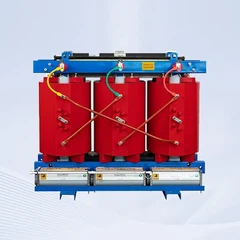
Cast resin transformers are produced by vacuum casting: the wound coils are placed in moulds, and epoxy resin mixed with filler is injected under vacuum so that every void is filled. After casting, the coils pass through a curing oven where the resin hardens. Check the vacuum level used in casting, the resin mixing and degassing procedure, and the temperature control of the curing process, since these directly determine the partial discharge performance and mechanical strength of the finished winding.
Quality Control and Testing Stations
The testing area is where the design and the production quality are proven. A complete routine test program for a dry-type transformer follows IEC 60076-11 and includes turns ratio verification, winding resistance measurement, insulation resistance testing, no-load loss and current measurement, load loss and impedance measurement, and dielectric tests such as the power frequency withstand test. Partial discharge measurement is particularly important for cast resin transformers, because voids in the resin cause partial discharges that erode the insulation over time. Temperature rise testing, performed as a type test, verifies the cooling performance under full load. The buyer should ask to see the test records of completed units and, where possible, witness the testing of the units ordered.
Product Display and Documentation Review
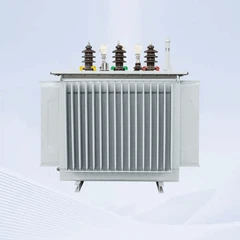
Many factories maintain a product display area where finished transformers of different ratings and enclosure types are exhibited. This allows the buyer to inspect the surface quality of the cast resin coils, the workmanship of the enclosures, the terminals and the nameplates. The documentation review covers the quality manual, the certificates of the quality management system, the type test reports, the routine test reports, the material certificates for copper, aluminium, silicon steel and epoxy resin, and the traceability records. A complete documentation system is a strong indicator of a mature manufacturing operation.
Checklist for Buyers
During the visit, confirm the following points: the capacity and voltage ratings of the units on the production line; the availability of the winding, casting and testing equipment described in the quotation; the number of routine tests performed on every unit and the type tests available; the cleanliness and humidity control of the winding area; the training and experience of the production and testing staff; the delivery schedule and the packing method; and the after-sales support for installation, commissioning and spare parts. Written minutes of the visit and photographs of the key processes help the buyer compare suppliers objectively.
FAQ
Q: Why is a factory audit necessary before buying dry-type transformers?
A: Because the quality of a cast resin transformer depends on production processes that cannot be seen from a datasheet, such as core cutting, winding tension, vacuum casting and curing; an audit verifies that the equipment and processes are actually in place.
Q: What is the most important process to inspect?
A: The vacuum casting and curing process, because voids and moisture trapped in the resin cause partial discharge and premature insulation failure; the vacuum level and the degassing procedure are critical parameters.
Q: Which standards should the factory tests follow?
A: Routine and type tests should follow IEC 60076-11 for dry-type transformers and IEC 60076-1 for general requirements, together with the applicable national standards of the destination market.
Q: What is partial discharge measurement?
A: It is a test that detects tiny electrical discharges in voids of the insulation under high voltage; low partial discharge levels indicate a well-impregnated, void-free casting, which is essential for long service life.
Q: What documents should the buyer request?
A: Type test reports, routine test reports, material certificates, the quality management system certificate, drawings and the installation and maintenance manuals of the specific unit.
Q: How long does a typical factory audit take?
A: A focused audit of the production lines and testing area normally takes one working day, while a full audit including witnessed type testing and detailed documentation review may take two to three days.
Send Inquiry