








Cooling Methods (AN / AF) for 1000kVA Dry Type Transformer Explained
Apr 17, 2026
Leave a message
In the landscape of modern electrical engineering, the efficiency and safety of power distribution rely heavily on thermal management. Understanding the Cooling Methods (AN / AF) for 1000kVA dry type transformer is essential for optimizing performance and preventing insulation failure.
Whether you are using a Dry-type Transformer for a commercial high-rise or a Three-Phase Dry-type Transformer for an industrial plant, the way heat is dissipated determines the unit's lifespan and its ability to handle peak loads.
As a premier cast resin dry type transformer manufacturers, GNEE has over 18 years of expertise in delivering high-end power solutions to the global market. Operating from our state-of-the-art manufacturing facility, we produce Three-Phase Cast Resin Transformer units that meet the most stringent international standards.
We are a direct-to-market factory, meaning our clients receive expert technical support, customized designs, and competitive pricing on every Cast Resin Power Transformer. From design to delivery, GNEE is your trusted partner for reliable, high-performance Indoor Three-Phase Transformer technology.
Defining the Cooling Methods (AN / AF) for 1000kVA Dry Type Transformer
The cooling system of a transformer is categorized by how it moves heat from the internal components to the external environment. For a 1000kVA dry type transformer, there are two primary states:
- AN (Air Natural): This is the baseline cooling method. In this mode, the dry core transformer relies on the natural convection of the surrounding air. As the air near the windings heats up, it rises, and cooler air flows in to replace it.
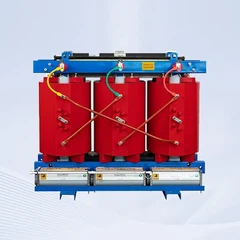
- AF (Air Forced): This method introduces electric fans at the base of the cast coil dry type transformer. These fans force air through the cooling ducts of the high-voltage and low-voltage windings, significantly accelerating the heat exchange process.
For many industrial operators, the Cooling Methods (AN / AF) for 1000kVA dry type transformer offer a "dual-rating." A transformer might be rated at 1000kVA under AN conditions, but with the activation of AF fans, that same unit can often handle up to 1330kVA or 1400kVA-a 33% to 40% increase in capacity without replacing the hardware.

A professional wide-angle shot of GNEE's production workshop showing several 1000kVA transformers
The Role of AN Cooling in a Low Loss Dry-type Transformer
The AN (Air Natural) cooling method is the preferred choice for a Low Loss Dry-type Transformer operating under standard conditions. Because it has no moving parts, it is completely silent and requires virtually zero maintenance for the cooling system itself. This makes the cast resin distribution transformer with AN cooling ideal for environments where noise pollution is a concern, such as hospitals, schools, and residential complexes.
When GNEE engineers a dry cast resin transformers unit, we optimize the spacing between the resin-encapsulated coils to maximize the "chimney effect." This ensures that even without fans, the cast resin type transformer remains within its safe thermal class (usually Class F or H). However, AN cooling is highly dependent on the ambient temperature. If the room where the Indoor Three-Phase Transformer is located has poor ventilation, the efficiency of AN cooling drops, potentially leading to a shorter transformer life.
Boosting Performance: AF Cooling Methods for 1000kVA Dry Type Transformer
Why do engineers specify AF cooling?
The primary reason is the ability to manage "peak shaving" and temporary overloads. In the Cooling Methods (AN / AF) for 1000kVA dry type transformer framework, AF mode is usually triggered by a temperature controller (like a PT100 sensor).
When the winding temperature reaches a specific threshold-typically 100°C to 110°C-the fans automatically kick in. This allows the Three-Phase Cast Resin Transformer to dissipate heat much faster than natural convection allows. For a Dry distribution transformer serving a factory with high-startup currents or fluctuating loads, AF cooling is a critical safety feature. It allows the transformer to operate at a higher output during peak hours while reverting to silent, energy-efficient AN mode during off-peak times.

A detailed close-up of the cross-flow cooling fans mounted at the base of a GNEE cast resin transformer
Technical Parameters for 1000kVA Dry Type Transformer Cooling
To help you understand the impact of cooling on performance, GNEE has provided the standard parameters for our SCB series 1000kVA cast resin power transformer.
| Feature | Air Natural (AN) | Air Forced (AF) |
| Rated Capacity | 1000 kVA | 1330 - 1400 kVA |
| Temperature Rise Limit | 100K (Class F) | 100K (Class F) |
| Noise Level | < 50 dB | < 65 dB (when fans are active) |
| Power Consumption | 0 Watts (Cooling) | ~150W - 400W (Fan Power) |
| Cooling Efficiency | Standard | High (approx. 40% increase) |
| Best Application | Constant Loads / Residential | Fluctuating Loads / Heavy Industry |
Operational Advantages of GNEE's Cooling Designs
As expert cast resin dry type transformer manufacturers, GNEE doesn't just "attach fans" to a transformer. We design the entire thermal profile of the Three-Phase Dry-type Transformer using advanced simulation software. This prevents "hot spots"-localized areas within the dry core transformer that stay hot even when the rest of the unit is cool.
Our cast coil dry type transformer designs feature:
- Intelligent Controllers: Our systems feature RS485 communication, allowing you to monitor the Cooling Methods (AN / AF) for 1000kVA dry type transformer status remotely from your control room.
- High-Quality Fans: We use low-noise, long-life cross-flow fans that are specifically rated for industrial use, ensuring that when your cast resin type transformer needs extra cooling, the hardware won't fail.
- Low-Loss Core: By using high-permeability silicon steel, we reduce the initial heat generated by the Low Loss Dry-type Transformer, making the cooling system more effective.
Selecting the Right Cooling for Your Indoor Three-Phase Transformer
When deciding which Cooling Methods (AN / AF) for 1000kVA dry type transformer are right for your project, consider the installation environment. If the Indoor Three-Phase Transformer is in a basement with limited airflow, you should always specify a unit with AF fans and perhaps even an external ventilation system for the room itself.
Furthermore, a dry cast resin transformers unit in AF mode is an excellent way to plan for future expansion. If your facility currently requires 1000kVA but you anticipate growth in the next 5 years, choosing a GNEE 1000kVA unit with an AF rating of 1400kVA allows you to scale up without the massive expense of purchasing and installing a new Three-Phase Dry-type Transformer.

GNEE's packaging and shipping department preparing a 1000kVA transformer for export
Maintenance Tips for Cooling Systems
While the dry core transformer is static, the AF fans in a dry distribution transformer require periodic checks. As part of your maintenance schedule for the Cooling Methods (AN / AF) for 1000kVA dry type transformer, GNEE recommends:
- Fan Testing: Manually trigger the fans quarterly to ensure they spin freely.
- Cleaning: Dust is the enemy of Three-Phase Cast Resin Transformer units. Use dry compressed air to clear the cooling ducts between the coils to maintain the efficiency of both AN and AF cooling.
- Sensor Check: Verify that the temperature probes are correctly seated in the windings to ensure accurate fan activation.
Conclusion: Trust GNEE for High-Efficiency Cooling Solutions
In summary, the Cooling Methods (AN / AF) for 1000kVA dry type transformer are more than just technical specifications-they are the key to unlocking the full potential of your power infrastructure. While AN provides a silent and reliable foundation, the AF method gives your Dry-type Transformer the flexibility to handle heavy loads and extreme conditions with ease.
Inquire Now To Get The Best Factory-Direct Pricing And Technical Support!
Are you looking for a high-quality transformer that balances efficiency and power?
At GNEE, we provide the engineering expertise and manufacturing precision you need to succeed. Contact GNEE today for a detailed quote on our 1000kVA dry type transformer range. Whether you need a standard Low Loss Dry-type Transformer or a specialized cast resin distribution transformer, our team is ready to provide you with a solution that lasts.
What damages may happen during transportation of 1000kVA dry type transformer?
Vibration and collision may cause loose fasteners, core displacement, winding deformation, or epoxy surface damage. We use fixed shipping base, overall packaging, and pre-delivery testing to ensure safe transportation.
Can 1000kVA cast resin dry type transformer be placed horizontally during transport?
No. Horizontal placement may damage winding insulation and internal structure. It must be transported vertically with clear lifting and upright marks.
What are the key installation requirements for 1000kVA dry type transformer?
It needs a level, firm concrete foundation, sufficient ventilation space, safe distance from walls and barriers. Poor installation will lead to vibration, noise and overheating.
Can 1000kVA epoxy cast dry type transformer be installed outdoors directly?
Standard cast resin dry type transformer is for indoor use. Outdoor installation requires an IP54/IP56 enclosure for rainproof, sun protection and ventilation.
Why does insulation resistance decrease after installation?
Moisture, dust, high humidity and dirty surface are the main causes. Regular cleaning and drying can restore insulation performance.
What is the normal temperature rise for 1000kVA cast resin dry type transformer?
For Class F insulation, the winding average temperature rise is ≤100K, hot-spot temperature ≤155°C. Overload, poor ventilation and dust will cause abnormal high temperature.
What causes abnormal noise during operation of 1000kVA dry type transformer?
Loose core, unbalanced load, voltage fluctuation, harmonics, uneven foundation or internal looseness after transportation.
Is 1000kVA cast resin dry type transformer maintenance-free?
It is nearly maintenance-free, but needs regular dust cleaning, terminal torque check, insulation test and temperature monitoring.
Are small epoxy cracks acceptable for 1000kVA dry type transformer?
Superficial micro-cracks can be repaired, but deep or penetrating cracks affect insulation safety and must be repaired or replaced.
Why does the temperature controller alarm on 1000kVA epoxy cast transformer?
Common causes: overload, fan failure, poor ventilation, temperature sensor fault or heavy harmonics.
Send Inquiry