








Decoding the SCB18-2000/10 Dry-Type Transformer
May 11, 2026
Leave a message
In power distribution, building power supply, and industrial projects, the code SCB18-2000/10 frequently appears on specification sheets. It represents one of the most popular dry-type transformers on the market today – balancing energy efficiency, safety, and reliability.
Yet many electrical professionals are not fully confident in interpreting every letter and number. This article breaks down the SCB18-2000/10 step by step and provides practical background for better selection decisions.

Click to learn more about 2000kVA dry-type transformers
Bit-by-bit Model Analysis
✅ S: Three-phaseIt indicates a three-phase transformer, the mainstream configuration in the current power transmission and distribution system. It is applicable to most industrial and building power distribution scenarios with higher stability.
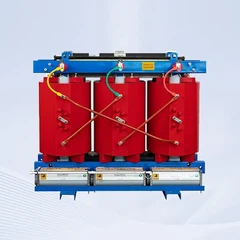
✅ C: Epoxy resin cast moldingThis is the core manufacturing process of dry-type transformers. The windings are integrally cast and solidified with epoxy resin. It features moisture resistance, flame retardancy, fireproof performance and zero pollution. No oil medium is required; it is safe and eco-friendly, and can be directly installed in enclosed spaces such as indoors and basements.
✅ B: Copper foil windingHigh-quality copper foil is adopted for winding production. Compared with traditional copper wire windings, it delivers better electrical conductivity and lower load loss, with a more compact winding structure. Its heat dissipation performance and mechanical strength are greatly improved, enabling more energy-saving and durable operation.
✅ 18: Design serial numberIt stands for the technical iteration version number of the transformer. The larger the number, the more advanced the product's technical level, energy-saving performance and manufacturing process. SCB18 is a new-generation low-loss dry-type transformer with a higher energy efficiency grade.
✅ 2000: Rated capacityThe rated capacity is 2000kVA, which directly determines the load-carrying capacity of the transformer. It can meet the power load demands of medium and small factories, high-rise buildings, commercial complexes, residential communities and other scenarios.
✅ 10: High-voltage side rated voltageThe rated voltage of the high-voltage side is 10kV, which perfectly matches China's mainstream 10kV distribution network system and is the most commonly used voltage level for urban-rural power distribution and industrial power supply.
Beyond the Type Code - Parameters You Must Check
Insulation class and temperature rise.
Typically Class F or H insulation. Winding temperature-rise limits per GB/T 10228: Class B 80 K, Class F 100 K, Class H 125 K. For energy-efficient projects, specify low losses and a high efficiency grade.
Enclosure protection (IP rating).
Indoor clean environment - enclosure optional; basements or contact risk - IP20; outdoor, dusty or humid - IP23 or higher. Enclosures reduce heat dissipation, so derating or forced ventilation may be required.
Cooling and fans.
Standard thermostat and bottom-mounted fans; forced air (AF) increases short-term overload capacity, but fan lifetime and noise must be checked - the AF increase is design-dependent (commonly 20–30%, confirm per manufacturer).
Vector group.
Dyn11 (delta primary, star secondary with neutral) is recommended for unbalanced loads; Yyn0 is not recommended where significant single-phase loads exist.
Application Guidelines – Where Does SCB18-2000/10 Excel?

| Project Type | Recommended? | Key Reason |
|---|---|---|
| High‑rise office buildings | ✅ Yes | Fire safety, can be placed in electrical shafts or basements |
| Large shopping malls / hospitals | ✅ Strongly recommended | Low noise, environmentally friendly, safe for unattended operation |
| Data centre (initial modules) | ✅ Optional | 2000 kVA supports ~800–1200 kW IT load |
| Industrial park substations | ✅ Mainstream choice | High efficiency → significant long‑term electricity savings |
| Wind / solar skid‑mount substations | ❌ Not recommended | Outdoor/corrosive environment – oil‑filled or specially coated dry type required |
| Temporary construction power | ❌ Not recommended | Higher cost, sensitive to dust |
tandards and Service Life
Selection and testing follow GB/T 10228 and IEC 60076-11; overload operation follows GB/T 17211 / IEEE C57.96 guidance. Under proper operating conditions and regular maintenance, a high-quality 2000kVA transformer can operate reliably for 25–40 years. Periodic inspections, temperature monitoring and preventive maintenance maximise lifespan.
Summary – One Sentence to Remember
SCB18-2000/10 = three-phase + cast resin + copper foil winding + 18th-generation high efficiency + 2000 kVA + 10 kV HV side. It is a fire-safe, energy-efficient, compact dry-type transformer ideal for modern building and industrial power distribution - knowing the code is the first step; verifying insulation, IP rating, cooling and vector group is what enables safe selection.
If you are selecting a transformer for a specific project – share the system voltage, load profile, and installation environment – and we can discuss further.
What is a 2000kVA dry-type transformer?
The 2000kVA Dry-Type Transformer from GNEE Electric is engineered for high efficiency and reliability in demanding industrial and commercial applications. It features advanced solid insulation technology, eliminating the need for oil, which reduces maintenance and environmental concerns.
Which is better, an oil type or dry type transformer?
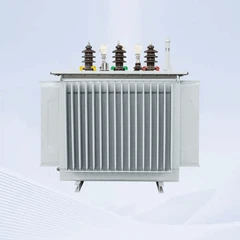
Oil immersed transformers are generally preferred for outdoor installations and high-capacity industrial applications because they offer better cooling efficiency, stronger overload capability, and longer service life. Dry type transformers are usually selected for indoor use because they provide better fire safety, lower environmental risk, and simpler maintenance.
What is the service life of a 2000 kVA transformer?
Under proper operating conditions and regular maintenance, a high-quality 2000 kVA transformer can operate reliably for 25 to 40 years. Periodic inspections, oil testing, temperature monitoring, and preventive maintenance help maximize transformer lifespan.
Send Inquiry