







Load Capacity for Dry Type Transformers
Jan 09, 2026
Leave a message
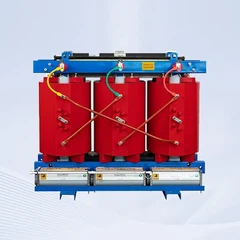
Dry type transformers harness air cooling to maintain safe, efficient temperatures as they convert high primary voltages to the right voltage for your application. Industrial, commercial and utility companies favor them as they excel at a wide range of voltage conversions.

Ensuring long-lasting, efficient performance depends on knowing and being able to calculate your transformer's load capacity.
What Is Dry Type Transformer Load Capacity?
Load capacity describes the maximum amount of power a dry type transformer can handle. Manufacturers usually give load capacity ratings in kilovolt-amperes (kVA).
Dry type transformers have temperature and insulation limits. Up to these limits, they can operate safely for a period of time. Beyond them, they are vulnerable to overheating and breaking down - and the farther over capacity they go, the faster damage will occur.
Load capacity tells you how much power a transformer can convert and supply to a system while remaining within its temperature and insulation limits. A transformer with a higher load capacity can serve electrical equipment systems that demand more power.
Why Does Load Capacity for Dry Type Transformers Matter?
Dry type transformers are essential in supplying power to electrical systems for facilities in countless sectors. A safe and consistent power supply depends on using these transformers correctly. Load capacity informs how you can use your transformer for maximal durability and reliable results.
 Taking load capacity into account helps ensure:
- Optimal distribution: Matching the transformer's load capacity to the load requirements keeps equipment running at optimal efficiency and reduces the potential for damage to equipment or the transformer itself.
- Electrical safety: Respecting a transformer's load capacity minimizes risks of electrical failures and hazards.
- Temperature regulation: The dry transformer's air cooling system works best while the transformer functions within its load capacity. Pushing the transformer beyond its capacity can cause it to overheat and break down, resulting in costly damage and power supply interruptions.
- Energy efficiency: Using a transformer with a sufficient load capacity minimizes energy losses during conversion. This promotes energy efficiency, which is important for financial and environmental reasons.
- Enhanced reliability: Considering load capacity when powering a system through a transformer maximizes the transformer's life span and helps maintain a dependable energy supply.
What Determines Dry Type Transformer Load Capacity?
Several factors impact the power load a dry type transformer can handle:
- Whether it is a single-phase or three-phase transformer
- How it's ventilated or cooled
- Build materials
- Cooling system efficiency
- Transformer size
- Amount of insulation
- Transformer winding voltages
- Environment
How to Calculate Load Capacity for Dry Type Transformers
You can calculate the necessary dry type transformer load capacity in kVA by following a few simple steps.
Check your electrical schematics for the information you need to complete these steps:
- Note the load voltage (V) and the required load phase current (L) indicated on your schematic.
- If L is not specified on the schematic, divide input voltage by input resistance to calculate it.
- Find the load's kilowatt (kW) power requirements through the formula V * L / 1000.
- Divide the load's kW power requirement by its power factor, which is usually 0.8.
- The result is the necessary transformer kVA rating.
Your result will likely contain decimals. Since most manufacturer load capacity ratings are expressed in whole numbers in multiples of 5 or 10, round your answer up to the nearest 5 or 10. This way, you'll select a transformer with a load capacity slightly higher than required. This ensures the transformer can handle the load's power demands. Stick to this 5kVA or 10kVA rounding, as exceeding it could land you with an oversized transformer that compromises your system's efficiency and safety.
For example, if your system has a V of 189.3 and an L of 50, V * L / 1000 = 9.465. Then. 9.465 / 0.8 = 11.831. This result means you need a transformer with a load capacity rounded up to 15 kVA.
The load capacity formula above assumes you are using a single-phase transformer. If you intend to use a three-phase transformer, you need to adjust the calculation by introducing an additional step.
For an accurate load capacity result for three-phase transformers, multiply the product of the voltage and amperage by the square root of 3 (shortened to three decimal places) - a constant of 1.732. A three-phase transformer's required load capacity in kVA = (V * L * 1.732 / 1000) / 0.8.
It's also important to note that a system's starting current usually exceeds its running current. Dividing by the power factor in the formula helps you account for that. If you need to start your transformer frequently - more than once per hour - the transformer will need a greater load capacity.
Specialized loads like medical equipment may also affect your transformer's kVA load capacity requirements. In these exceptional circumstances, accurately determining the required transformer load capacity is crucial but challenging. Seek the advice of a professional transformer company to find a transformer with the right load capacity for your needs.
Not sure about the required capacity/voltage of the dry-type transformer for your project? Submit your load requirements and installation environment, and GNEE engineers will provide a free accurate selection plan to avoid cost waste caused by incorrect selection!
What is the difference between a dry transformer and a power transformer?
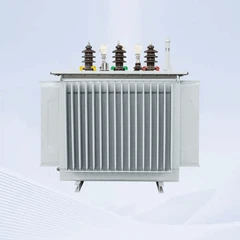
Dry-type transformers are generally insulated with resin, relying on natural air-cooling, and large-capacity cooling by fans; while oil-impregnated power transformers are insulated by insulating oil, and the inner coil of the transformer is recycled by insulating oil inside the transformer to dissipate heat.
How to test a dry transformer?
The following routine tests must be carried out on all dry-type power transformers:
Separate-source voltage withstand test.
Induced voltage test.
Voltage ratio measurement and check of polarities and connections.
No-load current and no-load loss measurement.
Winding resistance measurement.
Why would you use a dry transformer?
Low Noise Levels: Dry-type transformers produce less noise than oil-filled systems, making them ideal for indoor environments where noise control is essential. Space Efficiency: Designed to be compact, these units fit well into confined spaces, allowing for efficient installation in a variety of building layouts
What is the life expectancy of a dry transformer?
between 20 and 30 years
On average, the industry benchmarks for transformer longevity are as follows: Dry-type Transformers: Typically last between 20 and 30 years. Power Transformers (oil-filled): These can last anywhere from 30 to 50 years, depending on the operating conditions and the frequency of maintenance
Send Inquiry