







Oil-Immersed Distribution Transformers from 50 kVA to 2500 kVA: A Selection Guide
Jan 29, 2026
Leave a message
The Role of Oil-Immersed Distribution Transformers
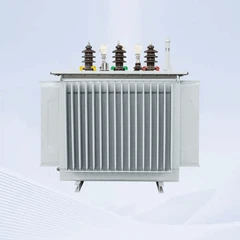
Oil-immersed distribution transformers are the fundamental nodes of electrical distribution networks. They step down medium voltage, typically 11 kV, 22 kV, or 33 kV, to usable low voltage such as 400 V or 230 V for end consumers. The insulating mineral oil inside the tank performs two jobs: it provides electrical insulation between the windings and the tank, and it transfers heat from the core and windings to the tank wall and radiators, where air carries it away. This proven design offers excellent cooling, strong dielectric performance, long service life, and cost-effectiveness for medium and higher power ratings. The 50 kVA to 2500 kVA range covers the vast majority of commercial, industrial, and small utility substation requirements, making it the most widely specified transformer family in power distribution.
Capacity Spectrum and Typical Applications
| Capacity Band | Typical Applications | Common Voltage Levels |
|---|---|---|
| 50 kVA to 250 kVA | Commercial buildings, small workshops, farms, rural electrification, pole-mounted distribution | 11 kV or 22 kV to 400 V |
| 250 kVA to 1000 kVA | Industrial plants, shopping centers, hospitals, schools, urban distribution substations | 11 kV, 22 kV, or 33 kV to 400 V |
| 1000 kVA to 2500 kVA | Large industrial facilities, commercial complexes, small utility substations, renewable plant service supplies | 11 kV, 33 kV, or 66 kV class to 400 V |
Within each band, the mechanical format follows the site: pole-mounted units for overhead rural networks, pad-mounted units for compact ground-level installation, and conventional tank-type units with radiators for substations and industrial plants.
Key Technical Parameters to Specify
An oil-immersed distribution transformer is defined by the following parameters, each governed by the IEC 60076 series:
| Parameter | Typical Value | Reference Standard |
|---|---|---|
| Rated power | 50 kVA to 2500 kVA | IEC 60076-1 |
| Voltage ratio | 11 kV, 22 kV, or 33 kV to 400 V | IEC 60076-1 |
| Vector group | Dyn11 or Dyn5 for distribution duty | IEC 60076-1 |
| Impedance voltage | 4 to 6 percent depending on rating | IEC 60076-5 |
| Temperature rise | Top oil 60 K, winding 65 K for mineral oil | IEC 60076-2 |
| Cooling mode | ONAN standard, ONAF optional | IEC 60076-2 |
| Tap changer | Off-circuit taps plus or minus 2 by 2.5 percent | IEC 60076-1 |
Efficiency requirements follow national energy regulations such as GB 20052, which set maximum no-load and load loss values by capacity and voltage class. Specifying a higher efficiency class reduces operating losses over the transformer life.
How to Select the Right Rating and Specification
Selecting an oil-immersed distribution transformer requires a structured approach:
Perform a load survey that records connected load, demand factor, and diversity factor instead of summing nameplate ratings.
Add a growth margin of roughly 10 to 20 percent for future expansion, balanced against the cost of oversizing.
Confirm the supply voltage, system frequency, and earthing arrangement so the vector group matches the network.
Compare loss values and the capitalized cost of losses over the expected service life.
Specify the impedance voltage with reference to the network fault level so through-fault currents stay within the transformer's short-circuit withstand capability per IEC 60076-5.
Define the environment: indoor or outdoor, altitude, ambient temperature, and pollution level, because these affect insulation design and enclosure requirements.
Installation and Operation Notes
Oil-immersed units require a few site disciplines that dry type units do not:
Provide an oil containment pit or bunding where required by local environmental rules to capture any leakage.
Keep the silica gel breather dry so moisture does not enter the conservator or tank.
For units above a few hundred kVA, fit the standard protection accessories such as a pressure relief device and an oil temperature indicator, and consider a Buchholz relay for units with a conservator.
Take periodic oil samples for dielectric strength and dissolved gas analysis to detect developing faults.
Maintain clearance around radiators and fans so cooling air can circulate freely.
Routine inspection of oil level, tank condition, and connection tightness completes the maintenance picture for a long service life.
FAQ
Q: Why are distribution transformers filled with oil?
A: Mineral oil provides both electrical insulation and heat transfer. It has high dielectric strength and good thermal capacity, so it keeps the windings cool and insulated inside a compact tank.
Q: What is the difference between ONAN and ONAF cooling?
A: ONAN means oil natural circulation with air natural convection, the standard rating. ONAF adds fans that force air over the radiators, increasing the heat dissipation and allowing a higher rating for the same unit.
Q: What voltage levels do oil distribution transformers use?
A: The primary is normally 11 kV, 22 kV, or 33 kV, and the secondary is typically 400 V three-phase or 230 V single-phase, depending on the distribution standard of the region.
Q: How do I choose between 50 kVA and a larger rating?
A: Calculate the maximum coincident demand of the loads with a diversity factor, add a growth margin, and select the nearest standard rating above that value. Oversizing wastes money; undersizing shortens transformer life.
Q: What maintenance does an oil-immersed distribution transformer need?
A: Periodic oil level checks, oil sampling for dielectric strength and dissolved gas analysis, breather maintenance, connection tightening, and inspection of the tank and accessories. Larger units with conservators should have the Buchholz relay tested.
Q: Which standards apply to oil-immersed distribution transformers?
A: The IEC 60076 series is the core reference, with IEC 60076-1 for general requirements, IEC 60076-2 for temperature rise, IEC 60076-5 for short-circuit withstand, and regional efficiency standards such as GB 20052.
Send Inquiry