







Oil Transformer Cooling Methods Explained: ONAN vs ONAF in Real Projects
May 13, 2026
Leave a message
When selecting an oil-immersed transformer, oil transformer cooling methods are not just a technical detail-they directly determine how much load your transformer can safely handle, how long it will last, and whether it will fit into your existing installation space. In real-world projects, heat is the number one enemy of transformer insulation. Choosing the wrong cooling method leads to accelerated aging, unexpected derating, or even premature failure.
As a professional transformer manufacturer with over 18 years of export experience, GNEE has helped hundreds of clients avoid these pitfalls. This guide explains the two most common oil transformer cooling methods-ONAN and ONAF-from a practical project perspective, so you can make the right choice for your substation, industrial plant, or commercial building.

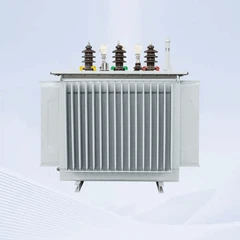
GNEE factory – oil-immersed transformers
What Are the Main Oil Transformer Cooling Methods?

International standards (IEC 60076, IEEE C57) classify oil transformer cooling methods using letter codes that describe oil circulation and air cooling:
| Cooling Method | Oil Circulation | Air Cooling | Typical Application |
|---|---|---|---|
| ONAN | Natural | Natural | Distribution transformers, stable loads |
| ONAF | Natural | Forced (fans) | Industrial peaks, hot climates |
| OFAF | Forced (pumps) | Forced | High capacity, compact sites |
| ODAF | Directed forced | Forced | Large utility transformers |
For most distribution and medium-power projects (1000kVA–2500kVA), ONAN and ONAF are the most relevant. They share the same natural oil circulation but differ in how heat is removed from the radiator surface.
How ONAN Cooling Works in Oil Transformers
ONAN (Oil Natural Air Natural) is the simplest and most widely used cooling method. Heat from the core and windings warms the oil, which rises naturally to the top and flows to cooling radiators. Cooler oil sinks, creating a natural convection cycle. Ambient air flows over the radiators-also naturally, without fans.

Key advantages of ONAN:
- No moving parts → extremely reliable
- Zero auxiliary power consumption
- Silent operation (ideal for residential or hospital areas)
- Low maintenance (only oil checks)
Limitations:
- Cooling capacity limited by natural airflow
- Requires good ventilation and clearance around the transformer
- Not suitable for sustained overload or high ambient temperatures
In real projects, ONAN is best for stable load profiles (average load ≤80% of rating), moderate climates, and installations with plenty of space for natural air movement.
How ONAF Cooling Improves Transformer Performance
ONAF (Oil Natural Air Forced) keeps the same natural oil circulation but adds external fans that force air over the radiators. Fans are typically temperature-controlled-they activate only when oil or winding temperature exceeds a set threshold.

Key advantages of ONAF:
- Increases thermal capacity by 25–40% compared to ONAN
- Allows safe short-term overload (e.g., 3125kVA from a 2500kVA unit)
- Helps in hot climates or poorly ventilated indoor substations
- Provides future expansion headroom without buying a larger transformer
Trade-offs:
- Additional cost for fans, control panel, and auxiliary power
- Fans generate moderate noise (65–70 dB)
- Requires periodic fan inspection and cleaning
ONAN vs ONAF – Key Differences at a Glance
| Parameter | ONAN | ONAF |
|---|---|---|
| Oil circulation | Natural | Natural |
| Air cooling | Natural | Forced (fans) |
| Load capacity | Rated (100%) | Up to 140% of ONAN rating |
| Auxiliary power | None | Required (intermittent) |
| Noise level | Very low (~55 dB) | Moderate (~68 dB with fans) |
| Maintenance | Minimal | Fan servicing every 6–12 months |
| Best for | Stable loads, quiet sites | Variable/peak loads, hot climates |
Real Project Scenarios – Which Cooling Method Should You Choose?
Scenario 1 – Industrial Plant with Stable Load
A factory runs 24/7 at 70–80% of transformer rating. Ambient temperature is moderate. Ventilation is good.
Recommendation: ONAN – lowest lifecycle cost, highest reliability.
Scenario 2 – Indoor Substation in a Hot Climate
Transformer room has limited airflow. Summer temperatures exceed 40°C. Load varies seasonally.
Recommendation: ONAF – forced air compensates for poor natural convection.

Scenario 3 – Future Expansion Expected
Current load is 2000kVA, but will grow to 3000kVA within 3 years. Budget is tight today.
Recommendation: ONAF-ready transformer – buy ONAN now, add fans later when load increases.
How GNEE Helps You Select the Right Cooling Method
Our engineering team follows a proven 4-step process:
- Evaluate your load profile – average, peak, duration, future growth.
- Assess installation environment – ambient temperature, ventilation, space, noise limits.
- Balance upfront cost vs. lifecycle reliability – we provide ONAN and ONAF quotes side by side.
- Deliver custom recommendations – including transformer sizing, fan configuration (if applicable), and installation guidelines.
We have successfully delivered ONAN and ONAF transformers to projects in Southeast Asia, Africa, the Middle East, and South America – each with a cooling method matched to local conditions.
Conclusion – Choose the Right Oil Transformer Cooling Method for Long-Term Performance
Oil transformer cooling methods – specifically ONAN vs ONAF – are not one-size-fits-all. ONAN gives you simplicity, silence, and low cost for stable loads. ONAF provides flexibility, overload capacity, and resilience in hot or confined spaces. The right choice protects your transformer's insulation, reduces downtime, and lowers total lifecycle cost.
Still unsure which cooling method fits your project?
👉 Send your load profile, substation photos, and ambient temperature to GNEE today. Our engineers will reply within 24 hours with a free cooling method recommendation, a detailed quote for both ONAN and ONAF versions, and a fit-check report.
FAQ
Q1: What are Oil Transformer Cooling Methods?
A: Oil Transformer Cooling Methods are the techniques used to transfer heat from transformer windings and core to the surrounding environment. In oil-immersed transformers, this involves circulating insulating oil and dissipating heat via natural or forced air.
Q2: What is the difference between ONAN and ONAF?
A: ONAN (Oil Natural Air Natural) relies entirely on natural oil circulation and air cooling. ONAF (Oil Natural Air Forced) adds fans to force airflow over radiators, increasing heat dissipation and thermal capacity under high loads.
Q3: When should ONAF cooling be used instead of ONAN?
A: ONAF is recommended for high ambient temperatures, variable load profiles, peak load conditions, or when future load growth is expected. ONAN is typically sufficient for stable load applications in moderate environments.
Q4: Can an ONAN transformer be upgraded to ONAF?
A: In many designs, ONAN transformers can be upgraded to ONAF by adding external fans and control circuits. This allows additional cooling without replacing the core and winding structure.
Q5: Does ONAF significantly increase operational costs?
A: Modern ONAF fans operate only when oil or winding temperature exceeds preset thresholds. Therefore, energy consumption is intermittent and usually minimal compared with the benefits of increased thermal capacity and reliability.
Send Inquiry