









Pad-Mounted vs Ordinary Oil-Filled Distribution Transformers
Aug 26, 2025
Leave a message
What Defines a Pad-Mounted Transformer
A pad-mounted transformer is a liquid-filled distribution transformer installed at ground level on a concrete pad, enclosed in a lockable steel cabinet with separate high-voltage and low-voltage compartments and cable access from below. It is designed for loop-feed or radial-feed networks in residential, commercial and light industrial areas, and it is rated for three-phase service up to 2500 kVA in the standard North American specification, IEEE C57.12.34.
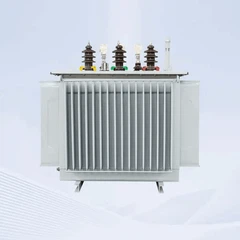
The ordinary oil-filled distribution transformer is the same active part without the enclosure and cable compartment. It is mounted on a pole, on a platform or inside a substation or switchroom, and its high-voltage connection is made by conventional bushings or cable terminations rather than by separable connectors.
Construction and Protection Features
The pad-mounted cabinet is a tamper-resistant enclosure with doors that can be padlocked, a dead-front high-voltage compartment in which all live parts are covered, and a low-voltage compartment with the secondary bushings and neutral. High-voltage cable connection uses elbow-type separable connectors that allow a cable to be plugged or unplugged without cutting the conductor, which makes network reconfiguration fast and reduces outage time.
Protection is normally by dual fusing: bayonet or current-limiting fuses on the high-voltage side for transformer faults, and a weak-link or expulsion arrangement on the loop for sectionalising. The tank is fitted with a pressure relief device, and the enclosure is designed to contain the coolant if a fault occurs, which is why the design suits a location where the public walks past the equipment.
Comparison with an Ordinary Oil-Filled Transformer
| Item | Pad-mounted | Ordinary oil-filled |
|---|---|---|
| Installation | Ground level on concrete pad | Pole, platform or indoor room |
| Enclosure | Lockable steel cabinet, dead front | None, exposed tank and bushings |
| HV connection | Separable elbow connectors | Bushings or cable box |
| Protection | Dual fusing, pressure relief | External fuse or upstream breaker |
| Network type | Radial or loop, terminal or ring network | Mainly radial |
| Footprint and weight | Larger and heavier at equal rating | Smaller and lighter |
| Unit cost | Higher because of cabinet and connectors | Lower |
| Coolant options | Mineral oil or ester-based fluid | Mineral oil or ester-based fluid |
The trade-off is explicit: the pad-mounted unit costs more and occupies more space, but it gives a compliant installation in a public place, faster network switching and better protection against accidental contact and transient overvoltage. Ester-based dielectric fluids are increasingly specified for pad-mounted units in environmentally sensitive locations, because they are readily biodegradable and have a higher fire point than mineral oil.
Applications and Installation Practice
Pad-mounted transformers are used for residential subdivision supply, commercial centres, electrical distribution rooms, basement and ground-floor substations, manufacturing plants, water and wastewater facilities, and public infrastructure where an underground cable network terminates above ground. They are widely deployed in North America, South America, Oceania, East Asia and South-East Asia.
Installation requires a level concrete pad sized for the cabinet and for cable bending radius, a grounding grid bonded to the tank and to the neutral, and clearance in front of the doors for operating personnel. Ventilation must not be obstructed, and where the unit is placed near a building, fire separation distances set by local code apply. Core and winding losses should be confirmed against the applicable national efficiency regulation for distribution transformers, and for the European market the loss classes defined in EN 50464-1 provide the usual reference framework.
Frequently Asked Questions
Q: What is the difference between terminal and ring-network pad-mounted units?
A: A terminal unit feeds one load from one direction; a ring-network unit carries loop cables so that a second transformer or feeder can be supplied or switched without an outage.
Q: Can the high-voltage cable be disconnected with the transformer energised?
A: It can be plugged and unplugged with the separable connector de-energised and the load transferred, which is the standard operating procedure for network reconfiguration.
Q: Why is a pad-mounted transformer more expensive?
A: The cabinet, dead-front compartment, separable connectors, dual fusing and the heavier tank required to fit the enclosure all add cost compared with a bare distribution transformer.
Q: Is a pad-mounted unit suitable for indoor installation?
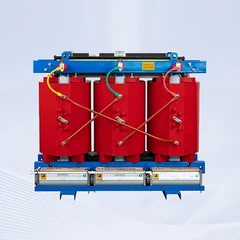
A: It is normally an outdoor product. Indoor installations usually use a dry-type unit or a compact substation with the appropriate ventilation and fire separation.
Q: Which coolant should be specified?
A: Mineral oil to IEC 60296 or ASTM D3487 remains the default; ester-based fluid is specified where spill risk, fire point or environmental rules require it.
Send Inquiry