







Pad-Mounted Transformer: Design Features, Applications and Installation Guide
Aug 26, 2025
Leave a message
What Is a Pad-Mounted Transformer?
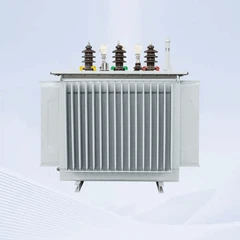
A pad-mounted transformer is a distribution transformer housed in a lockable, tamper-resistant steel enclosure that is installed on a concrete pad at ground level. It is the standard solution for underground residential distribution and commercial networks, especially in North America, where the enclosure contains the high-voltage terminations, low-voltage bushings and protective equipment in one compact unit. Per IEEE C57.12.20, pad-mounted transformers are commonly available up to 2500 kVA with system voltages up to 34.5 kV, and they eliminate the need for overhead lines in residential and urban areas.
Key Design Features and Advantages
Integrated and Compact Structure
The pad-mounted design integrates the transformer tank, high-voltage compartment, low-voltage compartment and protection devices into a single enclosure. This makes the unit more compact, easier to transport and simpler to install and maintain than conventional pole-mounted or open substation arrangements.
Strong Overload Capacity
Compared with older distribution transformer designs, pad-mounted units are engineered with generous cooling surfaces and efficient oil circulation, which gives them a stronger short-time overload capability and allows them to cope better with variations in power load.
Good Heat Dissipation
Optimized radiator and tank design effectively reduces the operating temperature, which slows insulation aging and improves the service life of the equipment. Typical operating temperature reduction is in the range of 10 to 20 K compared with poorly ventilated installations.
Typical Application Scenarios
Pad-mounted transformers are suitable for a wide range of occasions. In transmission and distribution systems they provide stable and reliable power supply at the point of consumption. In industrial and construction fields they meet various power needs and support the normal operation of production equipment. For small substations and distributed grid sources, their convenient transport and small footprint make them ideal for sites with limited space, such as residential subdivisions, shopping centres, schools and commercial campuses connected to underground cable networks.
Installation and Maintenance
Installation is straightforward: the transformer is placed on a reinforced concrete pad, levelled and anchored, and the cable connections are made from below through sealed cable entrances. The pad keeps the enclosure dry and provides a stable base for subsequent inspection and maintenance. Because multiple functions are integrated into the enclosure, the number of external devices is reduced and maintenance is more convenient; routine work covers oil level checks, bushing and connection inspection, compartment cleaning and operation of the switching and fusing devices. The enclosure door interlocks prevent access to live parts, improving operator safety.
Standards and Market Outlook
Pad-mounted transformers are designed and tested to IEEE C57.12.20, IEEE C57.12.00 and ANSI C57.12.20 where applicable, covering ratings, losses, temperature rise and tank construction, together with IEC 60076 for international projects. Demand continues to grow steadily, particularly in developed markets such as the United States and Canada, driven by the expansion of underground distribution systems, urbanization and the reinforcement of grid reliability. Technological development is focusing on lower losses, natural ester insulation and improved monitoring features.
FAQ
Q: What is the difference between a pad-mounted transformer and a pole-mounted transformer?
A: A pad-mounted unit is installed on a concrete pad at ground level inside a tamper-resistant enclosure, while a pole-mounted unit is fixed on a utility pole; pad-mounted units are preferred for underground residential distribution and commercial networks.
Q: Why is a concrete pad required?
A: The pad provides a stable, level foundation, keeps the enclosure above ground moisture, and makes the unit accessible for maintenance; it also supports the weight of the transformer and its oil.
Q: Are pad-mounted transformers safe for public areas?
A: Yes, the locked enclosure, grounded tank and interlocked compartments prevent direct access to live parts, and the design meets the tamper-resistance and safety requirements of IEEE C57.12.20.
Q: What voltage ratings are available?
A: Pad-mounted transformers are commonly available for primary voltages up to 34.5 kV and secondary voltages of 480 V, 400 V or 208 Y/120 V, with ratings typically up to 2500 kVA.
Q: What is the typical overload capacity?
A: The overload capacity depends on the loading history and ambient temperature; typical designs allow short-time overloads of 20 to 30 percent above nameplate rating while keeping the hot-spot temperature within the limits of the loading guide IEC 60076-7.
Q: How often should a pad-mounted transformer be inspected?
A: Annual external inspection and periodic oil level and dielectric checks are common practice, with more detailed oil analysis and electrical testing every three to five years depending on the operating environment.
Send Inquiry