







The Cost of Transformer Failure in Manufacturing
Jan 09, 2026
Leave a message
Recent surveys have reported the cost of a single hour of manufacturing downtime to be anywhere between $500,000 and $5 million. The survey participants were very large, high-volume manufacturers in automated industries such as automotive, steel, chemical and pharmaceuticals. The estimates of hourly downtime costs were reported by respondents to the surveys without definitions, supporting details or analysis.
Accepting these numbers at face value for the survey population and methods employed, they are not representative of the manufacturing sector as a whole and would be a misleading benchmark for the majority of manufacturing firms that own power transformers.

In this post, we describe a simple approach to estimating the cost of a transformer failure in manufacturing based on the associated downtime and the value of lost production. Two hypothetical examples are presented with realistic calculations to illustrate the magnitude and importance of downtime cost. Any manufacturing firm could use this method to estimate the corresponding cost of a transformer failure in its own operations.
The critical cost control factor is the time to restore power after a failure and several strategies for minimizing downtime are recommended.
What Causes Transformer Failure?
 Transformer failures can happen for various reasons. Depending on the operating life of a unit, different causes can affect a transformer's reliability or even end its service life.
The specific stages of failure include:
- Infant mortality: This stage covers the first five years of a transformer's operating life. Failure during this stage typically occurs from delivery damage or manufacturing defects like poor craftsmanship, careless assembly or faulty winding during automated processes.
- Random failure: This stage covers a unit's operating life from five years to 25 years. Typical causes of failure range from functioning in hazardous environments to experiencing consistent abnormal conditions like overloads, power surges or short circuits. This stage usually sees the least number of failures.
- Wear-out failure: Wear-out failure occurs after a transformer operates for more than 25 years. Long-time exposure to vibrations, heat and mechanical stresses will weaken the materials and structure. The insulation usually suffers the brunt of the wear.
How Much Does It Cost if Your Transformer Fails?
In manufacturing companies, the value of lost production during the downtime period is, by far, the largest component of the cost of a transformer failure. During an unscheduled power outage of a few hours or days, most costs continue but are not covered by produced value.
While there are collateral costs associated with replacing a failed transformer, they are often trivial relative to the value of lost production.
To assess the hazard, it is a fair approximation to measure the downtime cost to a manufacturer as the value of lost production, which is relatively easy to measure as it is simply the calculated lost revenue. This approach also reveals the high cost of each hour of downtime.
Minimizing that downtime in the event of a failure should be a high priority for manufacturing firms.
Example
A continuous process manufacturer operates 24/7 for 52 weeks throughout the year, with 10 days of scheduled downtime for maintenance and line changeovers. The total available production time in a year is 24 x 355 = 8520 hours per year. Assume that following a transformer failure it takes three days to find and order a suitable replacement, receive it, install it and power it up.
The resulting production downtime is 3 x 24 = 72 hours. This is 72/8520 = 0.85% of their annual production capacity, lost forever. Its monetary value depends on the value of the company's production that relied on the failed transformer.
For example:
| Annual Production Value (Revenue) | Hourly Value | Downtime | Cost of a Failure |
|---|---|---|---|
| $100 million | $11,737 | 0.85% | $845,000 |
| $500 million | $58,685 | 0.85% | $4.2 million |
| $1 billion | $117,370 | 0.85% | $8.4 million |
Even if the failed transformer powered only a single step in the production line, its failure would disrupt the flow of work and soon force upstream and downstream sections to shut down. The value of lost production could be that of the entire line.
Although the chances of a 20-year-old power transformer failing are small, the financial consequences for the company can be quite large if it does. Along with lost production, there may be issues such as scrap or equipment damage incurred during the power failure, loss of customer confidence or delivery delay penalties. A continuous process manufacturer may not be able to make up for the lost production time and related costs. There are no more productive hours in the year.
How to Minimize Downtime Due to a Failed Transformer
The best way to minimize downtime and the costs that come with it is by taking a proactive approach to your power needs. The first critical step is partnering with a company that learns about your operation and helps identify the most beneficial solutions for your facility. Some of the ways we can help your company minimize the costs of transformer failure include:
 Invest in Redundancy
Investing in redundant equipment and infrastructure is the most effective method. Downtime can be eliminated by installing parallel transformers. When one transformer fails, load is switched to the opposite-ended transformer. The fault is then investigated and repaired, or the offline transformer is replaced offline.
High-volume high-value continuous process manufacturers can readily justify this level of investment, and many of them have done it. But not all.
A simpler and less expensive method is to purchase backup transformers and store them on-site. Downtime then can be reduced to the time required to install, which could be anywhere from a few hours to two days depending on the availability of installation crews. This approach works well if the facility uses only a few different sizes of transformers and has adequate storage space.
Backup transformers are replaced as needed. We know of some companies that do this, but it is not a widespread practice.
Planned Replacement
A growing practice in facilities management is the planned replacement of aging electrical equipment when it approaches its useful life. The advantages of planned replacement are that it utilizes the "safe" economic life of equipment while avoiding the higher costs of catastrophic failure during operation. It is now common in overhead lighting, where the useful life is well known, and scheduled bulk replacement is more economical.
It is also used for mission-critical military electronics equipment. Except for some utilities, it has not been widely practiced for distribution transformers in the United States.
Because transformers are highly reliable devices (useful lives of 15 to 25 years with low maintenance), their operation is often taken for granted. Failures are quite rare and come as unwelcome surprises. Despite continuous reliability engineering research, the amount of publicly available data on transformer failure rates is insufficient to calculate accurate age-dependent hazard rates that would be necessary for optimum replacement planning.
As failure data and reliability research improve, planned replacement of transformers may become a more common practice.
At the unit level, the economic life of a transformer depends on the quality of materials and workmanship put into a transformer and the conditions of its use over time. As a rough rule of thumb, the maximum economic life of a power transformer under normal rated conditions is about 40 years, and any transformer older than 30 years is beginning to age physically and should be considered for replacement.
Preventive Maintenance Programs
Following a practical preventive maintenance program is also helpful for preventing early failures in dry type transformers. Regular inspections can identify warning signs of deterioration long before failure occurs.
 We recommend following these basic steps:
- Establish inspection intervals: Base your maintenance schedule on your operating environment - every three to six months for dusty locations or annually for clean, controlled spaces.
- De-energize the transformer: Always cut power before performing any hands-on maintenance to ensure worker safety.
- Cleaning: Clean fans and windings first with a vacuum, followed by compressed air at a maximum of 20 to 25 psi. You should also avoid using chemicals that could damage the surface of your unit.
- Check for proper ventilation: Remove dust, dirt and debris that might restrict airflow.
- Visual inspections: Look for discoloration on components that could indicate an electrical problem or overheating.
- Check connections: Tighten all accessible hardware to prevent arcing, increased resistance and overheating.
- Documentation: Keeping detailed records of transformer maintenance provides valuable insight into the unit's performance while helping predict potential failures.
Not sure about the required capacity/voltage of the dry-type transformer for your project? Submit your load requirements and installation environment, and GNEE engineers will provide a free accurate selection plan to avoid cost waste caused by incorrect selection!
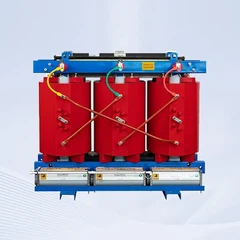
What is a dry transformer?
A dry type transformer is cooled by normal air ventilation instead of a liquid such as mineral oil or Envirotemp FR3. The early transformers manufactured by Westinghouse and General Electric were air cooled because they operated at low power and voltages.
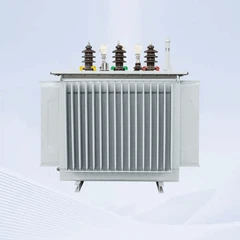
What is the difference between wet and dry transformers?
While dry-type transformers eliminate the risk of leaks and spills, liquid transformers are safer for the environment if a leak or spill occurs. Easier recycling: A liquid transformer is also easier to remanufacture or recycle, and they have multiple recycling options.
What is drying out of a transformer?
Transformer drying is a critical process aimed at enhancing insulation reliability by removing moisture through heating and dehumidification methods. Understanding the various techniques and their application ensures optimal transformer performance
Send Inquiry