


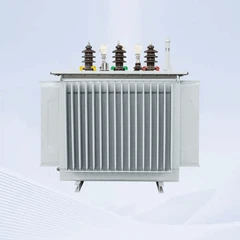
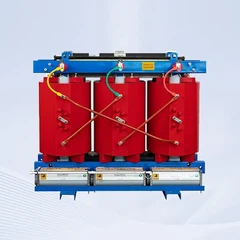





Types of Conductors Used in Dry Type Transformers
Jan 09, 2026
Leave a message
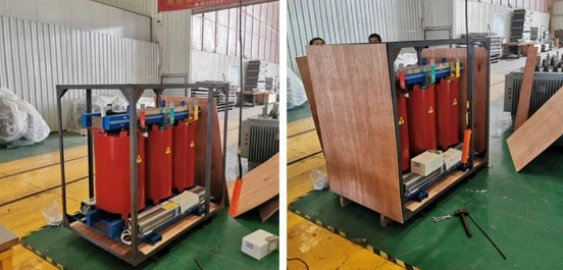
Dry-type transformers contain windings - or coils - that act as conductors. Transformer builds typically have primary and secondary windings: the primary windings create input power flow, while the secondary windings convert the power and transmit it to the load.
Transformers with disc windings have conductors wound on the flat sides of the disc, while transformers with layered windings use conductors that cross each other from bottom to top

The Role of Conductors in Dry Type Transformers
Although low- and medium-voltage transformers sometimes contain aluminum windings, many engineers prefer copper windings because of their superior properties. First, copper windings are significantly more conductive than their aluminum counterparts. Second, copper is much more reliable because of its superior strength, so it offers exceptional resistance to deformation and protection against fault current stresses.
Because of its lower price, some manufacturers choose aluminum for windings in less demanding, low-voltage applications.
While some manufacturing companies use both options for dry type units, copper windings are the industry standard due to their optimal performance.
Copper vs Aluminium Conductors
Windings consisting of either copper or aluminium can perform similar functions; the choice depends on the requirements of the application.
| Factor | Copper windings | Aluminium windings |
|---|---|---|
| Conductivity | Significantly higher | Lower |
| Strength / reliability | Superior; exceptional resistance to deformation and fault-current stresses | Adequate for less demanding service |
| Cost | Higher | Lower |
| Typical use | Industry standard for optimal performance | Some low-voltage, less demanding applications |
Conductor Specifications for GNEE Electric Dry Type Transformers
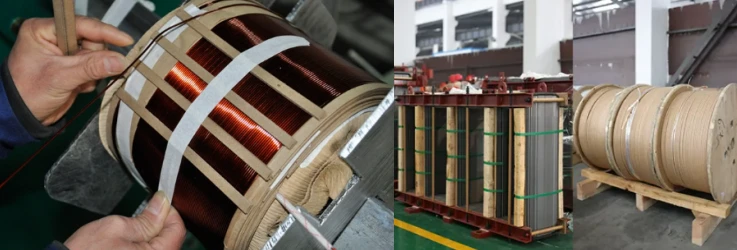
GNEE Electric dry type transformers feature some of the industry's most efficient designs, with 100% copper windings, laminated steel cores and premium-grade insulation. We hand-wind these units and assemble them under strict quality control parameters at our state-of-the-art
Cincinnati facility. We test all transformers multiple times during manufacturing to ensure each client receives a high-quality product that will provide many years of reliable service.
Our primary windings feature disc-wound, round coils with Nomex-insulated copper magnet wire or wire covered with heavy armored polythermaleze (HAPT). Disc-wound designs are standard in core-form transformers with ratings over 25 kilovolts. Because of its exceptional performance, we also use disc winding in our 5- and 15-kilovolt units.
The round-coil windings offer increased strength for transformers with medium and high voltages.
Our secondary windings contain Nomex insulation with copper conductors wound in strips to minimize vertical forces. GNEE Electric dry type transformers carry a basic insulation level (BIL) rating equal to liquid-filled designs.
Winding Design Notes
- Primary windings - commonly disc-wound round coils with Nomex-insulated copper magnet wire or heavy-armored polythermalze (HAPT) wire.
- Disc winding - standard in core-form transformers rated over 25 kV, and also used in 5- and 15-kV units; round-coil windings offer increased strength for medium- and high-voltage transformers.
- Secondary windings - Nomex insulation with copper conductors wound in strips to minimise vertical forces.
- BIL - dry-type transformers can carry a basic insulation level (BIL) rating equal to liquid-filled designs.

Advantages of Our Dry Type Transformer Conductors
Each conductor is drawn to exact specifications with strict quality control to create precise dimensions and surface quality.
This accuracy leads to consistent electrical properties throughout the winding assembly, eliminating weak points that can lead to premature failures.
Specialised heat treatment enhances electrical conductivity and mechanical durability, so conductors maintain their performance even after thousands of thermal cycles over decades of service.
 Integrated Cooling System Design
Strategically placed air channels between winding layers create a chimney effect that enhances cooling, increasing the surface area exposed to cooling air while maintaining proper electrical clearance.
Cooling ducts are sized and positioned based on thermal modelling that accounts for load profiles, so no section of the winding experiences excessive temperature rise, even under varying load conditions.
Temperature Monitoring and Protection
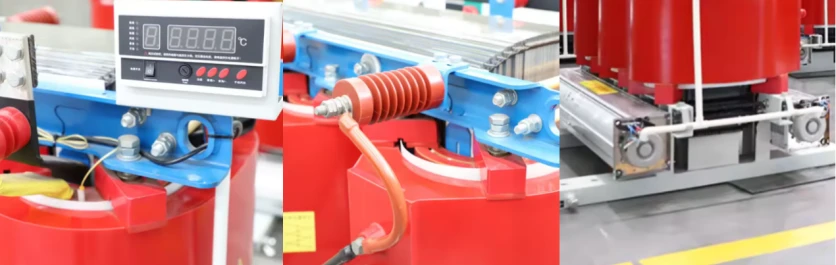
Thermal sensors track the operating temperatures of the windings, core and other key components. When temperatures exceed safe limits, alarms let operators know when to reduce load or perform maintenance, helping prevent transformer failures that could lead to costly downtime and damage to connected equipment. Continuous tracking detects overloads, cooling-system failures, insulation degradation and other abnormal conditions.
By continuously tracking the temperature of the windings, core and other key components, operators can detect overloads, cooling system failures, insulation degradation and other abnormal conditions.
These value-added features are among the many reasons businesses and organizations choose our transformers for their power distribution needs.
Learn More About Conductors for Transformers With GNEE Electric
If you want to learn more about how GNEE Electric Transformers' medium-voltage, dry type transformers can benefit your unique application, our knowledgeable and experienced team can guide you. Besides offering new transformer builds, we provide additional services to handle your transformer needs, including custom bus work, retrofitting and emergency replacements.
FAQ
What is the dry type of transformer?
Dry Type Transformers are transformers that use air instead of liquid for insulation and cooling. These transformers are safe, environmentally friendly, and require less maintenance. They are commonly used in indoor applications like commercial buildings, hospitals, and data centers, where fire safety is a priority.
What is the difference between dry and oil transformers?
Oil-filled transformers are ideal for larger applications requiring higher voltages, while dry transformers are better at handling medium and small voltage ratings
How do you clean a dry type transformer?
Ideally, use both methods. Start by vacuuming off the parts followed by spraying them with compressed air that has a pressure of no more than 20 to 25 psi. Only use dry compressed air. Avoid using chemical cleaners to protect the surfaces of the transformer from damage
What is the life expectancy of a dry type transformer?
between 20 and 30 years
Dry-type Transformers: Typically last between 20 and 30 years. Power Transformers (oil-filled): These can last anywhere from 30 to 50 years, depending on the operating conditions and the frequency of maintenance.
Complete an online quote form today to obtain pricing for our products. You can also call +86 15824687445 with questions or to request additional product information.
Send Inquiry