







What are the major faults in transformers?
Jan 09, 2026
Leave a message
Most of the time, your transformer may seem like an inert apparatus tucked away in a cabinet. However, when energized, it is a vibrant, living thing, transforming and feeding electrical power at 60 Hertz to your facility. In addition to the metal windings and core, it contains organic materials in the form of insulation. However, like all living things, transformers age over time and eventually lose their capacity to function.
Life insurance underwriters use statistical mortality curves to estimate the chance that a person will die at a given age. Reliability engineers use a corresponding hazard curve to estimate the failure rate of a specific class of transformers as a function of their age. A stylized hazard curve, also called the bathtub curve due to its shape, is shown in Figure 1 below.

Figure 1. Typical Hazard Curve for distribution transformers
The hazard curve shows that a cohort of newly installed transformers has a low positive failure rate (Infant Mortality) which declines with age as early failures are culled from the population. That is followed by a longer period of very low constant failure rates (Random Failure), until age and operating conditions begin to break down the dielectric properties of the transformer's insulation (Wear Out Failure), after which the failure rate increases rapidly. The causes of failure are different at each stage.
Determining Your Transformer's Failure Rate
The relevant measure of age here is cumulative operating hours at load, not necessarily calendar time. The cumulative effects of time, temperature, and electrical and mechanical stresses under load determine the residual dielectric strength of insulation and the useful life of your transformer. The rate of aging will depend not only on time but on your transformer's duty cycle and load history.

Other factors equal, a transformer with a continuous 24/7 duty cycle will age about four times as fast as one with a five-day eight-hour duty cycle. A transformer built with 180-degree (Class H) rated insulation will age faster (and fail sooner) than one with 220-degree (Class R) rated insulation. A history of unstable electric power conditions (primary voltage fluctuations, protection failure, persistent overloading, secondary power surges, shorts and switching harmonics) will increase dielectric stress, accelerate the normal aging process and shorten the useful life.
Each installation has a unique load history and the only way to accurately measure individual unit "age" is to continuously monitor and log transformer temperature and load (which we recommend.) Abnormal voltage and load events should also be recorded.
A benchmark for age measurement would be a continuous (24/7) operation at rated load, which would log a maximum of 8,760 hours of load per year. By comparison, an 8/5/50 operation would log a maximum of only 2,000 hours of load per year. No-load operations do not contribute significantly to aging.
Signs of an Aging Transformer
Even the most reliable transformers will show signs of deterioration before they fail. Identifying these warning signs early enough can help you plan ahead before a failure shuts down your operation.
 Unusual sounds: A well-functioning transformer will produce a consistent, low-humming sound. Irregular buzzing, crackling or popping noises typically indicate loose connections or failing insulation.
- Increased operating temperatures: Excessive heat rapidly breaks down the insulation and can lead to electrical shorts. If your transformer is operating hotter than normal, it could indicate deterioration internally.
- Visible deformations: Rust, corrosion, bulging components and other deformations can indicate environmental damage or internal pressure buildup. Even minor external damage can mean there's heavy damage on the inside.
- Discoloration on windings or insulation: Look for tracking on windings, carbonization or color changes on insulation materials during inspections. These signs often indicate overheating or loose connections.
- Performance changes: Voltage fluctuations or frequent breaker trips usually occur when transformers reach the end of their service life. These signs may start out small before growing into persistent problems and failing.
- Inadequate resistance: Insufficient measurements during dielectric absorption tests suggest insulation degradation that requires immediate attention.
How Proper Maintenance Can Increase a Transformer's Lifespan
Regular maintenance significantly extends your transformer's service life and helps avoid unexpected failures. ELSCO Transformers recommends taking the following steps to keep your units in good working condition:
- Always de-energize your transformer before performing any hands-on maintenance. Safety must be your primary concern when working with electrical equipment.
- Establish an effective inspection schedule based on your environment and application. Perform inspections every three to six months for transformers in dusty areas. In clean, dry environments, annual checks are normally sufficient.
- Clean the dust from the cooling fans and windings with a vacuum first, followed by dry compressed air at no more than 20 to 25 psi. Avoid chemical cleaners that might damage the surface.
- Check the ventilation during every inspection and remove any obstructions if needed. If dust is problematic, consider installing filters at ventilation ports and replacing them regularly to prevent restricted airflow.
- Tighten all accessible hardware and replace any loose insulation during maintenance to prevent components from working loose during operation.
- Document all maintenance, test results and observations to track the condition of your transformer over time.
Not sure about the required capacity/voltage of the dry-type transformer for your project? Submit your load requirements and installation environment, and GNEE engineers will provide a free accurate selection plan to avoid cost waste caused by incorrect selection!
What is the maintenance of a dry type transformer?
Dry-Type Transformer Maintenance Checklist
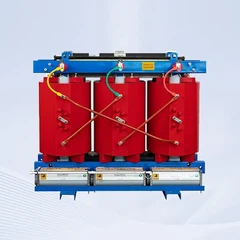
When you clean a transformer, be on the look out for rust on the clamps and core steel, carbonization or tracking on the windings and insulation, discoloration on surfaces that could be a sign of overheating, and loose connections.
What is the kVA rating of a dry type transformer?
Dry-type transformer, including one that is incorporated into any other product, in which the core and windings are in a gaseous or dry compound insulating medium and that: is either single phase with a nominal power of 15 to 833 kVA, or three-phase with a nominal power of 15 to 7500 kVA.
Where are dry type transformers commonly used?
Commercial Buildings: Dry-type transformers are commonly used in commercial buildings such as office complexes, shopping malls, and hospitals. Their low fire risk and maintenance-free operation make them ideal for indoor installations with critical space and safety.
Send Inquiry