







Sealed-Type vs Conservator-Type Oil-Immersed Transformers
Nov 12, 2025
Leave a message
Why Oil Volume Changes Matter
Transformer oil expands when the unit warms under load and contracts when it cools. If the tank were rigid and completely full, that volume change would generate internal pressure on the tank wall and draw air in through any seal imperfection as the oil contracted. Air brings oxygen and moisture, which oxidise the oil and degrade the paper insulation of the windings. Every oil-immersed design is therefore an answer to a single question: how to let the oil expand and contract without letting the atmosphere into the dielectric.
Sealed-Type Construction
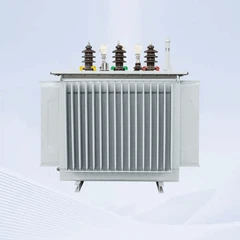
A sealed-type transformer has no conservator and no breather. The tank is welded closed and accommodates expansion either by a flexible element such as a corrugated wall or a diaphragm, or by a cushion of inert gas, normally nitrogen, held above the oil surface. Because there is no free oil surface in contact with air, moisture ingress is very low, oxidation is slow and the oil retains its dielectric strength for a long time.
The consequences are low maintenance and a compact, tamper-resistant assembly, which suits urban networks, pole and pad installations, renewable inverter step-up duty and indoor locations where periodic maintenance visits are difficult. The limits are thermal and volumetric: the flexible tank must be sized for the expansion of its own oil, so the design is used up to about 36 kV and for small to medium ratings rather than very large units.
Conservator-Type Construction
A conservator-type transformer keeps a separate expansion tank above the main tank, connected by an oil pipe. The main tank is filled to the top and the conservator holds the oil level, so the main tank is always full and the free oil surface is small in area. A silica gel breather dries the air that enters and leaves the conservator as the oil level changes, and a bladder or diaphragm is sometimes fitted inside the conservator to keep the oil from touching air at all.
This design scales. Because the conservator volume can be sized freely, the arrangement is used from medium distribution ratings up to very large power transformers in the hundreds of kV range, where the expansion volume would be impractical to absorb in the tank itself. The cost is routine maintenance: breather silica gel must be checked and replaced, oil level indicators must be read and the conservator gaskets must be monitored for leaks.
Structural Comparison
| Item | Sealed-type | Conservator-type |
|---|---|---|
| Oil expansion handling | Flexible tank wall or nitrogen cushion | Dedicated conservator tank |
| Air contact | None in normal operation | Exchange through silica gel breather |
| Moisture ingress risk | Very low | Moderate if the breather or bladder fails |
| Oil ageing rate | Slow, no oxygen exposure | Faster, oxidation proceeds over years |
| Common voltage range | Up to about 36 kV | Medium voltage up to transmission level |
| Maintenance | Minimal, no breather to service | Breather, oil level and leak checks |
| Oil sampling | Through a valve or by opening | Directly from the conservator |
| Gas monitoring | Limited sensor access | Supports full dissolved gas analysis |
Duty, Monitoring and Selection
Selection follows duty and voltage rather than preference. Choose the sealed design where the rating is small to medium, voltage is below about 36 kV, the site is unattended or hard to access, and the oil only needs occasional breakdown voltage and moisture checks to IEC 60156 or ASTM D1816. Choose the conservator design where the rating or voltage is large, where dissolved gas analysis to IEC 60567 or ASTM D3612 is part of the maintenance programme, or where oil level can be inspected during routine rounds.
Both designs require a pressure relief device, and both must be protected against through-fault damage to IEC 60076-5. Sealed units should be checked for correct nitrogen pressure or bellows travel when they cool, because a slow leak in a sealed system is invisible until moisture finally shows in the oil. Conservator units should be checked for silica gel colour change and for a rising oil level trend, which indicates free water or gas generation inside the tank.
Frequently Asked Questions
Q: Do all oil-immersed transformers use a conservator tank?
A: No. Sealed-type units have no conservator; they manage expansion through a flexible tank wall or an inert gas cushion.
Q: Which design keeps the oil drier?
A: The sealed design, because no air enters the oil space during normal operation, so neither oxygen nor atmospheric moisture is introduced.
Q: Is a breather always fitted to a conservator transformer?
A: A silica gel breather is standard, and a bladder or diaphragm may replace direct air contact inside the conservator on larger units.
Q: Why is the sealed design limited in voltage and rating?
A: The tank must absorb the full expansion of its own oil, so the practical size of the flexible element limits the design to small and medium ratings, typically up to about 36 kV.
Q: Are the same tests applied to both designs?
A: Yes. Insulation, temperature rise and short-circuit tests follow the same IEC 60076 series requirements; only the oil isolation method and the maintenance regime differ.
Send Inquiry