







Oil-Immersed vs Dry-Type Transformer: Key Differences and How to Choose
Apr 27, 2025
Leave a message
Construction and Cooling Mechanism
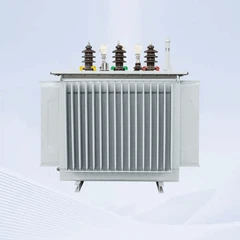
An oil-immersed transformer uses insulating oil as both the dielectric medium and the coolant. The core and windings are immersed in a sealed tank filled with mineral oil or natural ester oil, and the oil circulates by natural convection or with the help of pumps and fans, dissipating heat through the tank wall and radiators. This design gives a high thermal capacity, excellent insulation properties and long-term reliability, but it requires regular oil maintenance, carries a potential risk of leakage, and needs space for the tank and cooling equipment.
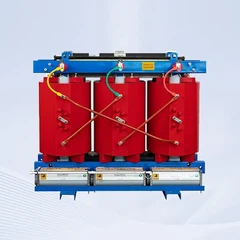
A dry-type transformer uses no oil. The core and windings are cooled by air circulation, or the windings are encapsulated in epoxy resin, which provides both insulation and mechanical protection. Dry-type units are compact, designed primarily for indoor use and are ideal for urban or space-constrained environments. Their advantages are the absence of oil leakage risk, low maintenance and a space-saving design; their limitation is a lower thermal capacity compared with oil-immersed units, which can restrict their use in very high-load applications unless the size is increased.
Application and Suitability
Oil-immersed transformers are typically used in high-voltage and high-capacity applications such as power distribution networks, substations and industrial facilities. Their robust construction allows outdoor installation and operation in extreme weather, and they are available in a wide range of ratings, for example 30 to 2500 kVA at 10 kV for distribution service and 800 to 31500 kVA at 35 kV for power transmission service. Dry-type transformers are preferred for indoor applications such as commercial buildings, hospitals and data centres, where fire safety and environmental concerns are critical. Typical dry-type ratings include 30 to 2500 kVA epoxy resin cast units and 30 to 2500 kVA at 10 kV air-cooled distribution units.
Safety and Maintenance
Oil-immersed transformers are highly reliable but require regular maintenance to keep the oil clean and free of moisture and dissolved gases. Any oil leakage can create a fire hazard or environmental risk, which makes them less suitable for sensitive indoor environments; key considerations are oil testing, tank inspection and fire protection measures such as containment pits and fire barriers. Dry-type transformers are inherently safer because they contain no flammable liquid. They are fire-resistant and environmentally friendly, require minimal maintenance and comply with the strictest indoor fire safety regulations; key considerations are keeping the ventilation clear and monitoring the winding temperature.
Cost, Efficiency, Noise and Environmental Impact
Oil-immersed transformers generally have a lower first cost for high-capacity applications because of the lower material cost of the tank and the simpler insulation process, and their cooling efficiency keeps load losses competitive; however, installation and maintenance costs can be higher because of oil handling and safety measures. Dry-type transformers are more expensive because of the advanced manufacturing processes and materials used in epoxy resin casting, but lower maintenance costs and a compact footprint can offset the initial investment over time. In terms of noise, oil-immersed units are typically louder because of oil circulation and core hum, while dry-type units are quieter, which matters in office buildings and hospitals. From an environmental perspective, oil-immersed units carry the risk of oil spills and require proper disposal of used oil, while dry-type units contain no hazardous liquid and are easier to recycle at the end of their lifecycle.
How to Choose the Right Transformer
The choice depends on the application, budget and operational requirements. If the project needs a high-capacity, outdoor solution for power distribution, an oil-immersed transformer is the appropriate choice. If the priority is safety, minimal maintenance and indoor installation, a dry-type transformer is preferred. In both cases, the unit should be specified and tested in accordance with the applicable standards, such as IEC 60076, and the rating, impedance, vector group, cooling mode and temperature rise should be matched to the load profile and the installation environment.
FAQ
Q: Can a dry-type transformer be installed outdoors?
A: Yes, if it is specified with a weatherproof enclosure and an appropriate ingress protection degree, but for outdoor high-capacity service an oil-immersed transformer is usually the more economical and robust solution.
Q: Which type has lower maintenance costs?
A: Dry-type transformers, because they have no oil to sample, filter or replace; maintenance is limited to visual inspection, connection checks and temperature monitoring.
Q: Are oil-immersed transformers more efficient than dry-type units?
A: At high loads, oil-immersed units often achieve competitive efficiency because of superior heat removal, while modern dry-type units with high-grade cores also reach excellent efficiency levels; the comparison must be made at the actual loading point using the measured losses.
Q: Why are dry-type transformers preferred in data centres?
A: Because they eliminate the fire risk of flammable oil, require less maintenance and produce less noise, all of which are critical for continuous, high-value indoor operation.
Q: What is the typical service life of each type?
A: Both types are designed for 25 to 30 years of service, provided the loading and temperature are kept within the specified limits and the recommended maintenance is performed.
Q: What should be checked when buying either type?
A: The rated capacity, voltage levels, impedance, vector group, losses, temperature rise, cooling mode, applicable standards, type test reports and the manufacturer quality certifications.
Send Inquiry