









Why a 225 kVA Dry Type Transformer Suits Large Commercial Malls
Jan 27, 2026
Leave a message
Why Fire Safety Drives the Transformer Choice in Malls
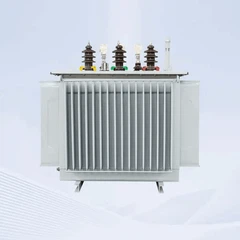
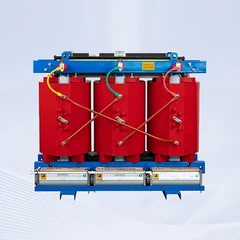
Commercial malls operate with dense crowds, many retail tenants, and valuable merchandise, so fire safety is a decisive factor in every equipment selection. An oil-filled transformer introduces a large volume of combustible liquid into the building, and its protection requires oil containment, fire-rated separation, and specific fire suppression measures. A 225 kVA dry type transformer eliminates this concern entirely. It uses air for cooling and solid insulation for the windings, so there is no flammable oil on site. The design complies with the indoor installation rules for dry type transformers in IEC 60076-11 and simplifies compliance with local building fire codes, giving mall owners and facility managers a safer electrical room without special fire-rated barriers around the transformer itself.
No Oil, No Leakage, No Special Containment
Beyond fire risk, oil leakage is a constant operational headache in occupied buildings. A leaking oil-filled transformer can contaminate floors, damage finishes, and create slip and environmental hazards in public areas. The dry type 225 kVA unit has no liquid coolant, so leakage is physically impossible. The electrical room stays clean, no oil containment pit is needed, and there is no oil sampling, filtration, or disposal program. For a mall maintenance team that is already stretched across HVAC, elevators, and tenant fit-outs, the reduced maintenance burden is a measurable operational benefit.
How a 225 kVA Dry Type Unit Handles Mall Loads
A large mall does not draw a constant load. Lighting, escalators, HVAC chillers, food court equipment, and tenant fit-outs create peaks during trading hours and deep valleys at night. The 225 kVA rating is well matched to the electrical demand of a large anchor tenant, a mall quadrant, or a cluster of retail areas, and it can be deployed in multiple units across the building to distribute the load and provide redundancy. Dry type transformers tolerate daily thermal cycling well because their encapsulated windings are designed for repeated heating and cooling. Where variable speed drives for escalators and HVAC create harmonics, the transformer can be specified with appropriate design margins, and Class F or Class H insulation per IEC 60076-11 provides useful short-term overload headroom during peak trading periods.
Installation and Environment Considerations
The indoor location of the transformer is one of its main advantages. Because the unit is dry, it can be installed close to the load center, shortening low-voltage cable runs and reducing distribution losses. The installation still needs attention to a few details:
Provide adequate room ventilation so that hot air exhausted by the transformer can escape, per the clearance and ventilation guidance of IEC 60076-11.
Keep the enclosure protection degree appropriate to the room, typically IP21 to IP23 per IEC 60529 for clean indoor electrical rooms.
Check the sound level, which is measured per IEC 60076-10, so that the unit does not disturb adjacent occupied areas.
Leave working clearance around the unit for inspection and dust cleaning.
Install a winding temperature indicator if the load profile includes sustained peaks.
Selecting the Right Number and Rating of Units
For a large mall, the transformer strategy should be planned at the system level:
Perform a load study of the whole complex and divide the demand into zones with separate transformer units.
Consider an N plus one arrangement so that a unit can be taken out of service for maintenance without shutting down a zone.
Size each unit with a realistic diversity factor rather than the sum of all tenant nameplate ratings.
Balance single-phase loads across the three phases to avoid neutral overload in a 400 V or 208Y/120 V system.
Specify the vector group and impedance voltage to match the low-voltage switchgear and the network fault level.
With these steps, the 225 kVA dry type transformer becomes a reliable, low-risk building block of the mall's power system.
FAQ
Q: Why choose a dry type transformer for a mall instead of an oil-filled unit?
A: The dry type design contains no flammable oil, which removes fire risk and leakage risk inside an occupied building, simplifies fire code compliance, and eliminates oil containment and oil maintenance.
Q: Can a 225 kVA dry type transformer handle the fluctuating load of a mall?
A: Yes. Encapsulated windings are designed for daily thermal cycling, and Class F or Class H insulation provides short-term overload headroom during peak trading hours. Multiple units distributed across the building add further flexibility.
Q: Where should the transformer be installed in a mall?
A: In a dedicated electrical room near the load center, with adequate ventilation, working clearance, and an enclosure protection degree such as IP21 to IP23 matching the room environment per IEC 60529.
Q: Is a dry type transformer quieter than an oil-filled one?
A: Sound levels depend on core design and quality and are measured per IEC 60076-10. Dry type units can be specified with low-noise core designs for sensitive areas, and their sound is not masked by oil tank resonance.
Q: How many 225 kVA units does a large mall need?
A: The number depends on the total demand, zoning, and redundancy strategy. A typical approach divides the complex into zones, sizes each unit from a load study with diversity factors, and uses an N plus one configuration for maintenance flexibility.
Q: What maintenance does the 225 kVA dry type transformer require?
A: Routine dust cleaning of windings and cooling ducts, connection torque checks, and periodic insulation resistance measurement. There is no oil sampling, filtration, or leak inspection.
Send Inquiry