


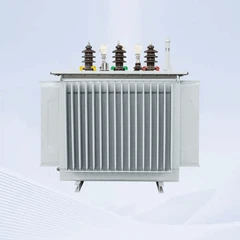
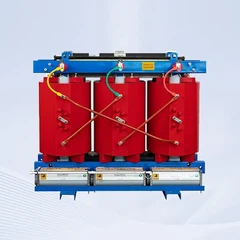





225 kVA Dry-Type Transformer Maintenance: Detecting Early Faults and Building a Diagnostic Toolkit
Jan 27, 2026
Leave a message
Why Proactive Maintenance Matters for a 225 kVA Dry-Type Transformer
Unexpected failure of a 225 kVA dry-type transformer during critical production hours causes costly downtime, production losses and safety risks. Because a dry-type unit has no oil, faults such as loose connections, insulation degradation, overloading and partial discharge develop silently before they become visible. A systematic maintenance program based on early fault detection is the most cost-effective strategy: small issues are caught and corrected long before they escalate into catastrophic failures, and the transformer continues to operate within its insulation temperature class.
Routine Visual and Sensory Inspection
The first line of defence is a scheduled walk-around inspection, which requires minimal tools but reveals significant problems.
What to look and listen for:
Physical damage: check the enclosure for dents, cracks or corrosion, and ensure all cooling vents are clear of dust and obstructions.
Connection integrity: inspect cable terminations, busbars and grounding connections for discolouration, oxidation or loose hardware.
Unusual sounds: a persistent loud hum at twice the supply frequency, 100 Hz for a 50 Hz system or 120 Hz for a 60 Hz system, may indicate loose core laminations; buzzing or crackling may point to arcing or loose connections.
Odour: a distinct burning smell or the odour of overheated insulation is a clear red flag that requires immediate shutdown and investigation.
Essential Diagnostic Tools for Early Fault Detection
To move beyond basic checks, the maintenance team needs the right instruments. The table below lists the core toolkit and the faults each tool detects.
| Tool / Instrument | Primary Purpose | Key Early Faults Detected |
|---|---|---|
| Infrared thermal camera | Non-contact temperature measurement of connections, windings and core | Hot spots from loose connections, unbalanced loads or failing components |
| Digital insulation resistance tester | Measures insulation integrity between windings and to ground | Degrading insulation from moisture ingress, contamination or aging |
| Power quality analyser / clamp meter | Measures voltage, current, load, harmonics and power factor | Overloading, phase imbalance and harmonic distortion |
| Ultrasonic detector | Converts high-frequency emissions from electrical discharges into audible signals | Corona and partial discharge activity that precedes insulation failure |
| Contact thermometer | Spot-checks temperature at specific terminals or surfaces | Corroborates thermal imaging findings at specific points |
Interpreting Test Results and Fault Thresholds
Collected data is only useful when compared with known limits. The following thresholds are typical reference points for a 225 kVA dry-type transformer.
Temperature: compare readings against the baseline and the insulation class rating, for example class F permits a maximum temperature of 155 °C; any terminal connection more than 70 K above ambient under load warrants investigation.
Insulation resistance: values should be stable over time; a significant drop of more than 20 percent from previous readings indicates moisture or contamination, and minimum acceptable values should follow IEEE 43.
Load current: the three phases should be balanced within 10 percent; chronic imbalance overheats one phase winding.
Partial discharge: any sustained partial discharge activity detected by ultrasonic or electrical methods is a serious warning of impending insulation failure.
Building a Maintenance Schedule
A typical program combines monthly visual inspections, quarterly thermal imaging and annual electrical testing. Insulation resistance and winding resistance measurements should be recorded in a trend file so that slow degradation becomes visible. Cleaning of the enclosure, especially in dusty environments, and re-torquing of connections should be included in the schedule. Spare parts such as cooling fans, thermal protection devices and terminal kits should be kept in stock to minimize repair time. The maintenance records also support warranty claims and provide evidence for reliability audits.
FAQ
Q: How often should a 225 kVA dry-type transformer be inspected?
A: Visual inspections are recommended monthly, infrared thermography quarterly and detailed electrical testing annually, with more frequent checks in dusty, humid or heavily loaded installations.
Q: What is the maximum safe operating temperature for a class F dry-type transformer?
A: Class F insulation is rated for a maximum continuous temperature of 155 °C at the hottest spot; the average winding temperature rise is limited to 100 K over a 40 °C ambient in accordance with IEC 60076-11.
Q: Why is insulation resistance testing important?
A: It reveals moisture ingress, contamination and aging of the insulation system before breakdown occurs; a steady drop in readings over successive tests is an early warning that requires corrective action.
Q: What causes a loud hum in a dry-type transformer?
A: Magnetostriction of the core laminations produces hum at twice the supply frequency, and the level increases with flux density; an unusually loud or harsh hum may indicate loose laminations or overexcitation.
Q: Can a dry-type transformer be tested while energized?
A: Thermal imaging, ultrasonic scanning and load and power quality measurement can be performed on energized equipment by qualified personnel using appropriate safety procedures and live-line tools.
Q: What should be done if partial discharge is detected?
A: The unit should be taken out of service for detailed inspection and testing, because sustained partial discharge erodes the insulation and can lead to failure within a short period; the cause, such as contamination or defective insulation, must be identified before returning the unit to service.
Send Inquiry