









Cast Resin Transformer: Benefits, Applications, and Selection Guide
Jun 05, 2025
Leave a message
What Is a Cast Resin Transformer?
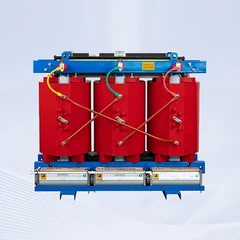
A cast resin transformer is a dry-type transformer in which the high- and low-voltage windings are cast inside an epoxy resin mould under vacuum. The resin forms a solid, self-extinguishing insulation system, so the unit contains no flammable liquid or gas and does not require an oil conservator or containment pit. Cast resin transformers are designed and tested in accordance with IEC 60076-11, the international standard for dry-type power transformers, and typical insulation classes are F or H with a winding temperature rise of 100 K or 125 K at rated load. Because the insulation is a solid block rather than a liquid, the transformer can be installed indoors in fire-sensitive buildings without the fire-protection measures that oil-filled equipment demands.
Key Technical Characteristics
The main characteristics that separate a cast resin transformer from an oil-immersed unit are its fire behaviour, moisture behaviour, and maintenance profile. The winding is protected by a sealed resin layer that resists humidity, dust, and salt pollution, which is why the design is widely used in coastal areas and chemical environments. The table below summarises typical design values for a medium-voltage cast resin distribution transformer.
| Parameter | Typical Value |
|---|---|
| Rated capacity range | 100 kVA up to 6,300 kVA per unit |
| Primary voltage | Up to 36 kV in accordance with IEC 60076-11 |
| Insulation class | F or H |
| Average winding temperature rise | 100 K or 125 K |
| Cooling methods | AN and AF |
| Partial discharge level | Controlled per IEC 60076-11 type tests |
| Short-circuit withstand | Verified by testing per IEC 60076-5 |
Where Cast Resin Transformers Are Used
Cast resin transformers are preferred wherever fire safety, low maintenance, and clean indoor installation matter most. Typical sites include hospitals and clinics, data centres, shopping centres, schools, metro systems, and high-rise commercial buildings where an oil spill or fire would be unacceptable. They are also used in demanding industrial settings such as offshore platforms, wind turbine towers, chemical plants, and paper mills, where the sealed winding resists vibration, thermal cycling, and airborne contamination. In distribution networks they commonly serve as the step-down unit between a 10 kV or 20 kV feeder and the 400 V consumer supply, and they can be paired with an IP-protected enclosure for outdoor installation.
Installation and Operation Considerations
Although the cast resin transformer needs no oil handling, installation still requires attention to ventilation, clearances, and earthing. The unit is usually installed with front and rear air ducts so that natural air convection can remove heat; where the load factor is high or the ambient temperature exceeds 40 C, forced air cooling can be added. It is good practice to monitor winding temperature with the built-in PT100 sensors and to carry out an insulation resistance measurement when the unit has been stored for a long period, because a very humid environment can raise surface conductivity even though the resin itself absorbs little moisture. Off-circuit tap switches allow voltage adjustment of plus or minus 2.5% or 5% on the primary side, which helps match the local supply voltage. When selecting a unit, confirm the system voltage, the short-circuit level at the installation point, and the altitude, since insulation and cooling ratings are normally quoted for operation up to 1,000 m above sea level.
Common Misconceptions
One common misunderstanding is that a cast resin transformer contains a small amount of oil. In fact, the winding is completely encapsulated and the unit is designed to operate with zero liquid insulation. Another misconception is that dry-type transformers cannot be used outdoors; with a suitable weatherproof enclosure and appropriate protection class they can be installed outside, although the enclosure must be ventilated. A third point to note is that cast resin transformers still produce losses and heat, so the load current should be checked against the rated current rather than against the nameplate kVA alone, especially when harmonic currents are present. Finally, users sometimes assume that a solid insulation system never ages; in practice thermal ageing of the resin and insulation system still follows the expected life curves, so the temperature limits in IEC 60076-11 should be respected.
FAQ
Q: Does a cast resin transformer contain any oil?
A: No. The windings are fully encapsulated in epoxy resin and the transformer operates with a solid insulation system, so there is no oil to leak, sample, or replace. This is the main reason it is accepted in fire-sensitive indoor locations.
Q: What standards apply to cast resin transformers?
A: The primary international standard is IEC 60076-11 for dry-type power transformers, covering ratings, insulation levels, temperature rise, and testing. Short-circuit withstand is verified in accordance with IEC 60076-5, and efficiency classes can be referenced to GB 20052 or DOE 2016 depending on the destination market.
Q: Can a cast resin transformer be installed outdoors?
A: Yes, provided it is placed in a weatherproof, ventilated enclosure with a suitable protection rating for the site. The transformer itself is not designed for direct exposure to rain or full sun.
Q: How does the cost compare with an oil-immersed transformer of the same rating?
A: The first cost of a cast resin unit is generally higher than an equivalent oil-immersed transformer, but the total cost of ownership is often lower in indoor applications because oil containment, fire walls, and routine oil testing are not required and maintenance is limited to inspection and cleaning.
Q: Why is partial discharge testing important for cast resin transformers?
A: Partial discharge testing detects small voids or defects in the resin insulation during manufacture. Keeping the partial discharge level below the limits of IEC 60076-11 confirms that the encapsulation is sound and that the transformer will not degrade prematurely under operating voltage.
Q: What temperature limits apply to cast resin transformers?
A: With class F insulation the average winding temperature rise is normally limited to 100 K, and with class H insulation to 125 K. The maximum ambient temperature for rating purposes is usually 40 C, and derating is required above 1,000 m altitude.
Send Inquiry