









GNEE One-Stop Residential Energy Storage System Solution
Nov 05, 2026
Leave a message
Residential solar-plus-storage systems are transforming how homeowners generate, store, and consume electricity. Whether you want to reduce electricity bills, achieve energy independence, or secure backup power during outages, understanding the four core components - PV array, hybrid inverter, battery bank, and BMS - is essential to choosing the right system.
GNEE delivers integrated, turnkey solutions designed for residential applications worldwide.

💡 Not Sure Which Energy Storage System Fits Your Home?
Our engineers analyze your roof space, electricity usage, and local grid conditions to recommend the optimal PV + storage configuration - completely free and with no obligation.
Understanding Residential Solar Energy Storage Systems: A Complete Overview
A residential energy storage system (also called a home battery system or solar-plus-storage system) captures solar energy during the day, stores it in rechargeable batteries, and releases it when the sun goes down or when the grid goes down. Unlike a simple grid-tied solar system, a PV + battery storage system gives you true energy autonomy - you decide when to use solar power, when to draw from the grid, and when to feed excess energy back.
At GNEE, we design and manufacture one-stop residential energy storage solutions that combine high-efficiency PV modules, intelligent hybrid inverters, safe LFP battery packs, and advanced BMS technology into a single, seamlessly integrated platform. Every component is engineered to work together, ensuring maximum efficiency, safety, and long-term reliability.

Core Architecture of a Residential PV-Storage System
Regardless of voltage level or circuit topology, every modern residential solar-plus-storage system follows a similar functional architecture. The system is composed of four core units that work in harmony:
☀️ PV Array (Energy Input)
Solar panels convert sunlight into DC electricity through the photovoltaic effect. Multiple panels are wired in series and parallel to achieve the desired voltage and current.
⚡ Power Conversion Unit
The hybrid inverter (or PCS + MPPT + DC/DC) manages energy flow between solar panels, batteries, the grid, and home loads - converting between DC and AC as needed.
🔋 Energy Storage Unit
The battery bank stores excess solar energy for later use. Lithium iron phosphate (LFP) batteries are the industry standard for residential systems due to their safety and cycle life.
📊 Control & Monitoring Unit
The EMS (Energy Management System) and BMS (Battery Management System) intelligently optimize energy flow, protect battery health, and provide real-time monitoring via app or web portal.
Main Technical Routes for Residential Energy Storage Systems
Not all home energy storage systems are created equal. Different voltage architectures and topologies suit different home sizes, power requirements, and budgets. Here are the three dominant technical approaches used in the industry today:
1. Low-Voltage 48V Energy Storage Solution
The 48V low-voltage architecture is a classic, widely deployed residential energy storage solution with a large installed base worldwide. This voltage standard originated from telecom base station power systems. The battery pack typically uses 16 cells of lithium iron phosphate (LFP) connected in series to achieve a nominal 48V.
Inside the system, a DC-DC converter steps up the 48V battery voltage to a 350–500V DC bus, which then feeds a DC-AC inverter producing 230V AC output. Solar energy connects to the DC bus via an MPPT unit, and a relay bank handles switching between grid-tied and off-grid modes.
Scaling Tip: Adding batteries in parallel increases system capacity (kWh), not power (kW). To increase power output, you need to upgrade the DC/DC boost module and DC/AC inverter rating, or use multi-unit parallel configurations. Always ensure cable gauge, thermal management, and BMS current-sharing control are properly sized.
2. Boost Stacking Battery System
The boost stacking topology shares the same overall architecture as low-voltage systems, but with a key difference: the bidirectional DC/DC converter is moved from the inverter into each low-voltage battery pack. Each pack boosts its own voltage to a high-voltage level before connecting in parallel to the energy storage inverter.
This design eliminates the circulating current problem between battery modules - a significant advantage over traditional low-voltage parallel systems. It also simplifies system expansion and improves overall efficiency.
3. High-Voltage Stacking Energy Storage Solution
High-voltage stacking systems connect multiple battery modules in series to achieve high voltage (typically 100–400V+). Each module has its own BMU (Battery Management Unit) operating in a master-slave configuration, paired with a solar-storage hybrid inverter for integrated operation.
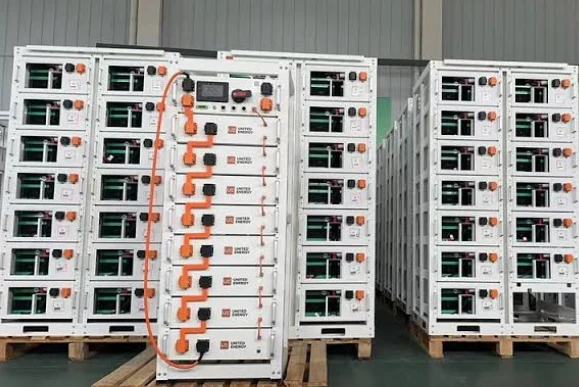
Traditional high-voltage all-in-one systems use separate high-voltage control boxes. Newer designs integrate the hybrid high-voltage inverter and high-voltage control box into a single unit, delivering significant cost savings and a cleaner installation.
| Feature | Low-Voltage 48V | Boost Stacking | High-Voltage Stacking |
|---|---|---|---|
| Battery Voltage | 48V nominal | Low-voltage pack + internal boost | 100–400V+ (series modules) |
| Module Circulating Current | Present (BMS-managed) | Eliminated | Minimal (series design) |
| Expansion Flexibility | Easy parallel expansion | Modular stacking | Modular stacking |
| Typical Power Range | 3–6 kW | 5–10 kW | 8–15 kW+ |
| Best For | Small to medium homes | Medium homes, easy expansion | Large homes, high power demand |
💰 Want to Know How Much You Can Save on Your Electricity Bill?
Tell us your monthly electricity usage and local utility rates, and we'll send you a detailed ROI analysis showing payback period, annual savings, and 20-year cost projections - for free.
How PV Modules Work in Residential Solar-Plus-Storage Systems
The PV (photovoltaic) array is the energy input side of the entire solar-plus-storage system. Solar panels use the photovoltaic effect to convert sunlight directly into direct current (DC) electricity. A single solar module produces a relatively low voltage, so in practical installations, multiple modules are connected in series (to increase voltage) and parallel (to increase current), forming a PV array that connects to the MPPT input of the inverter.
MPPT, or Maximum Power Point Tracking, is a critical technology that ensures the solar array always operates at its optimal voltage and current to deliver the maximum possible power, regardless of changing sunlight, temperature, and shading conditions. GNEE hybrid inverters use advanced MPPT algorithms with tracking efficiencies above 99.9%.
Hybrid Inverter: The Brain of Your Home Energy Storage System
Think of the hybrid inverter as the central nervous system of your residential energy storage setup. It is essentially a combination of four key functions in one unit: PCS (Power Conversion System) + MPPT + EMS + Battery-Side DC/DC. This integration reduces installation complexity, saves space, and improves overall system efficiency.
1. Unidirectional DC/DC (MPPT Converter)
The PV-side DC/DC converter incorporates MPPT algorithms and is a unidirectional circuit that boosts the solar panel voltage to match the DC bus voltage range. For low-power systems, Buck and Buck-Boost topologies are commonly used, while higher-power systems typically employ Boost circuits.

In real-world PV inverter products, the Boost topology has many derivatives - Dual Boost is a typical example, though it has some switching mode limitations due to common-mode leakage current considerations.

2. Bidirectional DC/AC Inverter (PCS Function)
This is the PCS (Power Conversion System) function, enabling bidirectional power conversion: DC→AC for supplying power to your home or feeding into the grid, and AC→DC for charging batteries from the grid when needed (such as during off-peak rate periods).

3. Bidirectional Battery-Side DC/DC Converter
The battery-side DC/DC is a bidirectional BOOST/BUCK converter located between the battery and the DC bus. It operates in two modes:
- Charging mode: Converts solar or grid energy into the appropriate voltage/current profile for battery charging.
- Discharging mode: Converts battery energy into the correct DC bus voltage for the inverter to supply home loads or export to the grid.

4. EMS Energy Management System (Local Controller)
GNEE hybrid inverters come with built-in multiple control modes. The EMS dynamically determines the optimal energy flow direction based on solar generation, battery state of charge, load power, and grid conditions. Users simply select the operating mode that matches their scenario - the system handles the rest automatically.
Common EMS modes include:
- Self-consumption mode: Prioritize using solar power for home loads, store excess in battery, export only when battery is full.
- Time-of-use (TOU) mode: Charge battery during low-rate hours, discharge during high-rate hours to maximize bill savings.
- Backup mode: Keep battery charged and ready for grid outages, automatically switching to off-grid supply when the grid fails.
- Feed-in priority mode: Maximize revenue by exporting solar power to the grid when feed-in tariffs are favorable.
Battery Technology: The Heart of Residential Energy Storage
A residential storage battery is far more than just cells in a box. It must deliver reliable energy storage, accurate monitoring, and comprehensive safety protection - all within a compact footprint, while maintaining stable communication with the inverter. Proper battery sizing and chemistry selection are critical to system performance and longevity.
GNEE residential battery systems use lithium iron phosphate (LFP / LiFePO₄) chemistry, which offers:
✅ Excellent safety profile (no thermal runaway risk)
✅ Long cycle life (6,000+ cycles to 80% capacity)
✅ Wide operating temperature range
✅ Environmentally friendly (no cobalt or nickel)
✅ Lower cost per kWh over the system lifetime
BMS Battery Management System Explained
The Battery Management System (BMS) is the guardian of your battery investment. While automotive BMS and energy storage BMS share similar underlying sensing and measurement principles, the key difference lies in the richness of supporting functions and application-specific features.
Core Functions of a Residential Storage BMS
📏 Real-Time Monitoring:Continuously measures cell voltage, pack voltage, charge/discharge current, and temperature at multiple points.
📊 State Estimation (SOC/SOH):Accurately calculates State of Charge (remaining capacity) and State of Health (battery degradation status).
🛡️ Protection & Safety:Protects against over-voltage, under-voltage, over-current, over-temperature, short circuit, and insulation faults.
⚖️ Cell Balancing:Active or passive balancing ensures all cells charge and discharge evenly, maximizing pack capacity and lifespan.
🔌 Charge/Discharge Control:Manages charge profiles, discharge rates, and communicates with the inverter for optimal power flow.
📡 Communication:CAN/RS485 communication with the hybrid inverter, plus WiFi/Bluetooth for app-based monitoring.
GNEE's proprietary BMS technology has been field-proven in thousands of residential installations worldwide, delivering exceptional reliability and battery longevity.
🔋 Ready to Go Solar + Storage? Get a Custom System Design & Quote
From 3kW small apartment systems to 20kW+ whole-home backup solutions, GNEE engineers design a system tailored to your exact needs. Get a detailed proposal with equipment list, pricing, and delivery timeline.
Why Choose GNEE One-Stop Residential Energy Storage Solutions
GNEE is a trusted manufacturer of complete residential energy storage systems, serving customers across Europe, North America, Australia, the Middle East, and Southeast Asia. Our one-stop approach means you get everything from a single source - no compatibility headaches, no finger-pointing between suppliers, and one point of contact for support.
🏭 End-to-End Manufacturing
We design and build inverters, batteries, and BMS in-house for guaranteed compatibility and quality control.
🌍 Global Certifications
CE, VDE, UL, IEC, TÜV - our products meet the strictest international safety and performance standards.
📱 Smart Monitoring App
Monitor production, consumption, and battery status in real time from your phone, tablet, or desktop.
🛠️ Technical Support
Dedicated English-speaking engineering support team for installation guidance and after-sales service.
📦 Flexible MOQ & Fast Delivery
Whether you need one system for your home or a container for your project, we deliver on time, every time.
💰 Competitive Pricing
Factory-direct pricing with no middlemen. Get premium quality at prices that make your project profitable.
Typical Residential System Configurations
| System Size | PV Power | Battery Capacity | Inverter Rating | Typical Home Size |
|---|---|---|---|---|
| Starter | 3 kWp | 5 kWh | 3 kW | Apartment / Small home |
| Standard | 5–6 kWp | 10–15 kWh | 5 kW | 3–4 bedroom home |
| Premium | 8–10 kWp | 20–25 kWh | 8–10 kW | Large home / EV charging |
| Whole-Home Backup | 12–15 kWp | 30–40 kWh | 12–15 kW | Luxury home / Off-grid |
Ready to Power Your Home with Solar + Storage?
Join thousands of homeowners worldwide who trust GNEE for their residential energy storage needs. Send us an inquiry today and get a free, no-obligation system design and quote within 24 hours.
Send Inquiry