

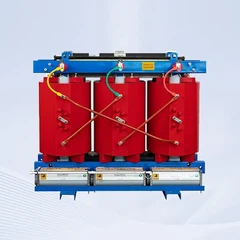
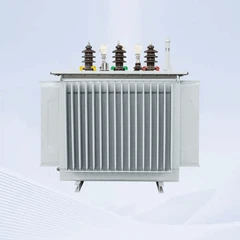






The 3 Phase Oil Filled Power Transformer features a fully sealed, oil-immersed corrugated tank that uses its built-in elasticity to accommodate thermal expansion and contraction of the oil, ensuring a permanent seal without leakage. This design eliminates the need for external conservator tanks, reduces maintenance, and enhances reliability. The oil provides efficient insulation and cooling for the windings and core, enabling stable operation under varying loads. Widely used in power distribution systems, it is favored for its durability, energy efficiency, and adaptability to diverse environments, making it essential for industrial and infrastructure projects like grid upgrades and large-scale facilities.
video
Detailed Photos

The operating principle of Oil Filled Power Transformer
Structure and Core Components
The transformer is composed of core components -- the core and windings. The core is typically made of a stacked layer of silicon steel sheets, used to guide magnetic flux. The windings are made of multiple strands of insulated copper or aluminum wire, divided into primary windings (input side) and secondary windings (output side). These two are coupled through a magnetic circuit rather than direct electrical connection. In an Oil Filled Power Transformer, both the windings and the core are fully submerged in insulating oil. This oil not only provides electrical insulation but also dissipates heat via natural convection or forced cooling, ensuring stable operation of the equipment.
Principle of Electromagnetic Induction
When alternating current passes through the primary winding, it generates a changing magnetic field in the core, creating alternating magnetic flux. According to Faraday's law of electromagnetic induction, this changing flux induces an electromotive force in the secondary winding, with the voltage magnitude proportional to the turns ratio of the windings. For example, if the secondary winding has fewer turns than the primary, the output voltage will be lower than the input voltage (step-down transformer); conversely, it steps up the voltage. This non-contact energy transfer does not require mechanical parts, making it efficient and reliable.
Voltage Regulation and Turn Design
A transformer adjusts the turns ratio between the primary and secondary windings to achieve voltage transformation. Assuming the primary winding has (N_1) turns and the secondary winding has (N_2) turns, then the voltage ratio is ( \frac{V_1}{V_2} = \frac{N_1}{N_2} ). For instance, if the input voltage is 10kV and the desired output voltage is 400V, the secondary winding should have 4% of the turns of the primary. This design allows transformers to flexibly adapt to various grid requirements, such as low-voltage power supply for industrial equipment or high-voltage transmission in power networks.
Advantages of Oil-Immersed Sealed Technology
An Oil Immersed Transformer uses a corrugated sealed oil tank. The tank body adapts automatically to the volume expansion of the oil due to temperature changes through the elasticity of metal corrugations, eliminating the need for traditional oil reservoirs or breathers, thus reducing leakage risks and maintenance needs. The high dielectric strength of the oil significantly enhances insulation performance, while its cooling efficiency can handle high loads, especially suitable for harsh environments (such as high temperatures and humidity). This design ensures the stability and safety of the transformer during long-term operation, making it an indispensable component in power systems.
Oil Immersed Transformer product parameters

SGS certification certificate

Why choose us?
GNEE Group:Global Transformer Supply Chain Integration Expert (2008 - Present)
Founded in 2008, GNEE Group has undergone fifteen years of deep industry cultivation, successfully transforming from a regional trader to a global supply chain management expert. As a pioneer in the integration of the steel industry chain, the group has established a full-cycle value system that spans raw material procurement, production coordination, logistics optimization, and terminal services, setting an innovative operational benchmark in the global transformer distribution sector. In the era of Industry 4.0, GNEE Group is accelerating towards its goal of becoming a global integrator of steel industry value through digital restructuring and green supply chain construction.

Product transportation

FAQ


