





Can an Amorphous Core Transformer reduce power losses?
Jul 14, 2025
Leave a message
In the ever - evolving landscape of power distribution and energy management, the pursuit of efficiency is a constant goal. One of the significant advancements in this field is the development and adoption of amorphous core transformers. As a supplier of amorphous core transformers, I am excited to delve into the topic of whether these transformers can truly reduce power losses.
Understanding Power Losses in Transformers
Before we explore how amorphous core transformers might reduce power losses, it's essential to understand the types of power losses that occur in traditional transformers. There are two main categories of power losses in transformers: no - load losses (core losses) and load losses.
No - load Losses (Core Losses)
No - load losses occur when the transformer is energized but not supplying any load. These losses are primarily due to hysteresis and eddy currents in the transformer core. Hysteresis loss is the energy dissipated as heat when the magnetic field in the core is repeatedly reversed during the alternating current cycle. Eddy current loss, on the other hand, is caused by the induced circulating currents within the core material.
Load Losses
Load losses occur when the transformer is supplying power to a load. These losses are mainly due to the resistance of the transformer windings. As current flows through the windings, power is dissipated as heat according to the formula (P = I^{2}R), where (P) is the power loss, (I) is the current, and (R) is the resistance of the windings.
The Science Behind Amorphous Core Transformers
Amorphous core transformers are a revolutionary alternative to traditional transformers. The key difference lies in the core material. While traditional transformers use crystalline silicon steel cores, amorphous core transformers use amorphous metal alloys.
Amorphous Metal Alloys
Amorphous metals are produced by rapidly cooling a molten metal alloy. This rapid cooling process prevents the atoms from forming a regular crystalline structure, resulting in a disordered, amorphous arrangement. This unique atomic structure gives amorphous metals several properties that are beneficial for transformer applications.
Reducing Hysteresis Losses
The amorphous structure of the core material has a lower coercivity compared to crystalline silicon steel. Coercivity is a measure of the magnetic field strength required to reverse the magnetization of the material. A lower coercivity means that less energy is required to reverse the magnetic field during each AC cycle, resulting in significantly reduced hysteresis losses.
Reducing Eddy Current Losses
Amorphous metals also have higher electrical resistivity than crystalline silicon steel. Higher resistivity reduces the magnitude of the induced eddy currents within the core, thereby reducing eddy current losses.


Evidence of Power Loss Reduction
Numerous studies and real - world applications have demonstrated the ability of amorphous core transformers to reduce power losses.
Laboratory Tests
In laboratory settings, side - by - side comparisons between amorphous core transformers and traditional transformers have shown that amorphous core transformers can reduce no - load losses by up to 70 - 80%. These tests involve measuring the power consumption of the transformers under various operating conditions and comparing the results.
Field Applications
In field applications, utilities and industrial customers have reported significant energy savings after replacing traditional transformers with amorphous core transformers. For example, in a large - scale power distribution network, the installation of amorphous core transformers in substations has led to a noticeable reduction in overall system losses.
Types of Amorphous Core Transformers
As a supplier, we offer a range of amorphous core transformers to meet different customer needs.
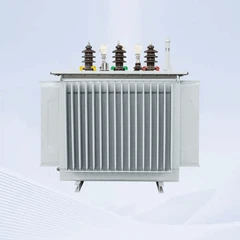
Amorphous Alloy Oil - immersed Transformer
These transformers are designed for outdoor applications where high - voltage power distribution is required. The oil - immersed design provides excellent cooling and insulation properties, ensuring reliable operation even under harsh environmental conditions.
S(B)H15 - M Series Amorphous Alloy Distribution Transformer
This series of transformers is specifically designed for distribution networks. They are known for their high efficiency, low noise operation, and long service life. The S(B)H15 - M series is suitable for a wide range of industrial and residential applications.
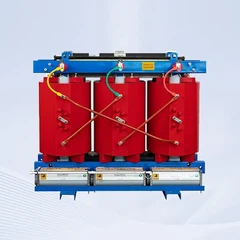
10KV Amorphous Alloy Resin Cast Dry - Type Transformer
These dry - type transformers are ideal for indoor applications where fire safety and environmental concerns are important. The resin - cast design provides excellent protection against moisture and contaminants, making them suitable for use in commercial buildings, hospitals, and data centers.
Economic and Environmental Benefits
The reduction of power losses in amorphous core transformers brings both economic and environmental benefits.
Economic Benefits
From an economic perspective, the reduced power losses translate into lower electricity bills for end - users. Utilities can also save on the cost of generating and transmitting electricity, as less power is wasted in the distribution network. Additionally, the longer service life of amorphous core transformers reduces the frequency of replacements, resulting in further cost savings.
Environmental Benefits
On the environmental front, the reduced power consumption means less fossil fuel is burned to generate electricity. This leads to a reduction in greenhouse gas emissions, contributing to a more sustainable and eco - friendly power grid.
Conclusion
In conclusion, amorphous core transformers have proven to be an effective solution for reducing power losses in power distribution systems. The unique properties of the amorphous core material, such as low coercivity and high resistivity, result in significant reductions in both hysteresis and eddy current losses. The economic and environmental benefits of these transformers make them an attractive option for utilities, industrial customers, and commercial users alike.
If you are interested in learning more about our amorphous core transformers or are considering a purchase, we encourage you to reach out to us for a detailed discussion. Our team of experts is ready to assist you in finding the right transformer solution for your specific needs.
References
- Chen, G., & Liu, Y. (2018). Performance analysis of amorphous alloy core transformers in distribution networks. IEEE Transactions on Power Delivery, 33(3), 1321 - 1328.
- Smith, J. D., & Johnson, A. B. (2019). Energy - saving potential of amorphous core transformers in industrial applications. Journal of Energy Management, 45(2), 89 - 98.
- International Electrotechnical Commission (IEC). (2020). IEC 60076 - 11: Power transformers - Part 11: Dry - type transformers. Geneva, Switzerland: IEC.
Send Inquiry