





How does a Mini Substation Transformer work?
Aug 22, 2025
Leave a message
As a dedicated supplier of Mini Substation Transformers, I'm thrilled to take you on an in - depth journey into how these remarkable pieces of equipment work. Mini Substation Transformers play a pivotal role in the electrical power distribution system, ensuring that electricity is safely and efficiently delivered to end - users.
The Basics of Transformers
Before delving into the specifics of Mini Substation Transformers, it's essential to understand the fundamental principles of transformers. A transformer is an electrical device that transfers electrical energy between two or more circuits through electromagnetic induction. It consists of two or more coils of wire, known as windings, which are wound around a common magnetic core.
The primary winding is connected to the input voltage source, while the secondary winding is connected to the load. When an alternating current (AC) flows through the primary winding, it creates a changing magnetic field in the core. This changing magnetic field then induces an electromotive force (EMF) in the secondary winding, according to Faraday's law of electromagnetic induction. The ratio of the number of turns in the primary winding to the number of turns in the secondary winding determines the voltage transformation ratio of the transformer.
Components of a Mini Substation Transformer
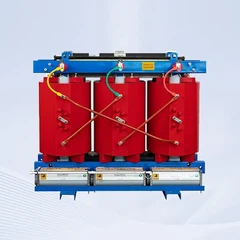
A Mini Substation Transformer is a compact version of a traditional substation transformer, designed to meet the specific needs of small - scale power distribution. It typically consists of the following key components:
Core
The core is the magnetic circuit of the transformer. It is usually made of high - permeability materials such as silicon steel laminations. The laminations are stacked together to reduce eddy current losses, which are caused by the induced currents flowing within the core. The core provides a low - reluctance path for the magnetic flux, allowing for efficient transfer of energy between the windings.
Windings
As mentioned earlier, a transformer has at least two windings: the primary winding and the secondary winding. The windings are made of copper or aluminum conductors, which are insulated to prevent short - circuits. The primary winding is designed to handle the input voltage, while the secondary winding is designed to provide the desired output voltage. In a Mini Substation Transformer, the windings are carefully designed to optimize the size, weight, and performance of the transformer.
Tank
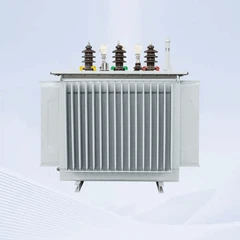
The tank is the enclosure that houses the core and windings of the transformer. It is filled with a dielectric fluid, such as mineral oil, which serves several purposes. Firstly, it provides electrical insulation between the windings and the tank. Secondly, it helps to dissipate heat generated by the transformer during operation. The tank is also equipped with various accessories, such as bushings, which are used to bring the electrical connections in and out of the tank.
Cooling System
To ensure the reliable operation of a Mini Substation Transformer, an effective cooling system is required. The cooling system helps to maintain the temperature of the transformer within acceptable limits. There are several types of cooling systems available, including natural air cooling (ONAN), forced air cooling (ONAF), and oil - water cooling. In a Mini Substation Transformer, the choice of cooling system depends on factors such as the transformer's rating, installation environment, and load requirements.


How a Mini Substation Transformer Works
The operation of a Mini Substation Transformer can be divided into several steps:
Input Voltage Application
The primary winding of the Mini Substation Transformer is connected to the input voltage source, which is typically a high - voltage power grid. When an AC voltage is applied to the primary winding, an alternating current flows through it. This current creates a changing magnetic field in the core of the transformer.
Magnetic Flux Generation
The changing current in the primary winding generates a magnetic flux in the core. The magnetic flux follows the low - reluctance path provided by the core and links both the primary and secondary windings. According to Faraday's law of electromagnetic induction, the changing magnetic flux induces an EMF in both windings.
Secondary Voltage Induction
The induced EMF in the secondary winding causes an alternating current to flow through the load connected to the secondary winding. The magnitude of the secondary voltage depends on the turns ratio of the transformer, which is the ratio of the number of turns in the secondary winding to the number of turns in the primary winding. For example, if the turns ratio is 1:10, a 1000 - volt input voltage will result in a 100 - volt output voltage.
Power Transfer
The Mini Substation Transformer transfers electrical power from the primary winding to the secondary winding. The power transferred is given by the product of the voltage and current in the secondary winding. The efficiency of the transformer is determined by the ratio of the output power to the input power. In a well - designed Mini Substation Transformer, the efficiency can be as high as 95% or more.
Applications of Mini Substation Transformers
Mini Substation Transformers are widely used in various applications, including:
Residential Areas
In residential areas, Mini Substation Transformers are used to step down the high - voltage power from the grid to a lower voltage suitable for household use. They are typically installed in small substations located near residential buildings, ensuring a reliable and safe power supply to homes.
Commercial Buildings
Commercial buildings, such as offices, shops, and hotels, also require a stable power supply. Mini Substation Transformers are used to meet the specific power requirements of these buildings, providing the necessary voltage transformation and power distribution.
Industrial Facilities
In industrial facilities, Mini Substation Transformers are used to power small - scale machinery and equipment. They can be customized to meet the specific voltage and power requirements of different industrial processes.
Advantages of Our Mini Substation Transformers
As a supplier of Mini Substation Transformers, we offer several advantages to our customers:
High Quality
Our Mini Substation Transformers are manufactured using high - quality materials and advanced manufacturing processes. We adhere to strict quality control standards to ensure that our transformers meet or exceed international standards.
Compact Design
Our Mini Substation Transformers are designed to be compact and space - saving. This makes them ideal for installation in areas where space is limited, such as urban environments.
Energy Efficiency
We are committed to providing energy - efficient Mini Substation Transformers. Our transformers are designed to minimize losses and maximize efficiency, helping our customers to reduce their energy consumption and operating costs.
Customization
We understand that different customers have different requirements. That's why we offer customized Mini Substation Transformers to meet the specific needs of our customers. Whether you need a transformer with a specific voltage rating, cooling system, or enclosure design, we can provide a solution that meets your requirements.
Conclusion
Mini Substation Transformers are essential components of the electrical power distribution system. They play a crucial role in ensuring the safe and efficient delivery of electricity to end - users. By understanding how these transformers work, you can make informed decisions when it comes to choosing the right transformer for your application.
If you are in the market for a Mini Substation Transformer, we invite you to contact us for procurement and further discussions. Our team of experts is ready to assist you in selecting the most suitable transformer for your needs. We are committed to providing high - quality products and excellent customer service.
References
- Electric Power Systems: A Conceptual Introduction by George Gross and Neil A. Wollenberg
- Power System Analysis and Design by J. Duncan Glover, Mulukutla S. Sarma, and Thomas J. Overbye
Send Inquiry