





How does temperature affect the performance of a pole mounted transformer?
Sep 16, 2025
Leave a message
Hey there! I'm a supplier of pole mounted transformers, and today I wanna talk about how temperature can have a big impact on the performance of these transformers.
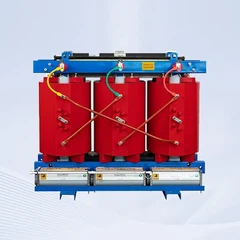
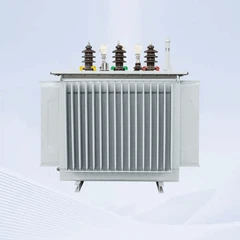
First off, let's understand what a pole mounted transformer is. It's a type of transformer that's usually installed on utility poles, and it plays a crucial role in the electrical distribution system. These transformers step down the high - voltage electricity from the power grid to a lower voltage that can be used in homes and businesses. We offer a variety of models, like the 250 KVA Single Phase Pole Mounted Transformer and the 50 KVA Single Phase Overhead Pole Mounted Transformer. You can also check out our Pole Electrical Transformer for more options.
Now, let's dig into how temperature affects these transformers.
Temperature and Resistance
One of the most basic ways temperature impacts a pole mounted transformer is through its effect on resistance. You see, as the temperature goes up, the resistance of the transformer's windings also increases. This is because the atoms in the conductor vibrate more vigorously at higher temperatures, making it harder for the electrons to flow through.
When the resistance increases, more power is dissipated as heat. This is calculated using the formula (P = I^{2}R), where (P) is the power dissipated, (I) is the current, and (R) is the resistance. So, if the resistance (R) goes up due to higher temperature, the power dissipated as heat also goes up.
This extra heat can cause a whole bunch of problems. For starters, it can reduce the efficiency of the transformer. Efficiency is basically the ratio of the output power to the input power. When more power is being wasted as heat, the output power relative to the input power decreases, and the transformer becomes less efficient.
Impact on Insulation
The insulation materials in a pole mounted transformer are also greatly affected by temperature. Most transformers use materials like paper, oil, or synthetic polymers for insulation. These materials have a limited temperature range within which they can function properly.
At high temperatures, the insulation materials can start to degrade. For example, the paper insulation can become brittle and crack. Once the insulation is damaged, it can lead to short - circuits between the windings. A short - circuit can cause a sudden surge in current, which can not only damage the transformer but also pose a safety hazard.
On the other hand, extremely low temperatures can also be a problem. Cold temperatures can make the insulation materials more rigid, reducing their flexibility. This can cause the insulation to crack under mechanical stress, such as during transportation or when the transformer experiences vibrations.
Thermal Expansion and Contraction
Another important factor is thermal expansion and contraction. As the temperature changes, the materials in the transformer expand and contract. Different materials in the transformer, like the copper windings and the steel core, have different coefficients of thermal expansion.
When the temperature rises, the materials expand. If the expansion is not properly accounted for, it can cause mechanical stress on the components of the transformer. For example, the windings might become loose or the core might deform. Over time, this mechanical stress can lead to physical damage to the transformer.
Conversely, when the temperature drops, the materials contract. This can also cause problems, such as the loosening of connections. Loose connections can lead to increased resistance at the connection points, which in turn generates more heat and can further damage the transformer.
Effects on Cooling Systems
Most pole mounted transformers rely on natural air cooling or oil - based cooling systems. Temperature can have a significant impact on these cooling mechanisms.
In a natural air - cooled transformer, higher ambient temperatures mean that the air around the transformer is already warm. This reduces the temperature difference between the transformer and the surrounding air, which is what drives the heat transfer. As a result, the cooling efficiency decreases, and the transformer can overheat more easily.
For oil - cooled transformers, the viscosity of the oil changes with temperature. At high temperatures, the oil becomes less viscous, which can cause it to flow more easily. However, if the temperature gets too high, the oil can start to break down chemically, losing its cooling and insulating properties. At low temperatures, the oil becomes more viscous, which can impede its flow and reduce the cooling efficiency.
Overloading and Temperature
Temperature also plays a role in how much load a pole mounted transformer can handle. Transformers are designed to operate within a certain temperature range. When the ambient temperature is high, the transformer's ability to dissipate heat is reduced. This means that it can't handle as much load without overheating.
For example, a transformer that can safely handle a certain load at a moderate temperature might start to overheat if the same load is applied during a heatwave. Overloading a transformer can cause it to fail prematurely, leading to costly repairs and power outages.
Monitoring and Mitigation
So, how can we deal with these temperature - related issues? Well, one of the key things is monitoring. We can use temperature sensors to keep an eye on the temperature of the transformer's windings, oil, and the surrounding environment. By continuously monitoring the temperature, we can detect any abnormal increases and take action before serious damage occurs.
There are also some design features that can help mitigate the effects of temperature. For example, some transformers are designed with larger cooling surfaces to improve heat dissipation. Others use special insulation materials that can withstand higher temperatures.
Conclusion
In conclusion, temperature has a profound impact on the performance of pole mounted transformers. It affects everything from the resistance of the windings to the integrity of the insulation, and from the cooling efficiency to the transformer's load - handling capacity.


As a supplier, we understand the importance of these temperature - related issues. That's why we offer high - quality pole mounted transformers that are designed to withstand a wide range of temperatures. Whether you need a small - scale transformer for a residential area or a larger one for an industrial complex, we've got you covered.
If you're in the market for a pole mounted transformer, or if you have any questions about how temperature might affect your specific needs, don't hesitate to reach out. We're here to help you make the right choice and ensure that your electrical system runs smoothly.
References
- Electric Power Substations Engineering, Third Edition by Turan Gonen
- Power System Analysis and Design by J. Duncan Glover, Mulukutla S. Sarma, Thomas J. Overbye
Send Inquiry