







How to design a three - phase power transformer to withstand seismic forces?
Aug 04, 2025
Leave a message
Hey there! As a supplier of three - phase power transformers, I've seen firsthand the importance of designing these crucial pieces of equipment to withstand seismic forces. In earthquake - prone areas, a power transformer that can't handle the shakes can lead to major power outages, equipment damage, and even pose risks to public safety. So, let's dive into how we can design a three - phase power transformer to stand up to seismic events.
Understanding Seismic Forces
First things first, we need to understand what seismic forces are. Earthquakes generate ground motions that can cause significant vibrations and movements. These forces can be classified into different types, like horizontal and vertical forces. Horizontal forces are usually the most critical for power transformers because they can cause the transformer to shift, tilt, or even tip over.
To design a transformer for seismic resistance, we need to know the seismic hazard level of the area where it'll be installed. This information is usually available from local geological surveys or seismic hazard maps. The seismic hazard level tells us about the expected ground acceleration and the frequency content of the seismic waves in that region. For example, areas closer to fault lines will generally have higher seismic hazard levels compared to regions further away.
Structural Design
The structural design of the transformer is key to its seismic resistance. We start with the base of the transformer. A well - designed base can help distribute the seismic forces evenly across the transformer and prevent it from moving too much. We often use a rigid base structure made of high - strength steel or concrete. This base should be firmly anchored to the ground using anchor bolts. The anchor bolts need to be sized correctly to withstand the expected seismic forces.
The tank of the transformer also plays an important role. It needs to be strong enough to resist deformation during an earthquake. We use thick - walled steel tanks and reinforce them with internal and external stiffeners. These stiffeners help increase the tank's stiffness and prevent it from buckling under the seismic loads.
Another aspect of the structural design is the support system for the internal components of the transformer, like the windings and the core. These components need to be securely fastened to the tank to prevent them from moving around during an earthquake. We use shock - absorbing materials, such as rubber pads or springs, to isolate the internal components from the seismic vibrations. This helps protect the delicate electrical components from damage.
Bushing Design
Bushings are an important part of a power transformer, and they can be vulnerable to seismic forces. During an earthquake, the vibrations can cause the bushings to break or disconnect, leading to electrical faults. To design bushings for seismic resistance, we use flexible connections between the bushing and the transformer tank. These flexible connections can absorb the seismic vibrations and prevent them from being transferred directly to the bushing.
We also need to ensure that the bushing is properly supported. We can use additional support structures, like brackets or struts, to hold the bushing in place. The materials used for the bushing should be strong and durable. For example, porcelain bushings are commonly used because they have good mechanical and electrical properties.
Testing and Certification
Once we've designed the transformer, it's important to test it to make sure it can withstand seismic forces. There are several testing methods available, such as shake table tests. In a shake table test, the transformer is placed on a platform that can simulate the ground motions of an earthquake. The transformer is then subjected to different levels of seismic forces, and its performance is monitored.
After the testing, we can get the transformer certified for seismic resistance. There are various international standards and codes for seismic design of power transformers, such as IEEE 693 and IEC 61463. These standards specify the requirements for seismic design, testing, and certification of power transformers. Getting the certification gives our customers confidence that the transformer can perform well in seismic events.
Our Product Range
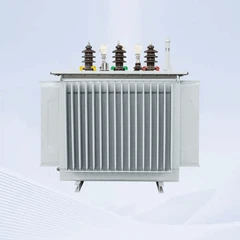
At our company, we offer a wide range of three - phase power transformers that are designed to withstand seismic forces. For example, our 33 - 38kV Oil - immersed Power Transformer is built with a robust structure and advanced seismic - resistant features. It's suitable for use in areas with moderate to high seismic hazard levels.
We also manufacture the Manufactures 100kVA 3 Phase Oil Immersed Type Power Transformer. This transformer is designed with a compact and durable structure, making it ideal for both urban and rural areas, even those prone to earthquakes.


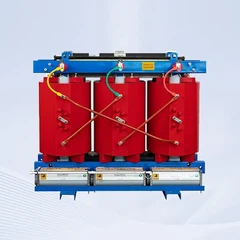
Another great product in our lineup is the SG(B)10 Non - encapsulated Dry - type Power Transformer. It offers excellent seismic performance along with high efficiency and low maintenance requirements.
Conclusion
Designing a three - phase power transformer to withstand seismic forces is a complex but crucial task. By understanding the seismic forces, focusing on the structural design, paying attention to the bushing design, and conducting proper testing and certification, we can ensure that our transformers can perform well in earthquake - prone areas.
If you're in the market for a three - phase power transformer that can handle seismic events, we'd love to talk to you. Whether you need a small - scale transformer for a local substation or a large - capacity transformer for an industrial complex, we have the expertise and the products to meet your needs. Get in touch with us to start the procurement process and discuss your specific requirements.
References
- IEEE 693: Recommended Practice for Seismic Design of Substations
- IEC 61463: Power transformers - Seismic qualification
Send Inquiry