





How to mitigate harmonic effects in a power transformer?
Aug 25, 2025
Leave a message
Hey there! As a power transformer supplier, I've seen firsthand how harmonic effects can mess up the performance of power transformers. Harmonics are basically unwanted frequencies that can cause all sorts of problems, from overheating and reduced efficiency to equipment damage and power quality issues. In this blog post, I'm gonna share some tips on how to mitigate these harmonic effects in a power transformer.
Understanding Harmonics in Power Transformers
Before we dive into the solutions, let's quickly understand what harmonics are and how they affect power transformers. In a perfect world, the voltage and current in an electrical system would be pure sine waves. But in reality, due to the presence of non - linear loads like variable frequency drives, computers, and LED lights, the waveforms get distorted. These distorted waveforms contain multiples of the fundamental frequency (usually 50 or 60 Hz), and these multiples are called harmonics.
When harmonics flow through a power transformer, they can cause additional losses. These losses are mainly due to increased eddy currents and hysteresis losses in the transformer core. The extra heat generated by these losses can reduce the transformer's lifespan and efficiency. Moreover, harmonics can also lead to voltage distortion, which can affect other equipment connected to the same electrical system.
Mitigation Techniques
1. Selecting the Right Transformer
One of the first steps in mitigating harmonic effects is to choose the right transformer for the application. Some transformers are designed to handle harmonics better than others. For example, a transformer with a K - factor rating can be a great choice. The K - factor is a measure of the transformer's ability to handle non - sinusoidal loads. A higher K - factor means the transformer can handle more harmonics without overheating.
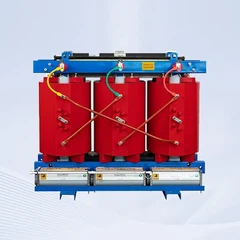
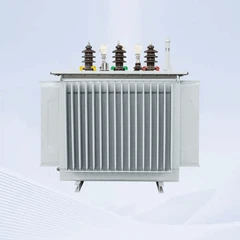
If you're looking for a reliable transformer, check out our Electric Transformers. We offer a wide range of transformers suitable for different applications, including those with high harmonic content.
2. Using Filtering Devices
Another effective way to reduce harmonic effects is by using filtering devices. There are two main types of filters: passive and active.
Passive Filters: These are relatively simple and inexpensive. They consist of capacitors, inductors, and resistors connected in specific configurations. Passive filters work by providing a low - impedance path for the harmonic currents, diverting them away from the transformer. However, they are only effective at specific harmonic frequencies and can be affected by changes in the electrical system.
Active Filters: These are more advanced and can provide better harmonic compensation. Active filters use power electronics to generate a current that is equal in magnitude but opposite in phase to the harmonic current. This cancels out the harmonics and restores the sinusoidal waveform of the current. Although active filters are more expensive than passive filters, they offer better performance and flexibility.
3. Proper Sizing of the Transformer
Sizing the transformer correctly is crucial in reducing harmonic effects. When there are high harmonic loads, it's important to oversize the transformer to account for the additional losses caused by the harmonics. A transformer that is too small for the load can overheat quickly, leading to premature failure.
For example, if you have a load with a high harmonic content, our 33kv 12.5Mva Three Phase Power Transformer might be a suitable option. It's designed to handle heavy loads and can better withstand the effects of harmonics.
4. Isolation Transformers
Isolation transformers can also help in reducing harmonic effects. These transformers have a separate primary and secondary winding, which provides electrical isolation between the input and output. This isolation can prevent the transfer of harmonics from one part of the electrical system to another.
Isolation transformers can be particularly useful in sensitive applications where power quality is critical. They can reduce the impact of harmonics on equipment and improve the overall reliability of the electrical system.
5. Load Management
Managing the load is another important aspect of mitigating harmonic effects. By distributing the non - linear loads evenly across different phases, you can reduce the overall harmonic distortion in the system. Additionally, avoiding the simultaneous operation of multiple high - harmonic loads can also help in reducing the harmonic content in the electrical system.
Case Study: Using Our 8000 Kva Distribution Power Transformer
Let me share a real - life example of how our 8000 Kva Distribution Power Transformer helped a customer mitigate harmonic effects. A manufacturing plant was experiencing problems with overheating transformers and poor power quality due to the use of multiple variable frequency drives.
We recommended our 8000 Kva Distribution Power Transformer, which had a high K - factor rating. Along with the transformer, we installed active filters to further reduce the harmonic currents. After the installation, the plant noticed a significant improvement in power quality. The transformers stopped overheating, and the equipment's performance improved. The customer was able to save on energy costs and reduce maintenance downtime.
Conclusion
Harmonic effects can be a real headache for power transformer users. But with the right strategies, you can effectively mitigate these effects and ensure the reliable operation of your power transformers. Whether it's selecting the right transformer, using filtering devices, or managing the load, there are several ways to tackle the harmonic problem.


If you're facing issues with harmonic effects in your power transformers or are looking for a new transformer for a high - harmonic application, don't hesitate to get in touch. Our team of experts is always ready to help you find the best solution for your needs. Contact us today to start a discussion about your power transformer requirements.
References
- Electric Power Substations Engineering by Turan Gonen
- Power System Harmonics by Math H.J. Bollen
Send Inquiry