





What are the protection devices for a Pad Mounted Transformer?
Aug 11, 2025
Leave a message
Pad mounted transformers are crucial components in the electrical distribution system, commonly used in urban and suburban areas to step down high - voltage electricity to a level suitable for commercial and residential use. As a supplier of pad mounted transformers, I understand the importance of protection devices in ensuring the safe and efficient operation of these transformers. In this blog, I will discuss the various protection devices used for pad mounted transformers.
Overcurrent Protection
Overcurrent is one of the most common issues that can affect pad mounted transformers. It can be caused by short - circuits, overloads, or ground faults. To protect against overcurrent, several devices are employed.
Fuses
Fuses are simple yet effective overcurrent protection devices. They consist of a metal strip or wire that melts when the current flowing through it exceeds a certain value. In pad mounted transformers, high - voltage fuses are often used on the primary side. These fuses are designed to interrupt the circuit quickly when a fault occurs, preventing damage to the transformer. For example, a current - limiting fuse can limit the peak fault current and reduce the stress on the transformer windings.
Circuit Breakers
Circuit breakers are another important overcurrent protection device. Unlike fuses, which need to be replaced after they blow, circuit breakers can be reset. They can automatically open the circuit when an overcurrent condition is detected. There are different types of circuit breakers, such as thermal - magnetic circuit breakers and electronic circuit breakers. Thermal - magnetic circuit breakers use a combination of a bimetallic strip (for overload protection) and an electromagnet (for short - circuit protection). Electronic circuit breakers, on the other hand, use electronic sensors and control circuits to detect and interrupt overcurrents more accurately.
Overvoltage Protection
Overvoltage can occur due to lightning strikes, switching operations, or faults in the power system. It can cause insulation breakdown in the transformer, leading to costly repairs or even complete failure.
Surge Arresters
Surge arresters are the primary devices used for overvoltage protection. They are connected between the line and ground and are designed to divert the excess voltage to the ground during a surge event. A typical surge arrester consists of a non - linear resistor, such as a metal - oxide varistor (MOV). When the voltage across the arrester exceeds a certain threshold, the MOV's resistance decreases, allowing the surge current to flow to the ground. Surge arresters can protect the transformer from both external (e.g., lightning) and internal (e.g., switching) overvoltages.
Temperature Protection
Excessive temperature can degrade the insulation of the transformer windings and reduce its lifespan. Therefore, temperature protection is essential for pad mounted transformers.
Temperature Sensors
Temperature sensors are used to monitor the temperature of the transformer windings and the oil (in oil - filled transformers). Thermocouples and resistance temperature detectors (RTDs) are commonly used temperature sensors. These sensors can provide real - time temperature data, which can be used to trigger alarms or control cooling systems.
Cooling Systems
To maintain the temperature within a safe range, pad mounted transformers are often equipped with cooling systems. For oil - filled transformers, oil circulation systems can be used to transfer heat from the windings to the radiator. Fans can also be installed to enhance the cooling effect. In some cases, forced - air cooling or liquid - cooled systems may be used for larger transformers.
Gas Protection
In oil - filled pad mounted transformers, the decomposition of oil due to overheating or electrical faults can produce gases. Monitoring these gases can provide early warning of potential problems.
Gas - Operated Relays
Gas - operated relays, such as Buchholz relays, are used to detect the presence of gas in the transformer. When a fault occurs, the gas produced rises to the top of the transformer and accumulates in the relay chamber. The relay can then send a signal to the control system, indicating a potential problem. In some cases, the relay can also be used to trip the circuit breaker to isolate the transformer.
Protection for Our Products
As a supplier, we offer a wide range of pad mounted transformers, including the 3000 Kva Pad Mounted Distribution Transformer and the 2500 KVA Pad Mounted Transformer. Our Cooper Oil Filled Pad Mounted Transformer is also a popular choice among customers. All our transformers are equipped with state - of - the - art protection devices to ensure their safe and reliable operation.

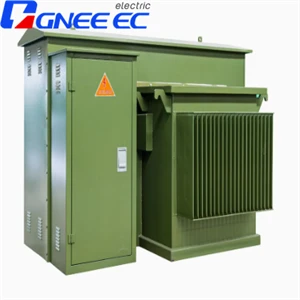
We understand that different applications may have different requirements for protection. That's why we work closely with our customers to provide customized solutions. Whether you need a transformer for a small commercial building or a large industrial complex, we can offer the right protection devices to meet your needs.
Contact for Purchase and Negotiation
If you are interested in our pad mounted transformers or need more information about the protection devices, please feel free to contact us. We are always ready to discuss your requirements and provide you with the best solutions. Our team of experts can guide you through the selection process and ensure that you get a transformer that meets your specific needs.
References
- Kirtley, J. L. (2004). Electric Machinery Fundamentals. McGraw - Hill.
- Gross, G. G., & Grainger, J. J. (2007). Power System Analysis. McGraw - Hill.
- Westinghouse Electric Corporation. (1982). Electrical Transmission and Distribution Reference Book. Westinghouse Electric Corporation.
Send Inquiry