

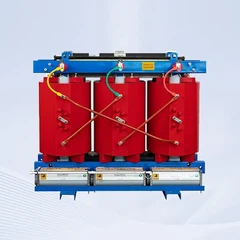
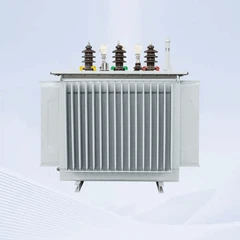




What is the inrush current of a 750 kva dry type transformer?
Jul 10, 2025
Leave a message
As a supplier of 750 kVA dry type transformers, I often encounter inquiries about inrush current. Understanding the inrush current of a 750 kVA dry type transformer is crucial for both our customers and the proper functioning of electrical systems. In this blog post, I'll delve into what inrush current is, why it matters, and how it relates to our 750 kVA dry type transformers.
What is Inrush Current?
Inrush current is a transient phenomenon that occurs when an electrical device, such as a transformer, is initially energized. It is a high - amplitude, short - duration current spike that can be significantly higher than the normal operating current of the device. When a 750 kVA dry type transformer is first switched on, the magnetic core of the transformer needs to be magnetized. This process requires a large amount of current to establish the magnetic field in the core.
The inrush current typically lasts for a few milliseconds to a few seconds, depending on various factors such as the transformer's design, the point on the voltage wave at which the transformer is energized, and the system impedance. During this short period, the inrush current can reach values that are several times the rated current of the transformer.
Why Does Inrush Current Matter?
The high inrush current of a 750 kVA dry type transformer can have several implications for the electrical system. Firstly, it can cause voltage dips in the power supply network. These voltage dips can affect other electrical equipment connected to the same network, leading to malfunctions or even damage. For example, sensitive electronic devices may experience glitches or shutdowns due to the sudden drop in voltage.
Secondly, the high inrush current can put stress on the transformer itself and other components in the electrical circuit, such as circuit breakers and fuses. Repeated high - inrush current events can lead to premature wear and tear of these components, reducing their lifespan and increasing the risk of failures. Therefore, it is essential to properly account for the inrush current when designing and protecting the electrical system.
Factors Affecting the Inrush Current of a 750 kVA Dry Type Transformer
Transformer Design
The design of the 750 kVA dry type transformer plays a significant role in determining the magnitude of the inrush current. Transformers with a larger core cross - sectional area and lower magnetizing impedance tend to have higher inrush currents. Additionally, the type of core material used can also affect the inrush current. For example, transformers with high - quality grain - oriented electrical steel cores may have different inrush characteristics compared to those with non - oriented cores.
Point on the Voltage Wave at Energization
The point on the voltage wave at which the transformer is energized is another critical factor. If the transformer is energized at the peak of the voltage wave, the inrush current can be relatively low. However, if it is energized at the zero - crossing point of the voltage wave, the inrush current can be much higher. This is because at the zero - crossing point, the magnetic field in the core needs to build up from zero, requiring a large amount of current.


System Impedance
The impedance of the power supply system also affects the inrush current. A lower system impedance allows for a higher inrush current to flow, as there is less resistance to limit the current. Conversely, a higher system impedance can help to reduce the magnitude of the inrush current.
Measuring and Mitigating Inrush Current
To measure the inrush current of a 750 kVA dry type transformer, specialized current - measuring devices such as oscilloscopes or current transducers can be used. These devices can capture the high - amplitude, short - duration current spikes during the energization process, allowing engineers to analyze the inrush current characteristics.
There are several methods to mitigate the inrush current of a 750 kVA dry type transformer. One common method is the use of pre - insertion resistors. These resistors are connected in series with the transformer during the energization process. The resistors limit the inrush current by providing additional impedance. After the magnetic field in the core is established, the resistors are bypassed, allowing the transformer to operate normally.
Another approach is the use of controlled switching techniques. By precisely controlling the point on the voltage wave at which the transformer is energized, the inrush current can be minimized. This requires sophisticated control systems that can synchronize the switching operation with the voltage waveform.
Our 750 kVA Dry Type Transformers and Inrush Current
At our company, we take into account the inrush current characteristics when designing and manufacturing our 750 kVA dry type transformers. We use advanced design techniques and high - quality materials to optimize the transformer's performance and reduce the inrush current. Our transformers are designed to meet international standards and are rigorously tested to ensure reliable operation.
In addition to our 750 kVA dry type transformers, we also offer a wide range of other dry type transformers, such as the 10kv 6.3kv 6kv/0.4kv 800kVA Sc (B) 13 Dry - Tape Voltage Transformer, the 2000KVA Cast Resin Double Winding Transformer 11.5KV 380V, and the IEC Standard 30kVA 6/0.4kv Dry Type Transformer From China. All of our products are engineered to provide efficient and reliable power transformation solutions.
Contact Us for Procurement and Consultation
If you are interested in purchasing a 750 kVA dry type transformer or need more information about inrush current and our products, please feel free to contact us. Our team of experts is ready to assist you with your specific requirements and provide you with the best solutions for your electrical system. We look forward to discussing your needs and working with you to ensure the success of your projects.
References
- Grover, F. W. (1946). Inductance Calculations: Working Formulas and Tables. Dover Publications.
- IEEE Std C57.12.00 - 2010, IEEE Standard General Requirements for Liquid - Immersed Distribution, Power, and Regulating Transformers.
- International Electrotechnical Commission (IEC). (2017). IEC 60076 - 1: Power transformers - Part 1: General.
Send Inquiry