







What is the working principle of a three - phase power transformer?
Aug 12, 2025
Leave a message
Hey there! As a supplier of three - phase power transformers, I'm super stoked to break down the working principle of these bad boys for you.
Let's start with the basics. A three - phase power transformer is a crucial piece of equipment in the electrical power system. It plays a vital role in transferring electrical energy between different voltage levels in a three - phase electrical network.
The Fundamentals of Electromagnetic Induction
At the heart of a three - phase power transformer lies the principle of electromagnetic induction. This was discovered by Michael Faraday way back in the 19th century. The basic idea is that when a changing magnetic field passes through a coil of wire, it induces an electromotive force (EMF) in the coil.
In a three - phase transformer, we have primary and secondary windings. The primary winding is connected to the source of electrical power, and the secondary winding is connected to the load. When an alternating current (AC) flows through the primary winding, it creates a changing magnetic field around it. This changing magnetic field then passes through the secondary winding, inducing an EMF in the secondary winding.
The relationship between the primary and secondary voltages is determined by the turns ratio of the transformer. The turns ratio is simply the ratio of the number of turns in the primary winding to the number of turns in the secondary winding. If the turns ratio is greater than 1, the transformer is a step - down transformer, which means it reduces the voltage from the primary to the secondary side. If the turns ratio is less than 1, it's a step - up transformer, and it increases the voltage.
Three - Phase System Basics
Now, let's talk about the three - phase system. A three - phase system consists of three alternating currents that are out of phase with each other by 120 degrees. This has several advantages over a single - phase system. For one, it provides a more constant power transfer. In a single - phase system, the power fluctuates between zero and a maximum value twice per cycle. In a three - phase system, the sum of the powers of the three phases is constant, which results in a smoother power delivery.
In a three - phase power transformer, there are three primary windings and three secondary windings. Each set of windings corresponds to one of the three phases of the three - phase system. These windings are usually wound on a common magnetic core. The magnetic core is made of a material with high magnetic permeability, such as silicon steel. This helps to concentrate the magnetic field and reduce losses.
Core and Winding Configurations
There are different types of core and winding configurations in three - phase power transformers. The most common ones are the core - type and shell - type configurations.
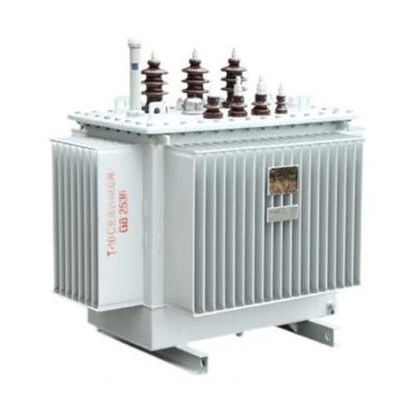

In a core - type transformer, the windings surround the core. The core is usually made up of laminated sheets of silicon steel to reduce eddy current losses. Eddy currents are circulating currents that are induced in the core due to the changing magnetic field. By laminating the core, we increase the resistance of the core to these eddy currents, thereby reducing the losses.
The shell - type transformer, on the other hand, has the core surrounding the windings. This configuration provides better mechanical support for the windings and also helps to reduce the leakage flux. Leakage flux is the magnetic flux that doesn't link both the primary and secondary windings, and it can cause losses in the transformer.
Cooling Methods
Three - phase power transformers generate heat during operation due to losses in the windings and the core. These losses include copper losses (due to the resistance of the windings) and iron losses (due to hysteresis and eddy currents in the core). To prevent overheating, transformers need to be cooled.
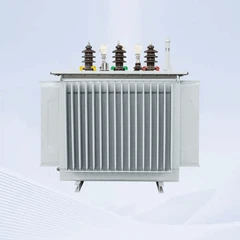
There are several cooling methods available. One common method is oil - immersion cooling. In an oil - immersed transformer, the windings and the core are submerged in a tank filled with insulating oil. The oil not only provides electrical insulation but also helps to transfer heat away from the windings and the core. The heated oil rises to the top of the tank and is then cooled by passing it through a radiator or a heat exchanger.
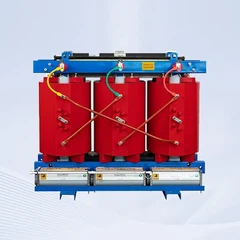
Another cooling method is air - cooling. In air - cooled transformers, fans are used to blow air over the windings and the core to remove the heat. This method is suitable for smaller transformers or for applications where oil - immersion is not practical.
Applications of Three - Phase Power Transformers
Three - phase power transformers are used in a wide range of applications. They are commonly used in power generation plants to step up the voltage for long - distance transmission. High - voltage transmission reduces the current in the transmission lines, which in turn reduces the power losses in the lines.
At the distribution end, step - down transformers are used to reduce the voltage to a level that is suitable for industrial, commercial, and residential use. Industrial facilities often use three - phase power for their heavy machinery and equipment.
If you're interested in specific types of three - phase power transformers, we offer some great options. Check out our Amorphous Steel Transformer, which has lower core losses compared to traditional transformers. We also have the 80KVA 3 Phase Oil - immersed Power Transformer, which is a reliable choice for medium - sized applications. And for larger distribution needs, our 8000 Kva Distribution Power Transformer is a top - notch option.
Why Choose Our Three - Phase Power Transformers
As a supplier, we take pride in offering high - quality three - phase power transformers. Our transformers are designed and manufactured using the latest technology and the best materials. We ensure strict quality control at every stage of the production process to guarantee reliable performance.
If you're in the market for a three - phase power transformer, whether it's for a small business or a large industrial project, we'd love to have a chat with you. We can help you choose the right transformer for your specific needs and provide all the technical support you require. Don't hesitate to reach out for a quote or to discuss your requirements. We're here to make your power distribution needs a breeze!
References
- Grover, F. W. (1946). Inductance Calculations: Working Formulas and Tables. Dover Publications.
- Chapman, S. J. (2012). Electric Machinery Fundamentals. McGraw - Hill Education.
Send Inquiry