







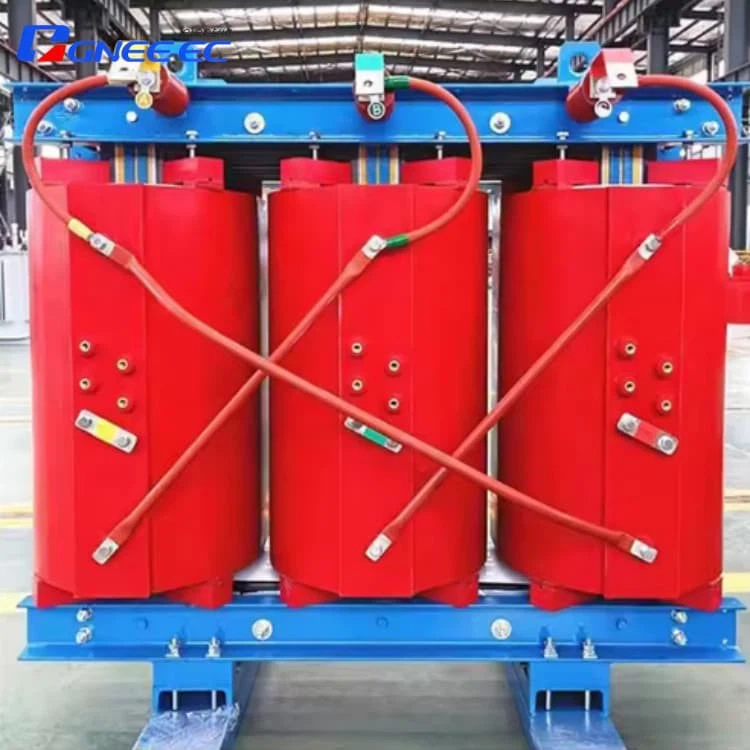
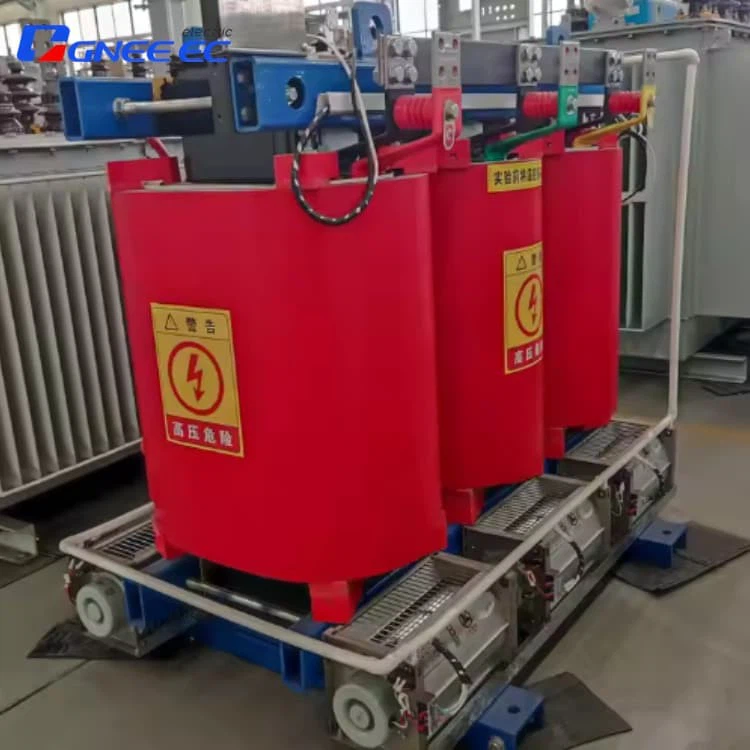
100KVA/10KV Cast Resin Copper Distribution Transformer
Winding Type:Two Winding
Rated Capacity:200kVA
High Voltage:10/11kV
Low Voltage:0.4kV
Tapping Range:±2x2.5%
Impedance Voltage:4%
Load Loss:2.73/2.6kW
No-load Loss:0.34kW
No-load Current:1.0%
Frequency:50/60Hz
Connection Group:Yyn0/Dyn11
Cooling Method:ONAN
Coil Material:Aluminum/Copper
Size:1240x780x1360mm
Weight:910kg
Have questions? GNEE sales representatives are available for live chat now
Send E-mail: sales@gneeelectric.com
Tel: +8615824687445
Henan GNEE Electric Co., Ltd. is one of the most reliable manufacturers and suppliers of 100kva/10kv cast resin copper distribution transformer in China. If you're going to buy customized 100kva/10kv cast resin copper distribution transformer made in China, welcome to get quotation from our factory. Quality products and reasonable price are available.
This 100 KVA 11KV transformer was delivered to Guatemala in 2024. the rated power of the transformer is 100 KVA. It is a Step-down transformer 11KV to 0.38KV, the primary voltage is 11KV, the secondary is 0.38KV. The transformer is equipped with ±2*2.5% no load tap changer at primary side. Our 100 KVA Distribution Transformer was designed with advanced technology and adopts high quality material and components which result in reliable quality and long operation time.
In GNEE Transformer, 100kva transformers are frequently asked for by our customers. For 100kVA transformers, we can provide customers with 100kVA pole mounted transformers, 100kVA pad mounted transformers, 100kVA distribution transformers for both single phase and three phase and 100kVA dry type transformers.
Main Component of 100 KVA 11/0.38KV Transformer

Core:
The iron core is one of the most basic components of the transformer, and it is the magnetic circuit part of the transformer. The primary and secondary winding of the transformer are all on the iron core. In order to improve the magnetic permeability of the magnetic circuit and reduce the eddy current loss in the iron core, the iron core is usually made of 0.35mm silicon steel sheet with insulating surface. The iron core consists of two parts, the iron core column and the iron yoke. The winding are put on the iron core column, and the iron yoke connects the iron core to form a closed magnetic circuit.

Winding:
The winding is also one of the most basic parts of the transformer. It is the circuit part of a transformer, usually made of copper or aluminum wire wrapped in insulating paper. The winding connected to the high-voltage network is the high-voltage winding, and the winding connected to the low-voltage network is the low-voltage winding.

Transformer leads:
1. Transformer leads have three requirements: (electrical performance), (mechanical strength) and (temperature rise requirements).
2.The power transformer leads are (bare copper wire), (paper-wrapped round copper wire), (bare bus bar), (cable) and (copper tube), etc.
3. Our factory adopts lead connection method (brazing) (gas welding) (cold pressure welding) (mechanical connection).

Oil Tank:
The basic functions of transformer oil tank can be summarized as protection of oil tank and holding oil, installation skeleton of external components and heat dissipation.
Finished 100 KVA 11/0.38KV Transformer

|
Transformer Type |
Resin Cast Dry Type |
|
Model |
SCB10-100/11 |
|
Number of Phase |
Three Phase |
|
Winding Type |
Two Winding |
|
Winding Material |
Aluminum/Copper |
|
Rated Capacity |
100kVA |
|
High Voltage |
10/11kV |
|
Low Voltage |
0.4kV |
|
Tapping Range |
±2x2.5% |
|
Impedance Voltage |
4% |
|
Load Loss (120°C) |
1.57kW |
|
No-load Loss |
0.4kW |
|
No-load Current |
1.5% |
|
Frequency |
50/60Hz |
|
Connection Group |
Yyn0/Dyn11 |
|
Cooling Method |
ANAF |
|
Insulation Class |
F |
|
Thermal Class |
F1 |
|
Protection Level |
IP00/IP20/IP30 |
|
Climatic Class |
C2 |
|
Environmental Class |
E2 |
|
Temperature Rise |
100K |
|
Operation Altitude |
≤1000m |
|
Size |
1030x750x1020mm |
|
Weight |
830kg |
What is a 100kVA transformer?
To know about 100kva transformers, we need to figure out the differences between 100kW transformers and 100kVA transformers. Kw is short for kilowatt and is a unit we often see on our electrical paying bills. kw means the actual power or working power of the electrical devices. It is not very likely to be a 100kW transformer. But in transformers or generators, kVA is frequently used. The formula of converting kVA into kW is: kVA(apparent power)*pf(power factor)=kw(actual power)
100kVA transformers can be used on many electrical occasions like suburban areas, residential areas, commercial centers, farmhouses, industries, energy stations, and so on.
100 kVA transformer types
For GNEE transformer, 100kva transformers can be overhead transformers, single phase transformers, three phase transformers, distribution transformers, and dry-type transformers. These types of transformers are of the same principles, but they are built in different constructions, and different types of transformers have different applications. According to different occasions where you want to use your transformers, GNEE offers you ideal solutions.
At the same time, 100kVA transformers can also be divided into step up transformers, step down transformers. A step down transformer distributes primary voltage to lower secondary voltage. So the coil number of primary voltage is more than that of the secondary voltage, which means, the ratio of primary and secondary windings is bigger than 1. On the contract, a step-up transformer transforms low voltage into higher voltage, so the winding numbers of primary voltage are less than the secondary voltage, and the winding ratio of primary and secondary voltage is less than 1.
How many amps can a 100 kVA transformer handle?
Amp is short for ampere, as we have mentioned before, it is the unit of the electrical current. 1 kVA usually represents 1000 volt-amps. Volt-Ampere is equal to a Watt. We can see that to convert kVA into amps, we also need to know volts. Here is a formula we can use: I (amps)= S (VA)/ V (volts). By this formula, we can turn kVA into amps. Here are some examples of the amps of different volt:
1 kVA to amp (120V)= 8.33A
1 kVA to amp (220V)= 4..55A
1 kVA to amps (12V)= 83.33A
Let's take the voltage as 220v (frequently used), amps of 100kVA will be about 455A.
100 kVA Transformer Load Capacity
Most time, we can clearly know about the rated capacity of the transformer, which is often based on kVA. It is also important for customers to know what the load capacity means to a transformer. The load capacity of a transformer tells how many amperes a transformer is designed to load. To know about the load capacity of the transformer, you can confirm if your transformer is too big or small in size. To calculate the load capacity of a transformer, you need to know the line voltage of the secondary output of the transformer, and if it is a single phase transformer or a three phase transformer. The formula of the calculation is kVA*1000/secondary voltage. After knowing this information, you can get started. Taking the secondary voltage as 240v for a single phase transformer, we can calculate that the full load capacity is 416.67 amps. For a 3-phase transformer, let's take the secondary voltage as 120/208v, the formula will be kVA*1000/voltage*1.732. By this, we can calculate the load capacity as 277.58 amps.
How do I choose a 100 kva transformer?
When you choose a transformer, the first thing you should think about is what are you going to do with those transformers. 100 kVA is a relatively small size, so they are one of the best-selling of both business buyers and personal clients in Daelim Transformers. For 100kva pole mounted transformers, they are widely used in suburban areas, farmhouses, ranches, and some other places similarly. And 100 kVA pad-mounted transformers are more widely used in residential areas, uptown areas, parks, commercial areas, schools, hospitals, etc. Besides, we can also customize the specific transformers based on customers' needs. And the price of the transformers will be based on the needs of customers.
The specification of a transformer contained many items. It is difficult to give a specification without clear technical data because customers' needs usually design transformers' specifications are different international standards. For the GNEE transformer, 100 kVA transformers can be 100 kVA pole mount transformers, 100kVA single phase pad-mounted transformers, 100kVA three phase transformers, and 100kVA dry type transformers.
We also make ideal solutions for solar power, wind power, energy storage, mining industries, cryptocurrency, and utilities. No matter when you need solutions for your projects, we are always here.
What is the load capacity of a 100 kVA transformer?
So, for a 100 KVA transformer we will multiply 100 x 1000 and then divide it by 240v. That gives us 416.67 amps. So, for a 100 KVA 240v single phase transformer the full load ampacity is 416.67 amps.
How many houses can a 100 kVA transformer handle?
8 - 500 kVA connects a nominal number of 103 customers, 100 kVA connects 14 customers.
What is the primary current of a 100 kVA transformer?
It's rating is 100 KVA. Using the aforementioned formula, let's confirm this rating: Primary Voltages or High Voltages (H.V) is 11000 volts. Primary Current (current on High Voltage side) is 5.25 amps.
How many amps can a 100 kVA 3-phase transformer handle?
Taking the secondary voltage as 240v for a single phase transformer, we can calculate that the full load capacity is 416.67 amps. For a 3-phase transformer, let's take the secondary voltage as 120/208v, the formula will be kVA*1000/voltage*1.732. By this, we can calculate the load capacity as 277.58 amps
What is the maximum efficiency of a 100 kVA transformer?
A 100−kVA distribution transformer has a maximum efficiency of 98% at 50% full-load and unity power factor.
How to size a transformer for a house?
To determine the required transformer VA, multiply the secondary voltage by the required amperes: For example, VA=Volts x Amperes or 28V x 1.2 amperes = 33.6 VA. To determine the maximum transformer current, divide the transformer VA by transformer secondary voltage.
How much oil is in a 100 kVA transformer?
1-2. 33kV - 400/230V
| Item | Capacity | Oil |
|---|---|---|
| kVA | Liter | |
| 1 | 50 | 165 |
| 2 | 100 | 230 |
| 3 | 160 | 280 |
What is the full load of a 100 kVA transformer?
100 KVA transformer load capacity in kW
1, transformer output power is the apparent power, and active power (KW) relationship is: apparent power = active power x power factor.
2, with the average power factor of 0.8 calculation,a 100 KVA transformer can provide (100 KVA × 0.8) 80 KW active power for the load.
How many amps is 100 kVA 3-phase?
Table of kVA to Amps Conversions
| kVA | Voltage (V) | Amps |
|---|---|---|
| 100 | 240 | 520.83 |
| 200 | 240 | 1041.67 |
| 300 | 240 | 1562.5 |
| 400 | 240 | 2083.33 |
Manufacturing Process of Cast Resin Copper Dry Type Power Transformer
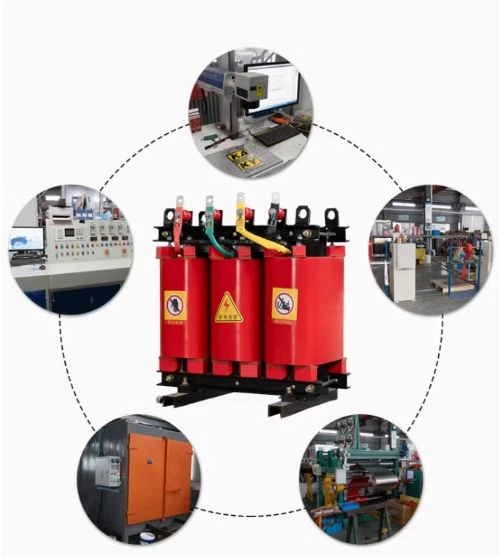
Pouring Process for Cast Resin Transformers
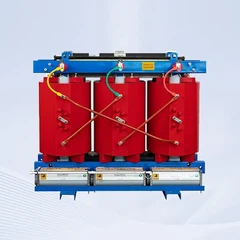
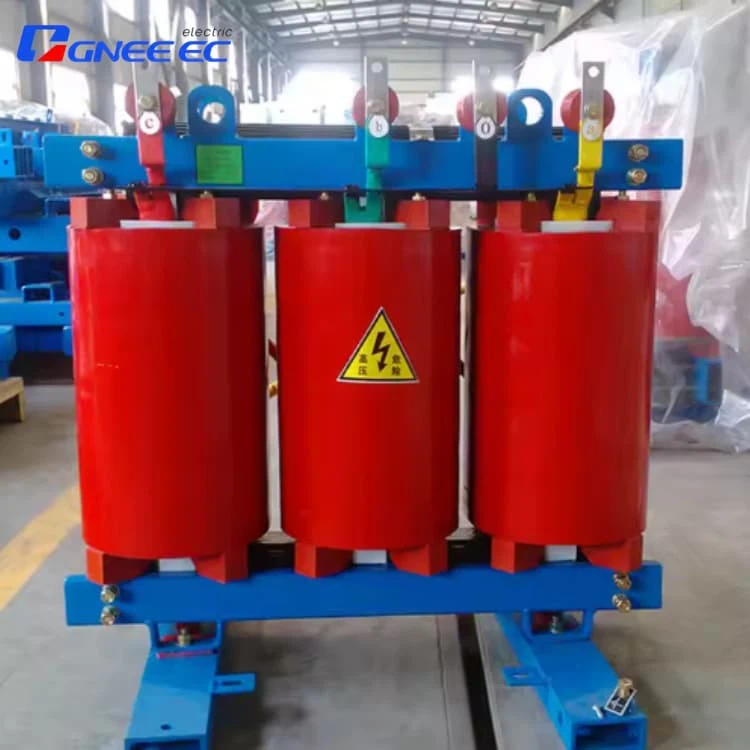
The winding of dry cast resin transformers is fully encapsulated in epoxy resin using Vacuum Pressure Impregnation (VPI) technology. This resin material has high insulation properties, fire resistance, and mechanical strength, ensuring stable operation of the transformer in harsh environments such as high temperatures and humidity.
Manufacturing of Copper Winding Transformers
The core winding uses 99.99% pure copper wire (pure copper transformer), which is precisely processed by a CNC winding machine to form a compact rectangular cross-section structure. The high conductivity of the copper wire (IACS 100%) significantly reduces energy consumption and heat dissipation losses, offering superior performance compared to traditional aluminum windings.
Dry Resin Curing Process
After resin pouring, high-temperature vacuum curing (180°C/3 hours) eliminates bubbles and stress, forming a seamless insulating layer. This process ensures excellent moisture resistance and short-circuit resistance for cast resin type transformers while reducing operating noise to below 50dB.
Process Verification and Standards
Each transformer undergoes partial discharge testing (≤3pC), lightning impulse tests (100kV), and temperature rise tests, complying with standards such as IEC 60076-7 and GB/T 10228. This ensures global compatibility for dry cast resin transformers.
Products parameter
| Main Technical Parameter (can customize it according to your techncial data) | ||||||||||
| Rated Capacity(KVA) |
Voltage Combination | Vector Group |
No-load Loss (KW) |
Load Loss (KW) |
No-load Curent% |
Short-circuitimpedance | Weight (kG) | |||
| High Voltage(KA) | High Voltage Tapping Range |
Low Voltage(KA) | Oil Weight | Gross Weight | ||||||
| 30 | 6 6.3 10 10.5 11 |
±5×2.5% ±2×2.5% |
0.4 |
Yyn0 Dyn11 |
0.71 | 0.19 | 1.6 | 4 |
250 | 320 |
| 50 | 1 | 0.27 | 1.4 | 370 | 460 | |||||
| 63 | 1.38 | 0.37 | 1.2 | 460 | 550 | |||||
| 80 | 1.57 | 0.4 | 1.1 | 490 | 580 | |||||
| 100 | 1.85 | 0.47 | 1.0 | 570 | 680 | |||||
| 125 | 2.13 | 0.54 | 1.0 | 640 | 750 | |||||
| 160 | 2.52 | 0.62 | 0.9 | 775 | 890 | |||||
| 200 | 2.75 | 0.72 | 0.8 | 895 | 1030 | |||||
| 250 | 3.47 | 0.88 | 0.8 | 1100 | 1250 | |||||
| 315 | 3.99 | 0.98 | 0.7 | 1200 | 1350 | |||||
| 400 | 4.88 | 1.16 | 0.7 | 1460 | 1610 | |||||
| 500 | 5.87 | 1.34 | 0.6 | 6 |
1680 | 1840 | ||||
| 630 | 5.96 | 1.3 | 0.6 | 1800 | 1980 | |||||
| 800 | 6.95 | 1.52 | 0.5 | 2130 | 2310 | |||||
| 1000 | 8.13 | 1.77 | 0.45 | 2520 | 2720 | |||||
| 1250 | 9.69 | 2.09 | 0.45 | 3075 | 3300 | |||||
| 1600 | 11.73 | 2.45 | 0.45 | 3670 | 3900 | |||||
| 2000 | 14.45 | 3.32 | 0.4 | 4420 | 4670 | |||||
| 2500 | 17.17 | 4 | 0.4 | 5310 | 5580 | |||||
Core Advantages of the Product
Safe and Reliable, Oil-Free and Environmentally Friendly
The Cast Resin Type Transformer features a fully sealed design without insulating oil, eliminating risks of oil leakage and fires. It meets safety requirements for indoor use and flammable environments such as data centers and chemical plants.Highly Efficient, Energy-Saving, and Long-Term Stability
By combining Copper Winding Transformer and Pure Copper Transformer processes, copper conductor losses are reduced by 30%, and temperature rise is decreased by 20%. This significantly improves energy efficiency and contributes to achieving carbon neutrality goals.Durable and Strong Adaptability
The epoxy resin layer of Dry Cast Resin Transformers effectively isolates external pollution and humidity. Short-circuit resistance is improved by 40%, enabling stable operation within a wide temperature range (-30°C to +55°C). It is suitable for harsh scenarios like mines and substations.Compact Design, Easy Maintenance
After epoxy resin curing, the volume shrinks by 15%, reducing space requirements. No oil handling equipment is needed, lowering maintenance costs. Modular structures support quick disassembly, reducing fault rates by 60% compared to traditional oil-filled transformers.
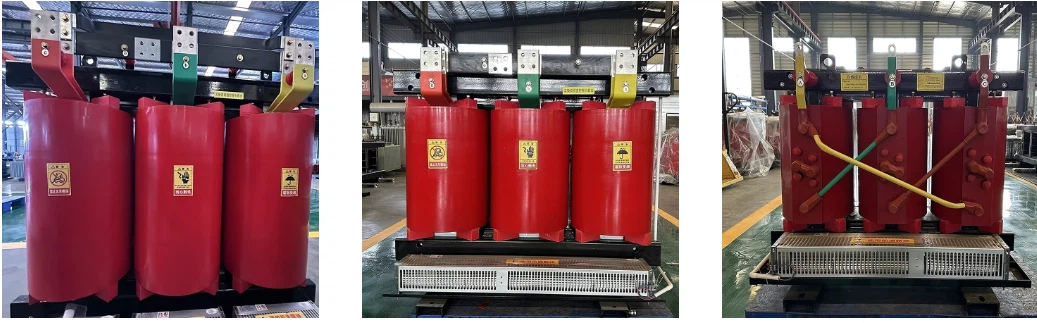
video
Why choose us?
GNEE Group:
Global Transformer Supply Chain Integration Expert (2008 - Present)
Founded in 2008, GNEE Group has undergone fifteen years of deep industry cultivation, successfully transforming from a regional trader to a global supply chain management expert. As a pioneer in the integration of the steel industry chain, the group has established a full-cycle value system that spans raw material procurement, production coordination, logistics optimization, and terminal services, setting an innovative operational benchmark in the global transformer distribution sector. In the era of Industry 4.0, GNEE Group is accelerating towards its goal of becoming a global integrator oftransformer industry value through digital restructuring and green supply chain construction.
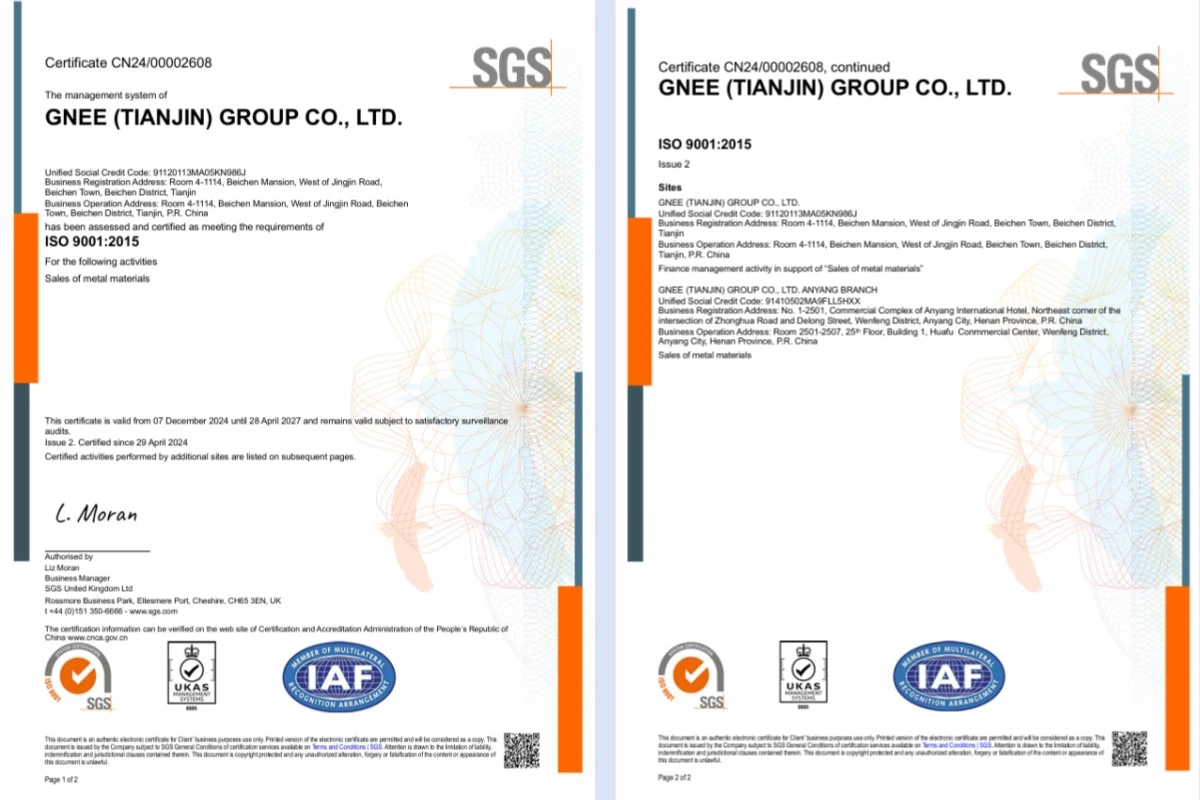
SGS certification certificate
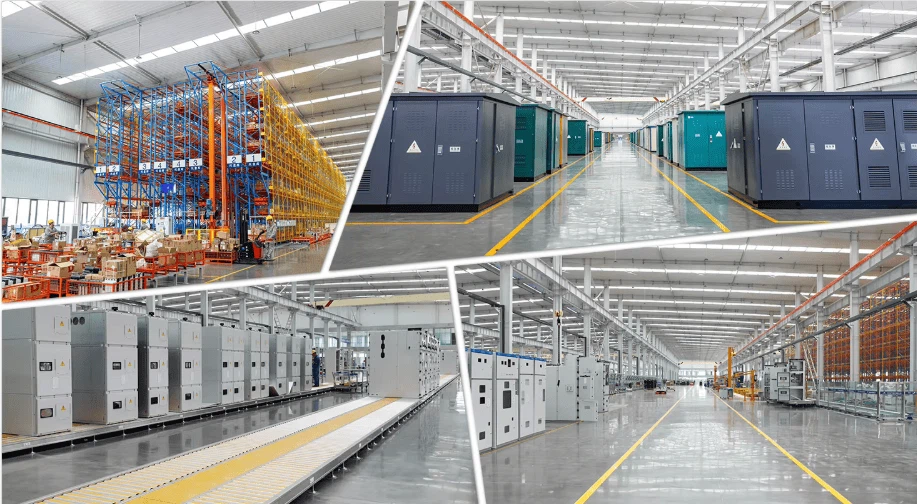
Production environment
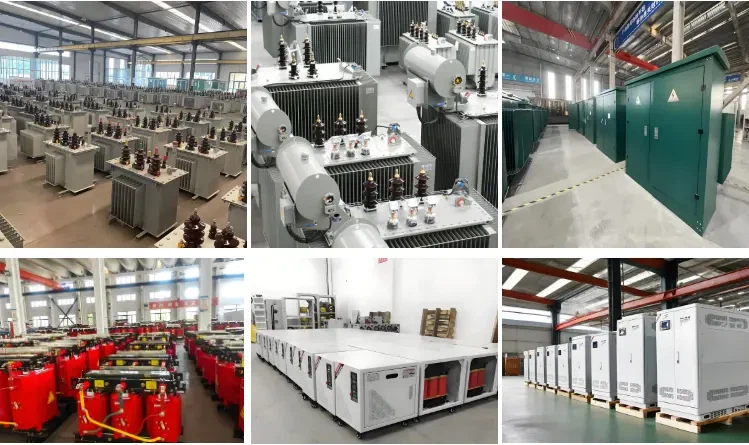
Our factory
Hot Tags: 100kva/10kv cast resin copper distribution transformer, China 100kva/10kv cast resin copper distribution transformer manufacturers, suppliers, factory, air insulated dry type transformer, 1333KVA Transformer, 315kVA Power Transformer, dry type transformer types, 750 kva dry type transformer, copper Transformer
You Might Also Like


Send Inquiry