








1000 kVA Oil-Immersed Transformer: Overload Operation and Safety Protection
What Determines the Overload Capability of a 1000 kVA Oil-Immersed Transformer
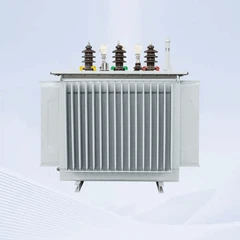
A 1000 kVA oil-immersed transformer is designed for continuous service at its rated capacity under the reference ambient temperature conditions defined in IEC 60076-1. In real networks, demand spikes regularly push the unit above its nameplate rating. Whether such overload operation is safe depends on the thermal state of the insulation system, not on the kVA figure alone. The transformer can carry temporary overloads when the winding hot-spot temperature remains within the limits defined by the loading guide IEC 60076-7. The insulating oil performs two duties at once: it insulates the windings from the tank and transfers heat from the core and windings to the radiators. When the load exceeds 1000 kVA, copper losses rise with the square of the current, and winding and top-oil temperatures climb rapidly, which is why overload management is fundamentally a temperature management problem.
Normal Permissible Overload and Emergency Overload
Overload operation of an oil-immersed transformer is divided into two categories in operating practice:
| Category | Typical Condition | Duration | Management Requirement |
|---|---|---|---|
| Normal permissible overload | Load above rating during peak hours while ambient temperature is low and cooling is effective | Limited hours per day, within the daily load cycle | Hot-spot temperature kept below the limit of the loading guide; load returns to rating after the peak |
| Emergency overload | Load far above rating after loss of a parallel unit or abnormal system condition | Minutes to a few hours, strictly limited | Continuous temperature monitoring, documented decision, inspection after the event |
The distinction matters because normal overload is a planned part of the daily cycle, while emergency overload is an exceptional event that consumes a measurable part of the insulation life.
Thermal Aging and Insulation Life
The life of the transformer is governed by the aging of the cellulose paper insulation around the windings. The loading guide IEC 60076-7 defines the aging model: a winding hot-spot temperature of 98 degrees Celsius is the reference for normal aging, and the relative aging rate roughly doubles for every additional 6 Kelvin above that value. For a unit with Class A insulation, the practical top-oil operating range is about 95 to 105 degrees Celsius under normal conditions, and exceeding the design temperature accelerates insulation degradation at a nonlinear rate. The practical consequence is clear: a moderate overload for a short time costs little insulation life, while the same overload sustained for days can permanently shorten the transformer service life.
Protection and Safety Devices for the 1000 kVA Unit
A 1000 kVA oil-immersed transformer is normally equipped with a protection package that detects the early signs of abnormal operation:
Buchholz relay for units with a conservator, which trips on gas accumulation or rapid oil surge caused by internal faults.
Pressure relief device that releases excess internal pressure before the tank distorts.
Oil temperature indicator with alarm contacts, and a winding temperature indicator where specified.
Overcurrent and earth-fault protection on the feeding circuit breaker, coordinated with the transformer short-circuit withstand capability per IEC 60076-5.
Oil level gauge so that a drop in oil level is noticed before insulation exposure occurs.
Periodic dissolved gas analysis of oil samples to detect developing thermal or electrical faults.
Cooling fans in an ONAF configuration extend the rating of the unit when they start automatically at a set oil temperature, and their operation should be verified during routine inspection.
Operating Guidelines for Overload Management
Practical overload management for a 1000 kVA oil-immersed transformer follows a simple discipline:
Know the load profile before the overload; a unit that was running near full load has no thermal margin for a long overload.
Monitor top-oil and winding temperature during peak periods instead of guessing from current alone.
Allow the unit to cool back to normal after an overload event before loading it again.
Check the cooling system, radiator fins, and fans before the hot season.
Record overload events and their duration so the accumulated insulation aging can be tracked.
Consult the manufacturer's load curves and the guidance of IEC 60076-7 when a permanent load increase is planned.
With these measures, the 1000 kVA unit can safely absorb the normal peaks of distribution duty while its protection system guards against the abnormal ones.
FAQ
Q: How much overload can a 1000 kVA oil-immersed transformer handle?
A: There is no fixed percentage. The safe overload depends on the load before the peak, ambient temperature, cooling mode, and duration. The loading guide IEC 60076-7 and the manufacturer's load curves define the allowable values for each condition.
Q: What is the difference between normal and emergency overload?
A: Normal permissible overload is a planned part of the daily cycle, typically during peak hours when ambient temperature is low. Emergency overload is an exceptional, short-duration event after abnormal system conditions, and it consumes more insulation life per hour.
Q: Why does overload shorten transformer life?
A: Overload raises the winding hot-spot temperature, which accelerates the aging of the cellulose insulation. Per IEC 60076-7 the aging rate roughly doubles for every 6 Kelvin above the 98 degrees Celsius reference, so sustained high temperature permanently consumes insulation life.
Q: What temperature is safe for the oil in a 1000 kVA transformer?
A: The top-oil temperature under normal rated operation is typically in the range of 95 to 105 degrees Celsius for Class A insulation systems, with the exact limit defined by the temperature rise class per IEC 60076-2 and the loading guide.
Q: Which protection devices should a 1000 kVA oil transformer have?
A: The standard package includes a Buchholz relay where a conservator is fitted, a pressure relief device, oil level gauge, oil and winding temperature indicators with alarms, and coordinated overcurrent protection on the feeding circuit.
Q: Can fans increase the overload capability?
A: Yes. In an ONAF configuration, fans force air over the radiators and improve heat dissipation, allowing a higher continuous rating for the same tank. The rating for each cooling mode is declared by the manufacturer.
Send Inquiry