








Loss Characteristics and Efficiency Analysis of 1000 kVA Oil-Immersed Transformer
In the modern industrial landscape, energy efficiency is no longer just an environmental goal but a financial necessity.
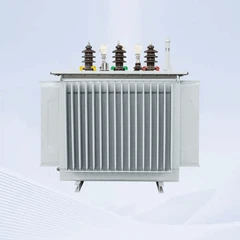
As a leading manufacturer of power equipment, GNEE provides high-performance solutions designed to minimize operational costs. The 1000 kVA oil immersed transformer is a cornerstone of our product line, engineered to provide exceptional stability for power grids and industrial plants.
By choosing a 1000 kVA Oil Filled Transformer from a specialized manufacturer like GNEE, you ensure that your oil filled distribution transformers meet the highest global standards for energy conservation and reliability.
This article provides a deep dive into the loss characteristics and efficiency metrics that define our world-class three phase oil immersed transformer units.
Defining Efficiency in a 1000 kVA Oil Filled Transformer
Efficiency in a 1000 kVA oil immersed transformer is the ratio of output power to input power. While no transformer is 100% efficient due to internal losses, GNEE's engineering team focuses on narrowing that gap. Our oil immersed type transformer models often achieve efficiency ratings exceeding 98% or 99% under optimal load conditions.
For an Outdoor Power Transformer, efficiency is directly tied to heat management. When energy is "lost," it is converted into heat. If the oil immersed transformer parts, such as the cooling radiators and the insulating oil, cannot dissipate this heat effectively, the transformer's lifespan decreases.
Therefore, understanding the "Loss Characteristics" is essential for any technical buyer or engineer looking to optimize their electrical infrastructure.
Analysis of No-Load Losses (Iron Losses)
No-load losses, often called iron losses, occur the moment the 1000 kVA Oil Filled Transformer is energized, regardless of whether it is powering a load. These losses are primarily comprised of hysteresis and eddy current losses within the transformer core.
At GNEE, we minimize no-load losses by using high-permeability, cold-rolled grain-oriented (CRGO) silicon steel. By optimizing the core stacking method (such as utilizing a "step-lap" joint), we significantly reduce the magnetic resistance. This meticulous design ensures that our oil filled distribution transformers remain energy-efficient even during periods of low power demand, such as night shifts in manufacturing facilities or idle times in commercial buildings.

High-quality Silicon Steel Core Assembly for 1000 kVA Transformer
Load Loss Characteristics of Three Phase Oil Immersed Transformers
Load losses, or copper losses, are variable and depend on the current flowing through the transformer windings. These losses are primarily due to the electrical resistance of the winding material (I²R losses).
As one of the premier oil filled transformer manufacturers, GNEE offers both copper and aluminum winding options for the three phase oil immersed transformer.
- Copper Windings: Offer the lowest resistance and highest efficiency, making them ideal for high-duty cycle industrial applications.
- Winding Geometry: Our engineers use transposed conductors to minimize skin effects and eddy currents within the windings themselves.
By accurately calculating the oil filled transformer sizes and winding cross-sections, we ensure that the temperature rise stays well within the limits, even at 100% load. This stability is what makes our units a top choice for Outdoor Power Transformer installations in harsh environments.
1000 kVA Oil Immersed Transformer Technical Parameter Table
The following table summarizes the typical loss and efficiency specifications for a GNEE standard 1000 kVA oil immersed transformer.
| Parameter | Specification (Standard Efficiency) | High Efficiency (Tier 2/3) |
| Rated Capacity | 1000 kVA | 1000 kVA |
| No-Load Loss (W) | ~1150 W | ~980 W |
| Load Loss at 75°C (W) | ~10300 W | ~8900 W |
| Total Losses (W) | ~11450 W | ~9880 W |
| Short Circuit Impedance | 5.0% | 5.0% |
| Efficiency at 50% Load | 99.1% | 99.4% |
| Efficiency at 100% Load | 98.8% | 99.1% |
| Cooling Method | ONAN | ONAN |
The Role of Oil Immersed Transformer Parts in Efficiency
Every component plays a role in the overall efficiency of the 1000 kVA oil immersed transformer.
- Insulating Oil: The quality of the oil affects the convection rate. GNEE uses highly refined mineral oil that provides superior dielectric strength and thermal conductivity.
- Radiators: Our corrugated tank designs increase the surface area, facilitating faster cooling for the oil immersed type transformer.
- Tap Changers: Proper voltage regulation via the tap changer ensures the transformer operates at its designed magnetic flux density, preventing over-excitation losses.
- Bushings and Terminals: High-quality oil immersed transformer parts reduce contact resistance at connection points, preventing localized heating and energy waste.
Importance of Oil Filled Transformer Testing for Loss Verification
To guarantee that the 1000 kVA Oil Filled Transformer performs as promised, GNEE conducts rigorous oil filled transformer testing. We use high-precision power analyzers to measure losses under controlled conditions.
Standard Tests Include:
- No-Load Loss Test: Measured at rated voltage and frequency to verify core quality.
- Load Loss and Impedance Test: Conducted at rated current to verify winding integrity.
- Temperature Rise Test: Ensures that the cooling system can handle the heat generated by the total losses.
As trusted oil filled transformer manufacturers, we provide our clients with certified test reports for every unit, ensuring transparency in every transaction.

Professional Efficiency and Loss Testing for Oil Filled Transformers
Selection Tips: Choosing the Right Oil Filled Transformer Sizes
When selecting the capacity, it is important to consider the "Efficiency Peak." Most oil filled distribution transformers reach their maximum efficiency at around 40% to 60% of their rated load.
If your average demand is 500 kVA, a 1000 kVA oil immersed transformer might be more efficient in the long run than a 630 kVA unit, as it will operate closer to its efficiency sweet spot while providing room for future expansion.
At GNEE, we help customers analyze their load profiles to select the optimal oil filled transformer sizes, balancing initial capital expenditure with decades of energy savings.
GNEE: Your Global Partner for High-Efficiency Transformers
Choosing GNEE means partnering with a factory that understands the nuances of power engineering. Our three phase oil immersed transformer units are exported globally, proving their reliability in diverse climates and grid conditions.
Whether you need a standard Outdoor Power Transformer or a custom-engineered solution, our manufacturing facility is equipped with the latest technology to deliver excellence.
- Factory Direct: Direct communication with the manufacturer for better pricing and technical support.
- Standard Compliance: Our transformers meet IEC, ANSI, and IEEE standards.
- Durability: Robust construction designed for a 30-year service life.

Export-Ready 1000 kVA Oil Filled Transformers from GNEE Factory
Conclusion: Optimize Your Power with GNEE 1000 kVA Oil Immersed Transformers
Understanding the loss characteristics of a 1000 kVA oil immersed transformer is the first step toward a more efficient and cost-effective power system. By focusing on high-quality oil immersed transformer parts, advanced core materials, and stringent oil filled transformer testing, GNEE ensures that every 1000 kVA Oil Filled Transformer we produce is a benchmark of reliability.
Don't let inefficient equipment drain your operational budget. Invest in a three phase oil immersed transformer that is built to last and designed to save.
Ready to upgrade your electrical infrastructure with a high-efficiency solution?
Contact GNEE today to discuss your project requirements! Our engineers are ready to provide a customized efficiency analysis and a factory-direct quote for your 1000 kVA oil immersed transformer.
FAQ
What is the primary role of oil in oil immersed transformers?
The oil in oil immersed transformers serves dual functions: insulation and cooling. It acts as a barrier to prevent electrical leaks and dissipates heat generated, preventing overheating and potential electrical faults.
How often should the dielectric strength test be conducted?
Dielectric strength tests are typically recommended annually or as advised by the manufacturer, aligning with operational conditions to maintain optimal transformer performance.
Why is monitoring oil levels essential for transformer maintenance?
Monitoring oil levels is crucial because low oil levels can lead to overheating and reduced insulation ability, increasing the risk of electrical faults.
What measures can prevent thermal overloads in transformers?
Preventive measures for thermal overloads include optimizing load distribution, employing advanced cooling techniques, and continuous temperature monitoring with prompt corrective actions when necessary.
How can thermal imaging help in transformer maintenance?
Thermal imaging captures infrared images to identify hotspots that may indicate electrical issues or potential component failures, allowing for early intervention and prevention of larger failures.
What makes oil transformers more efficient than dry-type alternatives
Oil transformer units achieve superior efficiency through enhanced cooling capabilities that enable higher power densities and reduced losses. The liquid insulation provides better thermal conductivity compared to air, allowing for more compact designs with improved electrical performance. Modern oil transformer designs typically achieve efficiency ratings exceeding 99%, while comparable dry-type units may have efficiency ratings several percentage points lower due to thermal limitations and design constraints.
How long can oil transformers typically operate before requiring replacement
Well-maintained oil transformer units regularly achieve service lives of 30-40 years, with many installations operating successfully for 50 years or more. The longevity depends on factors including load patterns, environmental conditions, and maintenance quality. Regular oil analysis and condition monitoring enable optimization of equipment lifespan while providing advance warning of potential issues. This extended service life makes oil transformer technology highly cost-effective from lifecycle perspective considerations.
Send Inquiry