








How to Select a 1000 kVA Oil-Immersed Transformer for Industrial Power Supply
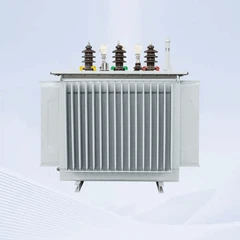
Choosing a 1000 kVA oil-immersed transformer for industrial power supply is not only about capacity; it involves load analysis, voltage compatibility, cooling, materials, installation environment and long-term operating cost. A well-selected unit operates within its thermal limits, maintains stable voltage regulation and delivers the lowest total cost of ownership over its service life, typically 25 to 30 years.
Load Analysis and Voltage Compatibility
Before selection, evaluate the total connected load in kW, the power factor, normally between 0.8 and 0.9, the peak versus average load profile and the expected future expansion. A 1000 kVA transformer is generally suitable for continuous loads in the range of 700 to 850 kW at a power factor of 0.85, which keeps the loading near 80 percent of rating and leaves margin for starting currents and growth. For voltage, confirm the primary side matches the grid level, commonly 6 kV, 10 kV, 11 kV or 33 kV, and the secondary side matches the plant distribution voltage, usually 0.4 kV or 0.69 kV. Incorrect voltage selection leads to inefficiency or equipment damage, so the vector group, such as Dyn11, must also be verified against the earthing system of the plant.
Cooling, Materials and Key Components
Cooling systems directly affect performance and lifespan. ONAN, oil natural air natural, is suitable for standard industrial environments and requires no auxiliary power. ONAF, oil natural air forced, adds cooling fans that increase the continuous rating by roughly 20 to 30 percent and is used for higher loads or high-temperature sites. Core and winding materials matter for losses and durability: high-grade grain-oriented silicon steel reduces no-load loss, while copper windings give lower load loss and higher reliability than aluminium at a higher first cost. Key components to evaluate include porcelain or polymer bushings, the conservator with oil level indicator, the tap changer, off-load or on-load, and protection devices such as the Buchholz relay and winding temperature indicators.
Testing and Quality Standards
Quality assurance depends on documented testing. Routine tests per IEC 60076-1 include turns ratio, winding resistance, insulation resistance, impedance voltage, no-load loss, load loss and dielectric tests. For acceptance on large units, type tests such as the temperature rise test and short-circuit withstand test are performed according to IEC 60076-3 and IEC 60076-5. Confirm that the transformer is designed and tested to IEC, ANSI or GB standards, and request copies of the routine and type test reports before shipment.
Technical Parameters of a Typical 1000 kVA Oil-Immersed Transformer
| Parameter | Specification |
|---|---|
| Rated capacity | 1000 kVA |
| Phases | Three-phase |
| Voltage rating | 10 kV / 0.4 kV, customizable |
| Frequency | 50 Hz or 60 Hz |
| Cooling method | ONAN or ONAF |
| Insulation class | Class A, 105 °C |
| Temperature rise | Average winding 65 K, hot spot 78 K |
| Impedance voltage | 4 to 6 percent |
| Winding material | Copper or aluminium |
| Oil type | Mineral oil or natural ester oil |
| Vector group | Dyn11 or as required |
| Installation | Indoor or outdoor |
| Standards | IEC 60076, ANSI, GB/T 1094 |
Installation Environment and Expansion Planning
The installation environment plays a key role: consider ambient temperature extremes, humidity, dust, corrosive gases and coastal salt exposure. For harsh environments, specify anti-corrosion coating, a sealed tank and suitable bushing creepage distances. For capacity planning, allow a margin of 10 to 20 percent and consider load growth over five to ten years, while avoiding oversizing, which increases first cost and no-load losses. A properly sized unit balances initial investment with lifetime efficiency.
FAQ
Q: What is the difference between a 1000 kVA dry-type transformer and a 1000 kVA oil-immersed transformer?
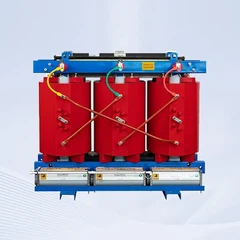
A: A dry-type transformer uses air or resin for cooling and insulation and suits indoor installations with high fire-safety requirements; an oil-immersed unit uses insulating oil, offers stronger cooling and overload capacity, and is preferred for outdoor and heavy-duty industrial applications.
Q: What maintenance does an oil-immersed transformer require?
A: Periodic oil analysis, including dissolved gas analysis, moisture and dielectric strength testing, visual inspections of the tank, bushings and cooling system, and electrical tests of insulation and protection devices, normally on an annual basis.
Q: Are there environmental concerns with oil transformer installations?
A: Modern installations include oil containment systems and environmental protection measures; mineral oil is biodegradable in many formulations, natural ester oil is a sustainable alternative, and oil recycling programs reduce long-term impact.
Q: What is a 1000 kVA cast resin dry-type transformer?
A: It is a dry-type transformer whose windings are encapsulated in epoxy resin, improving insulation, reducing fire risk and enhancing performance in humid or dusty indoor environments.
Q: Which is better for a plant, dry-type or oil-filled?
A: It depends on the application: dry-type is better indoors, for example in hospitals and commercial buildings, because of fire safety and low maintenance; oil-filled is better for industrial or outdoor sites because of durability, efficiency and lower first cost.
Q: What specifications should be provided for a quotation?
A: Capacity, primary and secondary voltages, frequency, cooling method, vector group, impedance, winding material, altitude, ambient temperature, installation location and the applicable standards.
Send Inquiry